

R.I.P. Magnificent 7?
smaller header
Five years from now you’ll probably wish you’d bought these “NEXT Magnificent 7” stocks!
The “Magnificent 7” stocks have delivered Motley Fool members returns like 95X… 221X… and even 445X, and were responsible for nearly ⅔ of the market’s gains last year alone.
But considering they now make up nearly ⅓ of the U.S. stock market, have collectively been recommended 229 times by The Motley Fool over the past two decades, and have a combined market cap 3X the GDP of Japan, and the creator of the term himself just wrote an “R.I.P Magnificent Seven Era” memo…
Our top analysts have at long last taken it upon themselves to identify what they consider “The NEXT Magnificent 7” – a group of potential superpower stocks with 74X more room to run still flying under the radar of the mainstream financial media!
Fair Warning: Today’s VIP offer to get instant access and lock in the BEST deal available expires Sunday at midnight.

Dear fellow Fool, I can feel it, and I know you can feel it too. We’re in the midst of one of those moments where the market is on an absolute tear – and feels like it’ll never slow down. The US S&P 500 is up 26% since the beginning of 2023. Normally an incredible return for a little over a calendar year… Not in this case. The tech-heavy Nasdaq puts it to shame, up a truly mind-boggling 43% over the same time period.


Chart refers to U.S. market.
After spending the end of 2021 and the entirety of 2022 like a bull bucking to get out of its cage, the market has finally busted out with a vengeance. Did you really think inflation and high interest rates were going to hold it down forever? Here at The Motley Fool, we’ve known it was only a matter of time. And if you’ve paid even a lick of attention to the market over the past year, you already know the primary drivers…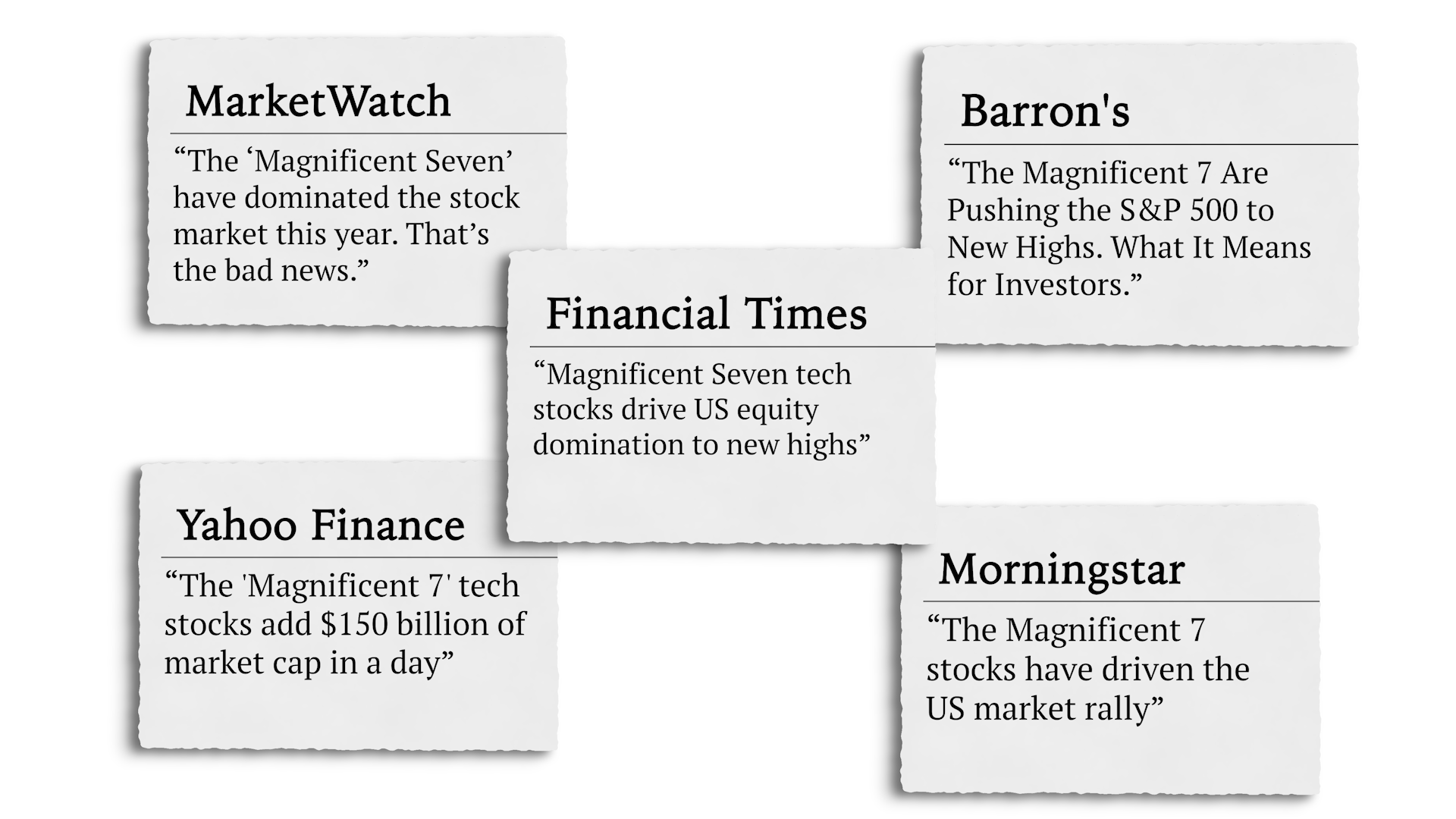

Chart refers to U.S. market.
Meta, all but left for dead after Mark Zuckerberg’s perplexing pivot to the “Metaverse” back in 2021, nearly 3X’d in value last year.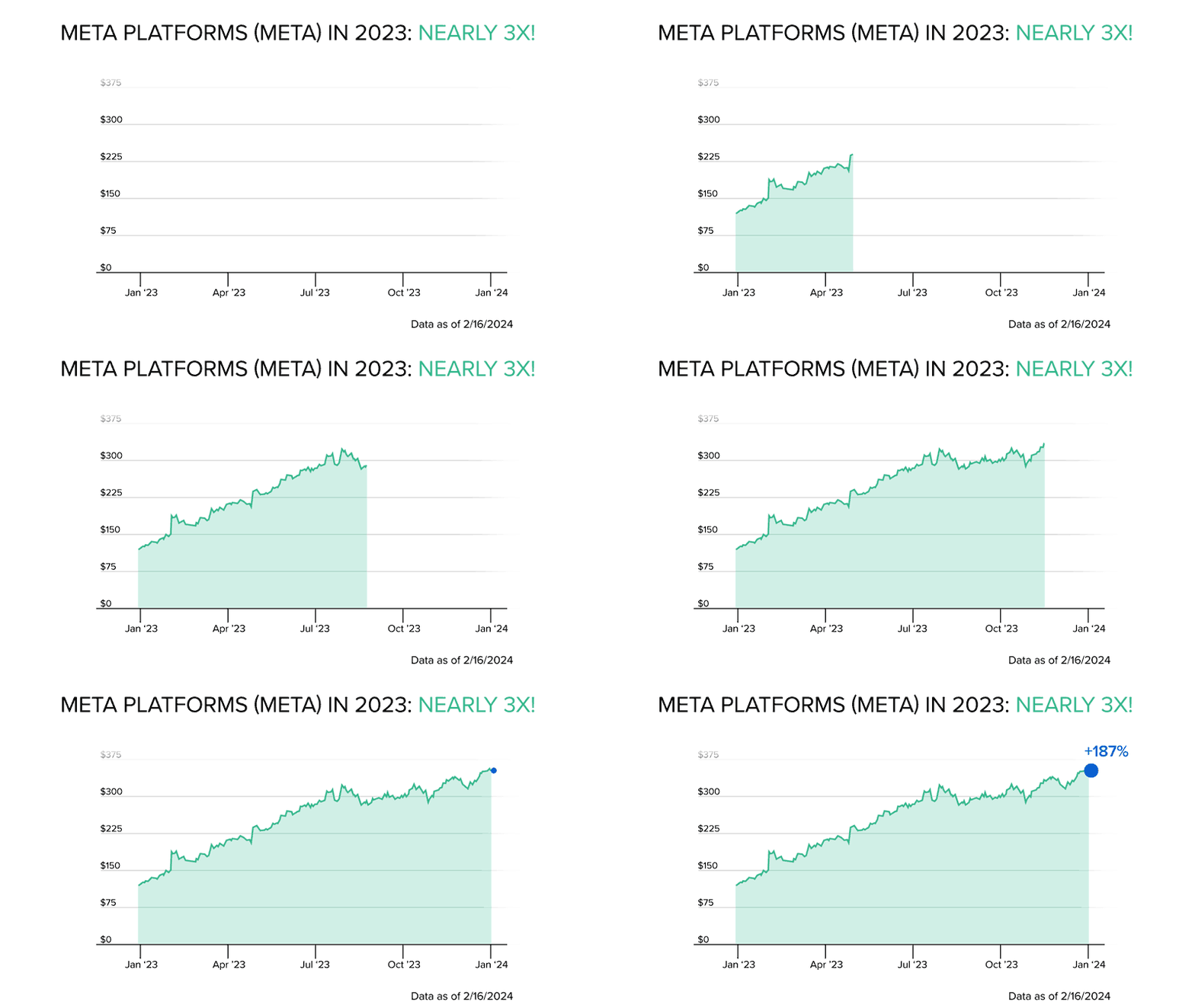
Chart refers to U.S. market.
And Nvidia made them both look borderline pedestrian with just under a 3.5X return.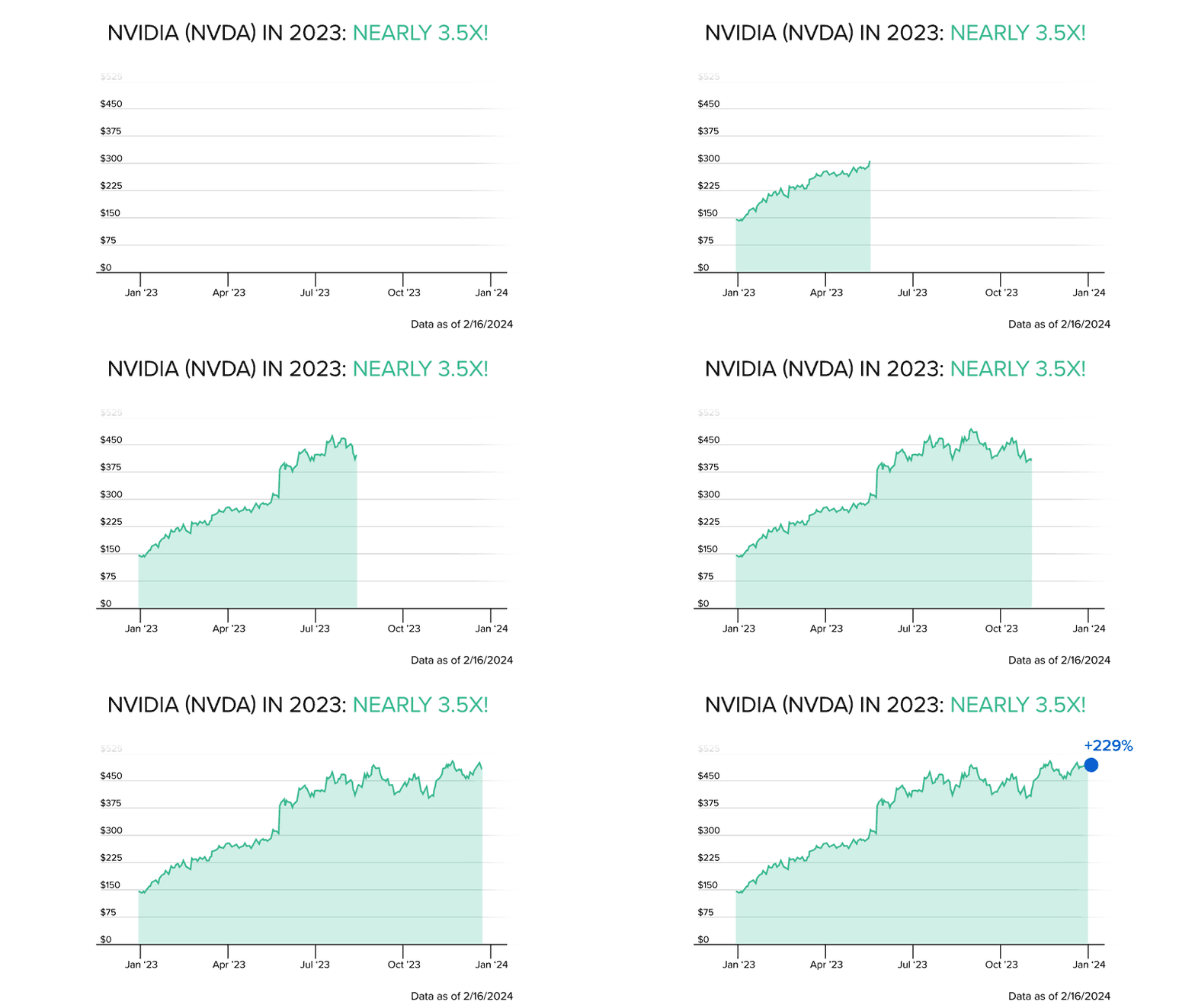
Chart refers to U.S. market.
Of course, if you zoom out over the past five years, returns like that from “The Magnificent 7” weren’t uncommon.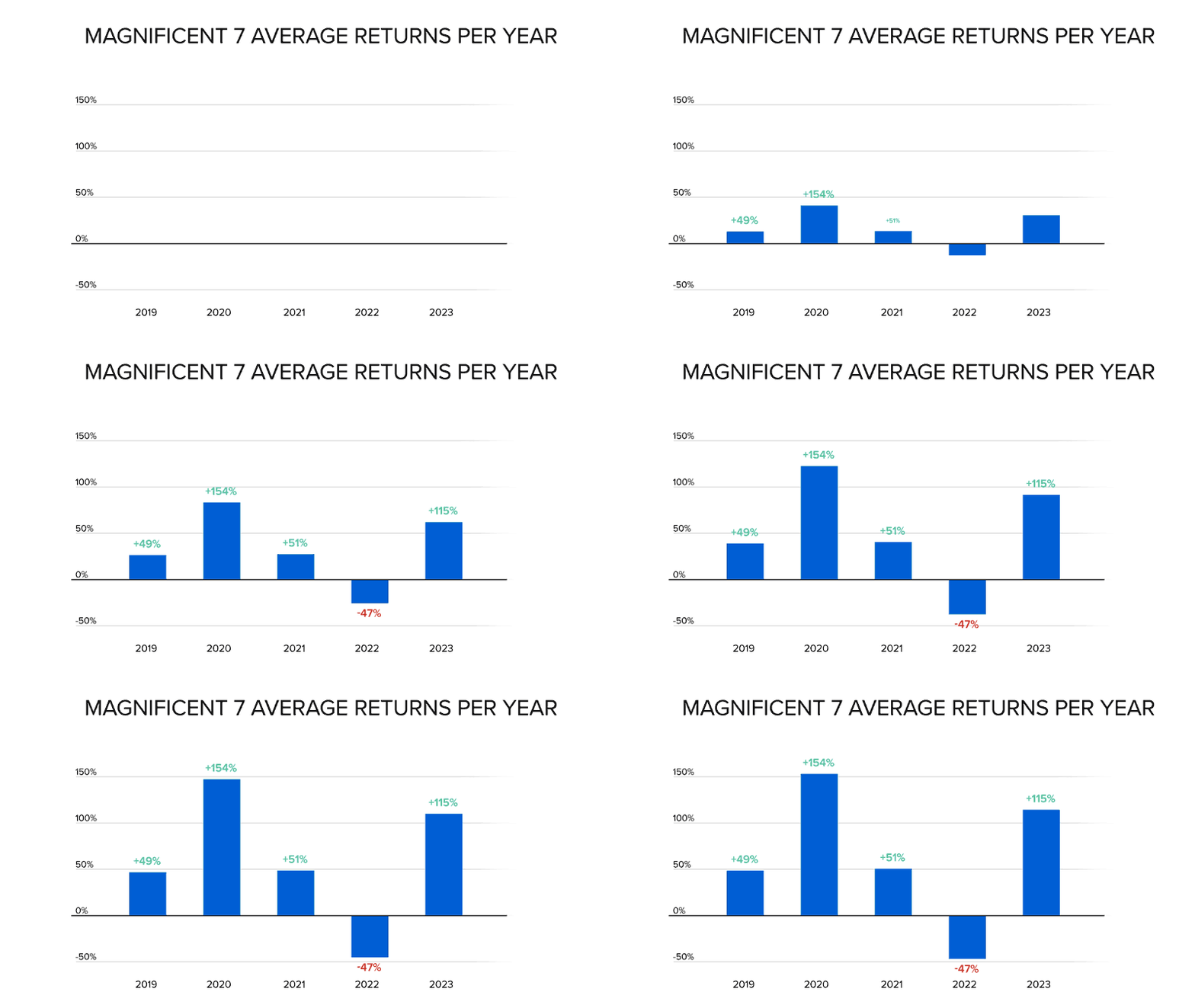
Chart refers to U.S. market.
Even including the hammering the US market as a whole took in 2022, “The Magnificent 7” have collectively averaged an amazing 65% per year going back to 2019. If you’d invested a mere US$5,000 across these seven companies back then, it would have quickly grown to US$61,149 by the beginning of 2024… A US$20,000 stake would already have you at US$244,596, nearly a quarter of a million dollars… And if you’d gone big with a US$50,000 investment, you’d currently be sitting on a US$611,491 war chest of cash. When you see returns like that, it starts to feel like just about anybody could have made a mint off “The Magnificent 7.”And that’s true… to an extent.
But here’s the real question you should be asking yourself…
Could they have made returns like:+9,460% (95X your money)…
+22,081% (221X your money)…
Or even a mind-bending +44,415% (445X your money!)?
That’s precisely what The Motley Fool US did with our original recommendation of Tesla back in 2011, shortly before the release of the original Model S…
Chart refers to U.S. market.
Our first-ever Amazon recommendation back in 2002, when other outlets like Barron’s were still busy putting out headlines like “Amazon.bomb?”…
Chart refers to U.S. market.
And our original recommendation of Nvidia all the way back in 2005, when they did little more than design graphics cards for computer games and “Artificial Intelligence” was best known for being a moderately successful Steven Spielberg movie…
Chart refers to U.S. market.
That doesn’t even take into account our original recommendations of: Microsoft in 2018, +229% (more than 3X your money)…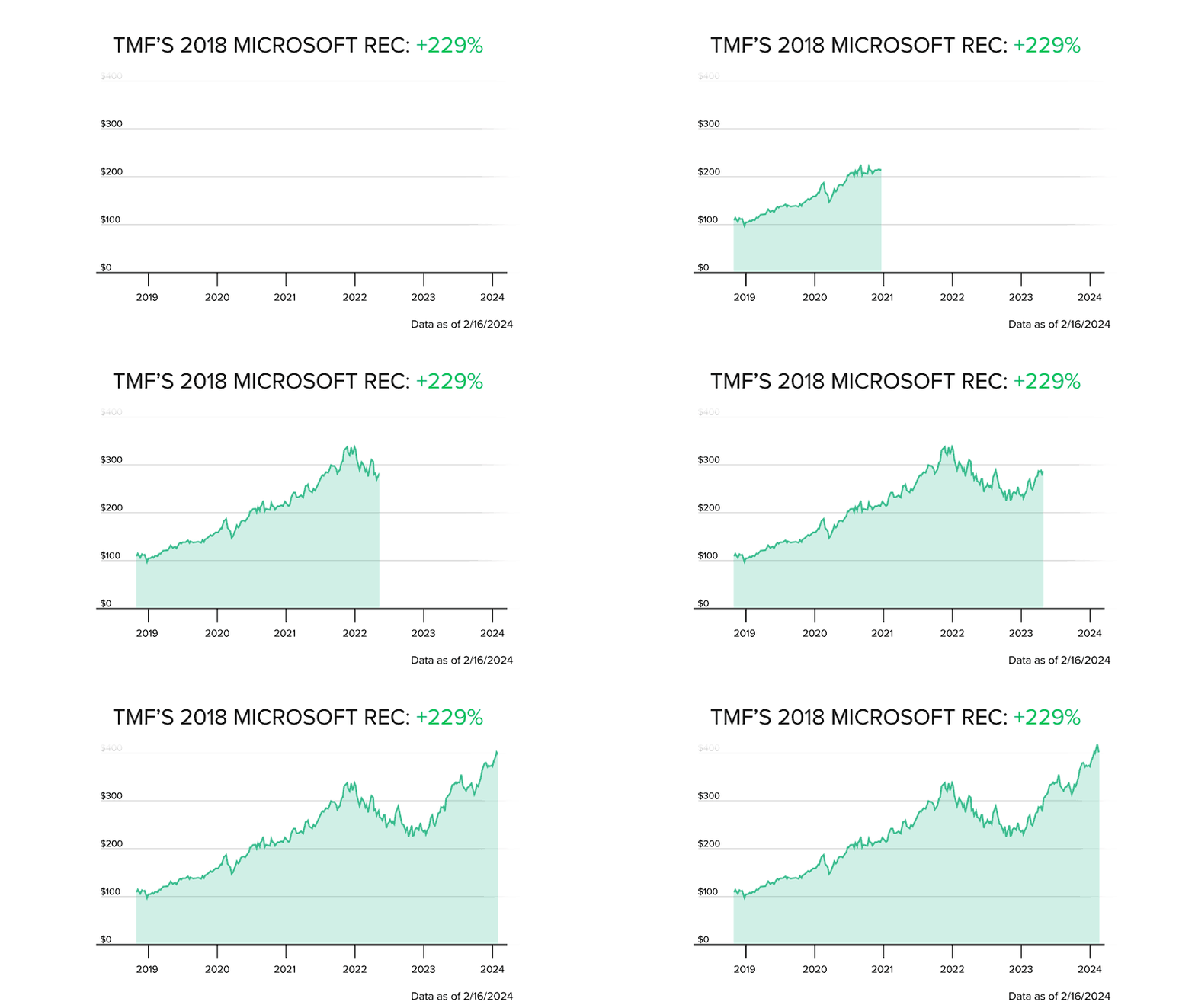
Chart refers to U.S. market.
Alphabet in 2008, +944% (more than 10X your money)…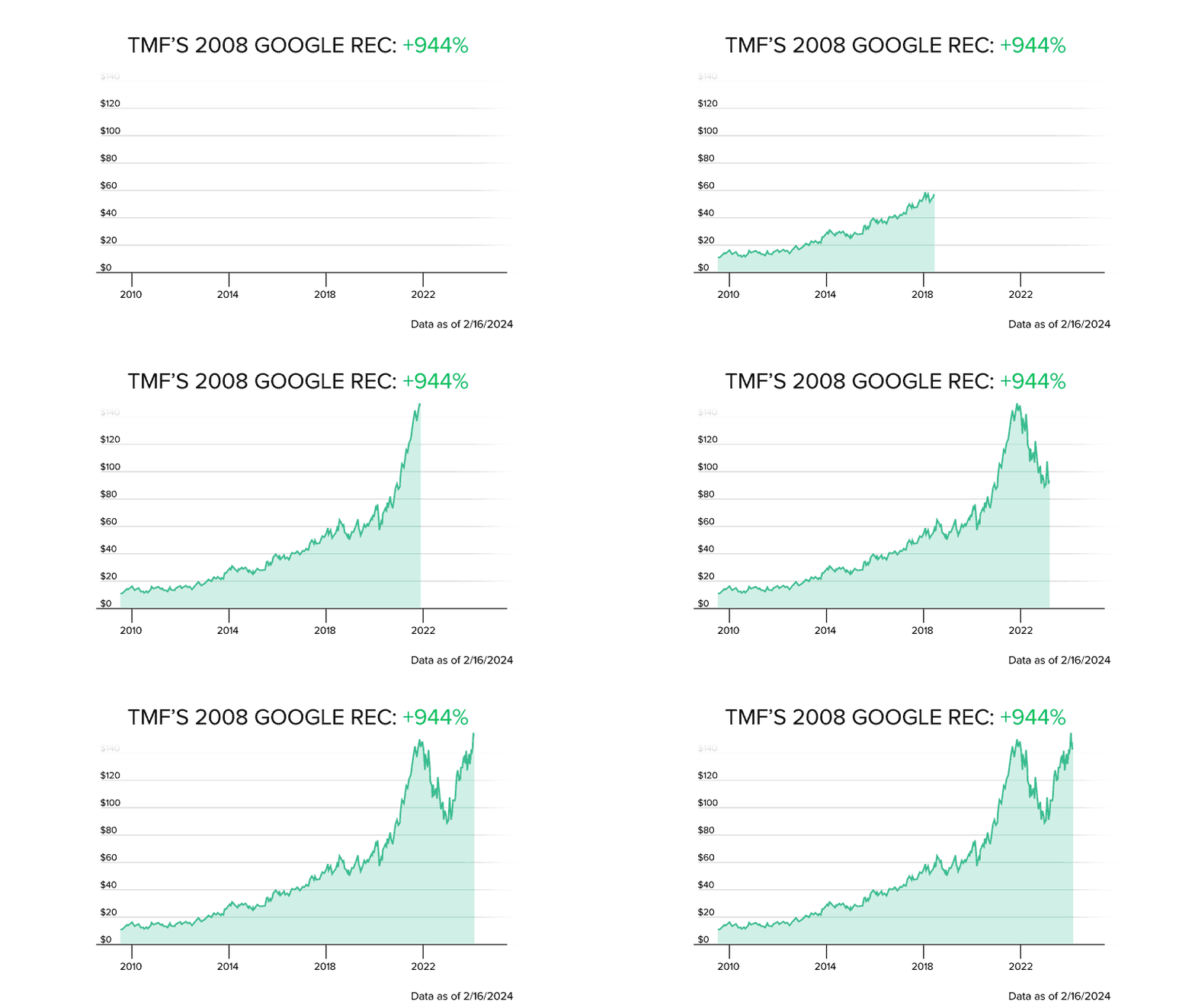
Chart refers to U.S. market.
Meta in 2012, +1,549% (more than 16X your money)…
Chart refers to U.S. market.
Apple in 2008 – just after the iPhone was released – +3,668% (more than 37X your money!)…
Chart refers to U.S. market.
By now, you should be catching on to not one, but two crucial trends here…
First, while “The Magnificent 7” as a moniker may have only been en vogue for the past year or so, the dominance of those seven companies has been a multi-decade story. (I’ll explain why that’s important in a minute.) And second, aside from being a little later on Microsoft, The Motley Fool US recommended every single one of “The Magnificent 7” over a decade ago. After all, it’s easy to hop onto the caboose of the train once it’s already left the station… It’s a lot harder to sit there patiently before it’s even begun boarding. Not to toot our own horn too much, but The Motley Fool US was so early to “The Magnificent 7” we were there when they were still laying down tracks. Many people forget this, but Motley Fool co-founder David Gardner was actually one of the first and most public advocates for Amazon stock back in the mid-90s when all they were selling was books! That takes vision to foresee the future potential of a company well in advance… Courage to take action well ahead of everybody else… And patience to hold through the turbulent times, while blocking out the naysayers… In short, it takes guts. And as some of the dollar figures I showed you earlier can attest, Motley Fool US members who’ve followed along with our “Magnificent 7” recommendations for the past 10… 15… even 20 years (in the case of Amazon) have profited wildly. Which brings me to another vital point that needs to be reinforced… Genuine, life-altering wealth is almost never made from “getting lucky” on a single stock just ONCE.And in fact, over the years, we “doubled up” on many of the “Magnificent 7” stocks again and again!
You can see some of our “Magnificent 7” recommendations clearly on this chart here: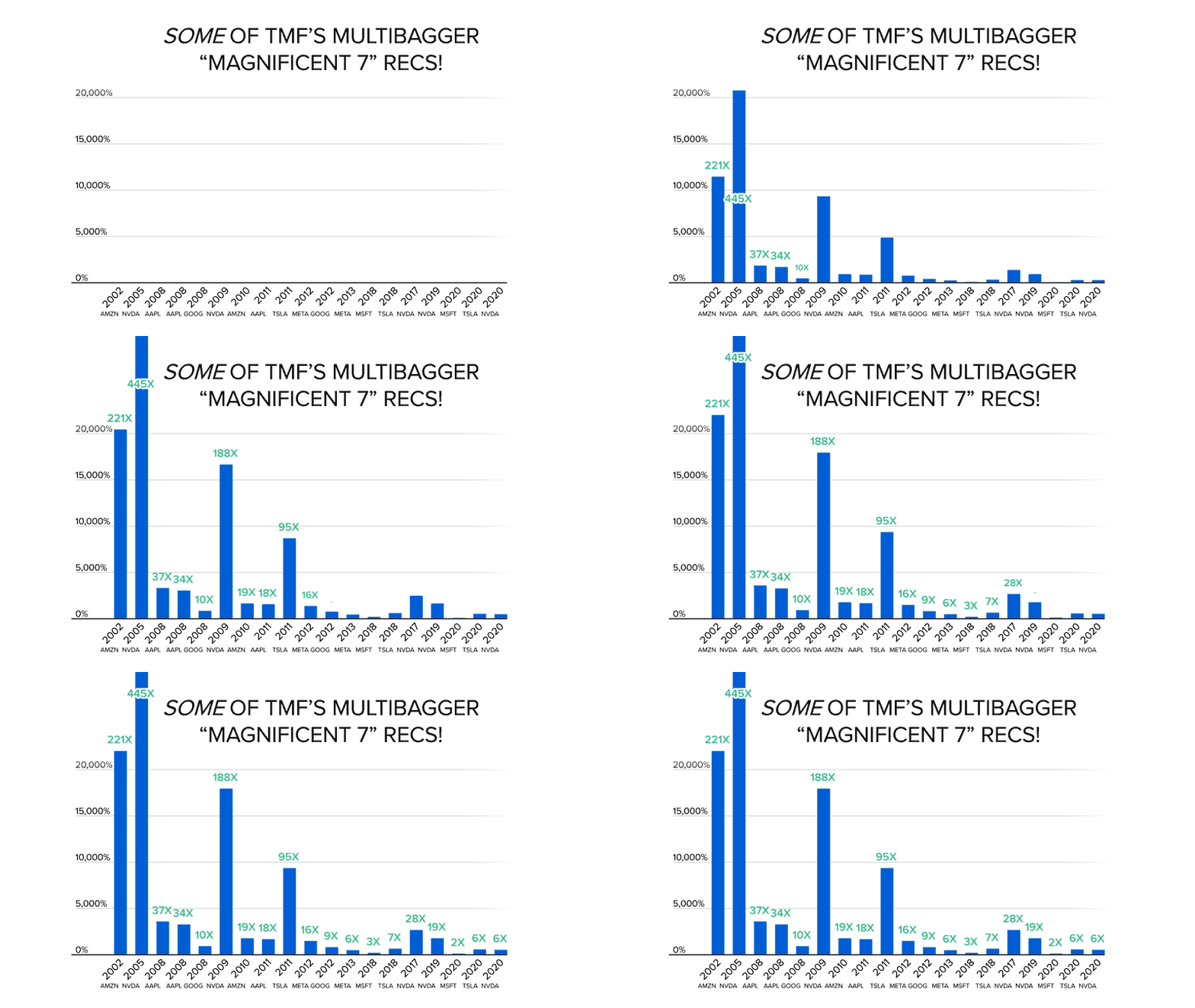
Chart refers to U.S. market.
For example, we didn’t just recommend Amazon in 2002 for a massive 221X return, turning every US$10,000 invested into over US$2 million today… We did it again in 2010 for another 19X return, adding almost US$200,000 more to your wealth – IF you’d followed that recommendation and invested another US$10,000 at the time. Or take Nvidia. We didn’t just recommend it in 2005 for that staggering 445X return. We did it again in 2017 for another 28X return – and then again in 2019 for yet another 19X gain. We also didn’t just recommend Apple in 2008, good for a 37X return on your money. We did it again in 2011 for another 18X return. And we didn’t just recommend Tesla in 2011 for that remarkable 95X return. We did it again in 2018 for another 7X gain. It simply goes to show the incredible wealth building power the “Magnificent 7” have historically had. Plus, what you see here aren’t even all of our “Magnificent 7” recommendations that have made investors money. And that’s because… All in all, we’ve recommended:Nvidia 19 times
Apple 22 times
Microsoft 24 times
Amazon 28 times
Meta 34 times
Alphabet 43 times
Tesla 59 times

Chart refers to U.S. market.
That’s 229 total “Buy” recommendations! I should note that’s across Stock Advisor, Rule Breakers, as well as our more specialized portfolio services. That said, you know the old saying.. In both life and in investing, eventually “All good things must come to an end.” And it certainly raises the question of just how much higher the “Magnificent 7” can go. I’ll answer that question in a moment. First, as you can imagine… We’ve been following all seven of these fortune-making stocks extremely closely over the past two decades – and we’ve discovered something remarkable.A pattern seemingly so lucrative it could very well spotlight the next group of superpower stocks – before they make their monumental rise.
After all, we’ve recommended the “Magnificent 7” a total of 229 times! And we finally went back and decided to home in on precisely what even made it possible for them to generate those incredible 19X… 37X… or even 445X returns over the last two decades. Specifically – what did they all have in common? Now, of course, there are many factors that played a role in “The Magnificent 7’s” success. But one thing sticks out like a sore thumb… Each of “The Magnificent 7”:- Tapped into a MASSIVE, fast-growing market opportunity, then…
- Went on to absolutely dominate that market.
The pattern here is getting pretty clear:
“The Magnificent 7” have managed to capture huge chunks of huge markets. Speaking of taking a massive bite out of a market, the same goes for Apple. Steve Jobs revealed the first iPhone on January 9, 2007, launching the smartphone era and fundamentally altering the course of human history in the process… While grabbing a stranglehold on the gigantic consumer electronics market that’s now worth a cool trillion US dollars each year as well. Apple’s smartphone market share in the U.S.? It sits at over 60%. What about Nvidia? Now, this one’s interesting because they’re in the news so much of late specifically because of artificial intelligence. But the truth is the famed smart chip maker established its dominance long before the recent bull run in the AI sector. Specifically in the gaming industry, the real launchpad for Nvidia’s meteoric rise. And once again, we’re not exactly talking about a small market here… Global semiconductor sales – Nvidia’s true market – totaled more than US$526 billion last year. After all, there’s a reason our initial recommendation of Nvidia came all the way back in 2005 as I mentioned earlier… not in the past couple years like most investors. That foresight is the difference between 440% gains you can casually brag to your coworkers about around the water cooler… And the +44,000%+ gains from our original 2005 recommendation that would have made you a millionaire with every US$2,500 investment…
Chart refers to U.S. market.
(No coworkers when you’re retired years ahead of time!) Then there’s Tesla, the undisputed champion of EVs. Tesla’s market share in the U.S. was right around 55% last year – I’d call that dominance. As for the size of the global electric vehicle market, it’s expected to reach US$1.66 trillion by 2030. No small potatoes, but… Still nowhere near the size of the global e-commerce market, which was worth a whopping US$6.3 trillion last year. Of course, that’s where Amazon established its dominance, clinching 38% of the U.S. market share last year. Here’s the bottom line. Each of “The Magnificent 7” companies managed to establish a stranglehold on huge markets worth anywhere from half a trillion US dollars to US$6.3 trillion. All of this gives rise to one all-important question likely bouncing around your head by now… If “The Magnificent 7” have performed so well not only for investors in general over the past year, but for Motley Fool US members in particular over the past two decades…Why on Earth would we invest anywhere else?
Well, consider this from a recent Goldman Sachs report… Back in March 2000, Microsoft, Cisco, General Electric, Intel, and Exxon Mobil were the largest US S&P 500 companies, making up 18% of the index. And while forecasts showed those five companies growing sales at a 16% compound annual growth rate over the next two years… They ultimately delivered just 8%, and as a group went on to underperform the US S&P 500 by 21 percentage points over the following two years. OUCH. And this brings me back to what I mentioned earlier about all good things coming to an end. Because while that “Big Five” made up 18% of the US S&P 500’s market cap… By the end of 2023, “The Magnificent 7” were responsible for 30% of it – almost a third of its overall value!
Chart refers to U.S. market.
As Ann Miletti of Allspring Global Investments told the WSJ, “It’s a mind-blowing number to me when I think about an index that’s supposed to represent such a broad group of companies.” To put it in proper perspective… If you go back just five years, that number was only 17%.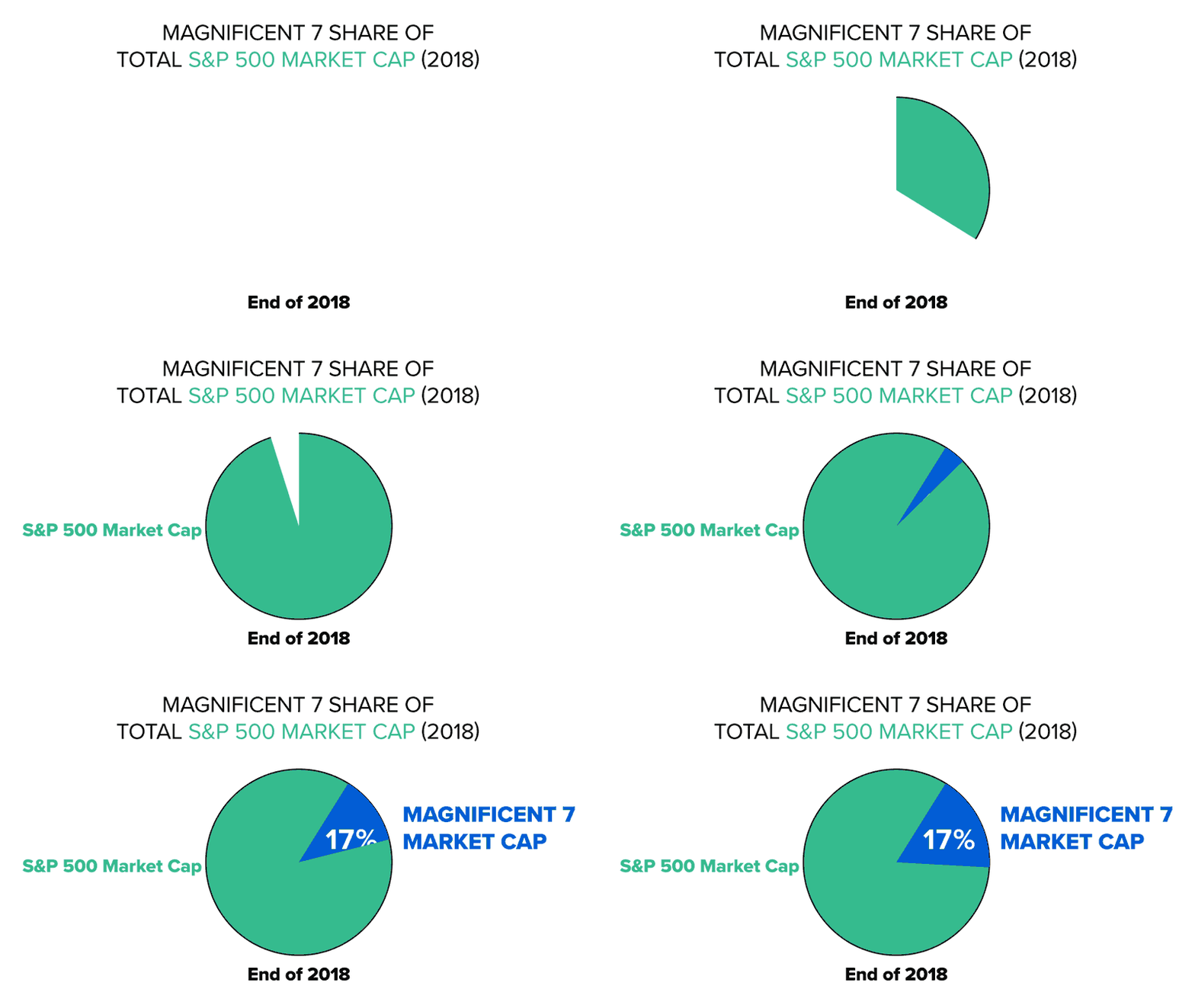
Chart refers to U.S. market.
Go back 10 years and the contrast is even starker…
Chart refers to U.S. market.
…because the “Magnificent 7” stocks made up a mere 9% of the US S&P 500’s total market cap. You can really see the effect of investors absolutely piling into these seven stocks. Along with just how “crowded” they’ve become over the past few years. Little wonder Axios recently reported:

Chart refers to U.S. market.
JP Morgan analysts echoed them in a recent report, saying market concentration is becoming “increasingly unhealthy.” Market Insider reported how one veteran analyst even says the “Magnificent 7 mania is like the dot-com bubble.” And Reuters recently ran a headline saying:
But there’s actually a far more pernicious problem at work here…
When you have tunnel vision on just seven stocks that are already massive, you’re all but guaranteed to miss countless other opportunities around you. Opportunities that may prove far more profitable in the long run, despite the TV talking heads flat-out ignoring them in the present. To that point, the Executive Editor of Yahoo Finance recently ran an eye-catching headline that read: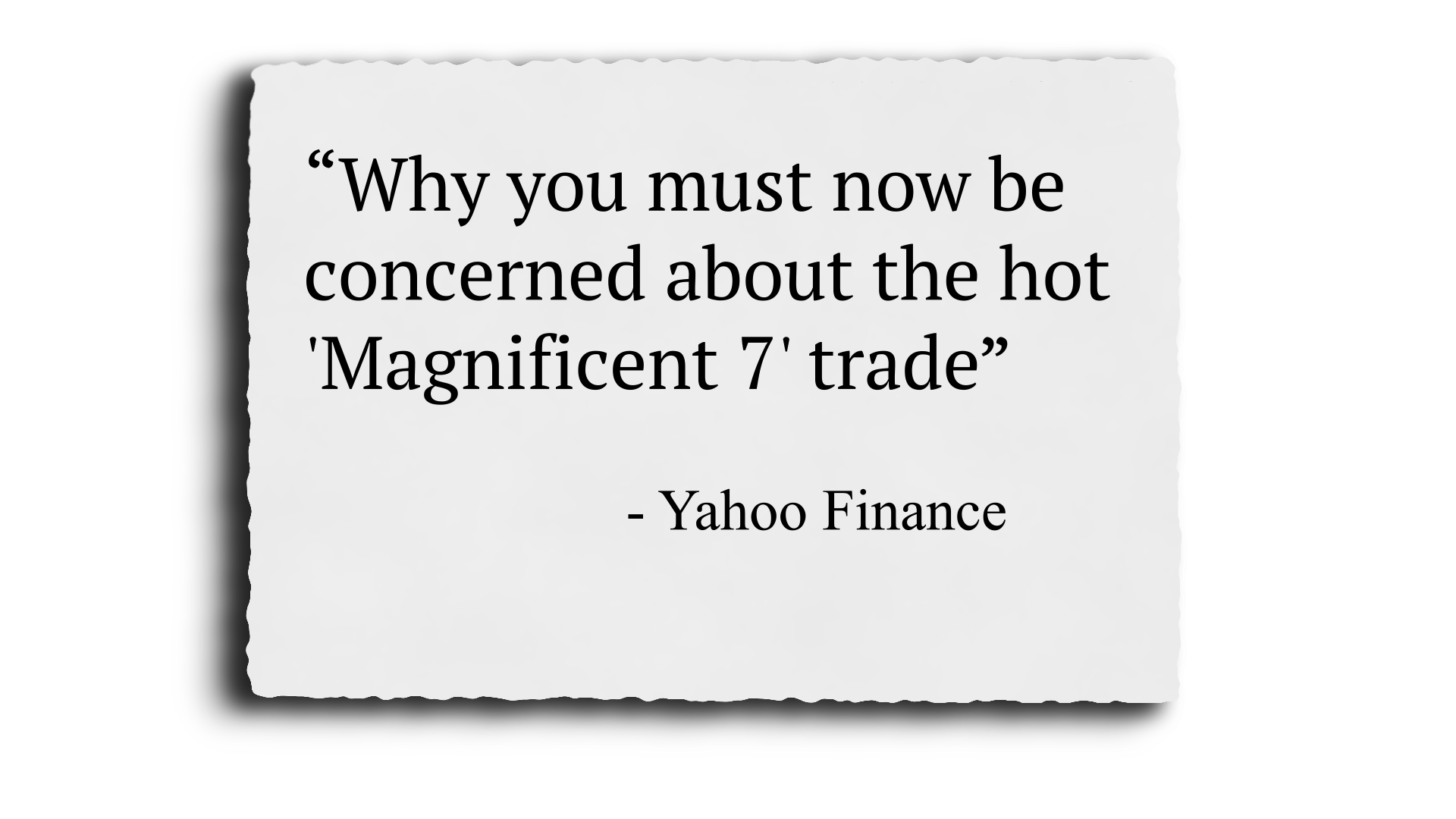
“Evolve your thinking around the “Magnificent Seven” trade that has brought you immense paper profits the past year, or else get your portfolio blown up in the not-too-distant future.
Am I being too harsh? Maybe, but I need to be because I truly feel that investors have forgotten there are more ways to make money than hitting the buy button on seven tech stocks. And with their blinders on, they are overlooking new trends, news, and information that warrant a short-term pause on the explosive Magnificent Seven trade.”
But this is what really made me stand up and pay attention…
Silvercrest Asset Management Group conducted a study of two time periods of intense market concentration comparable to our modern-day “Magnificent 7:” the so-called “Nifty Fifty” in the 1970s and the Internet Revolution of the 1990s. They discovered that “In the five years after the most admirable periods of growth for the Nifty Fifty and the leaders of the Internet Revolution, the top five underperformed considerably compared to the remainder of the US S&P 500.” Ultimately concluding, “Given the nature of competition, peak periods of concentration in the market are typically followed by a changing of the guard.” Let’s quickly compare that to the state of our current market… Admirable growth? Check. Peak periods of concentration? Check check. Changing of the guard? It very well could be staring us straight in the face. After all, Jones Trading’s chief market strategist Mike O’Rourke, who originally created the “Magnificent 7” moniker last spring, just released a memo saying:“R.I.P. Magnificent Seven Era”
— Mike O’Rourke, coined the term “Magnificent 7”
You may get infinitely more upside by putting your money in an entirely different collection of overlooked stocks!
Imagine a group of stocks that compared to “The Magnificent 7” are…A mere 1/74th the size by market cap…
Still flying under the radar of the mainstream financial media…
Positioned to own some of the biggest and fastest-growing markets of the NEXT decade…
That last one is particularly important, and here’s why. Think back to the sectors “The Magnificent 7” are currently dominating… Alphabet controls a ridiculous 87% of the U.S. internet search market, thanks to Google… Roughly 70% of all desktop computers around the world run on Microsoft’s Windows operating system… Apple’s share of the U.S. smartphone market is over 60%… Despite rampant and growing competition, Amazon still controls 38% of U.S. e-commerce – DOUBLE the next nine leading e-commerce retailers combined! You see similar dominance in Meta with social networking… Nvidia with smart chips… and Tesla with electric vehicles. The point here should be clear. While those are all massive markets… by and large, they’ve also already been claimed. I don’t know about you, but I’m not betting against anybody to take over for the iPhone… Windows… or Google search any time soon.But what if that were a bet we didn’t have to make in the first place?
What if instead of trying to “guess” what finally topples those juggernauts that have been dominating their sectors for 10… 15… and even 25 years now… We instead concentrated on the next sectors that could be just as impactful and just as large?(If not larger, as I’ll share in just a second.)
And then identified a new group of infinitely smaller companies with the early look of becoming the next superpower stocks… Potentially primed to control the sectors of the global economy that, to date, have yet to be fully realized. You see, after analyzing how our whopping 229 “Magnificent 7” recommendations have undoubtedly minted fortunes for Motley Fool members who followed our recommendations over the past two decades… Our analysts have now identified seven major emerging market trends poised to unearth what we think are the biggest winners of the next decade and beyond. And just like “The Magnificent 7” have dominated trillion-dollar markets like software, e-commerce, and smartphones…Our experts have at long last identified what they consider “The NEXT Magnificent 7.”
But before I tell you more about those seven potential superpower stocks of the future… Let me first reveal those seven sectors our top analysts have in their crosshairs.
Next Magnificent 7 Sector –
Cybersecurity – a projected US$2 trillion opportunity
Next Magnificent 7 Sector –
Gene Editing – a potential US$10 trillion opportunity
Next Magnificent 7 Sector –
Artificial Intelligence – a projected US$15.7 trillion opportunity
Next Magnificent 7 Sector –
Augmented & Virtual Reality – a projected US$8 trillion opportunity
Next Magnificent 7 Sector –
FinTech – a projected US$20 trillion opportunity
Next Magnificent 7 Sector –
Next-Gen Energy – a projected US$23 trillion opportunity
Next Magnificent 7 Sector –
Big Data – a projected US$3.6 trillion opportunity

Chart refers to U.S. market.
From where I sit, they’re largely unclaimed territory. Which of course, opens a window of opportunity for savvy, in-the-know investors. I’m happy to announce that after consulting with dozens of our top analysts across the company, The Motley Fool has just released an exclusive, brand-new report squarely focused on the seven stocks we believe could dominate each of those “NEXT Magnificent 7” sectors!Introducing…
“The NEXT Magnificent 7: Seven Under-the-Radar Stocks with Trillion-Dollar Potential”
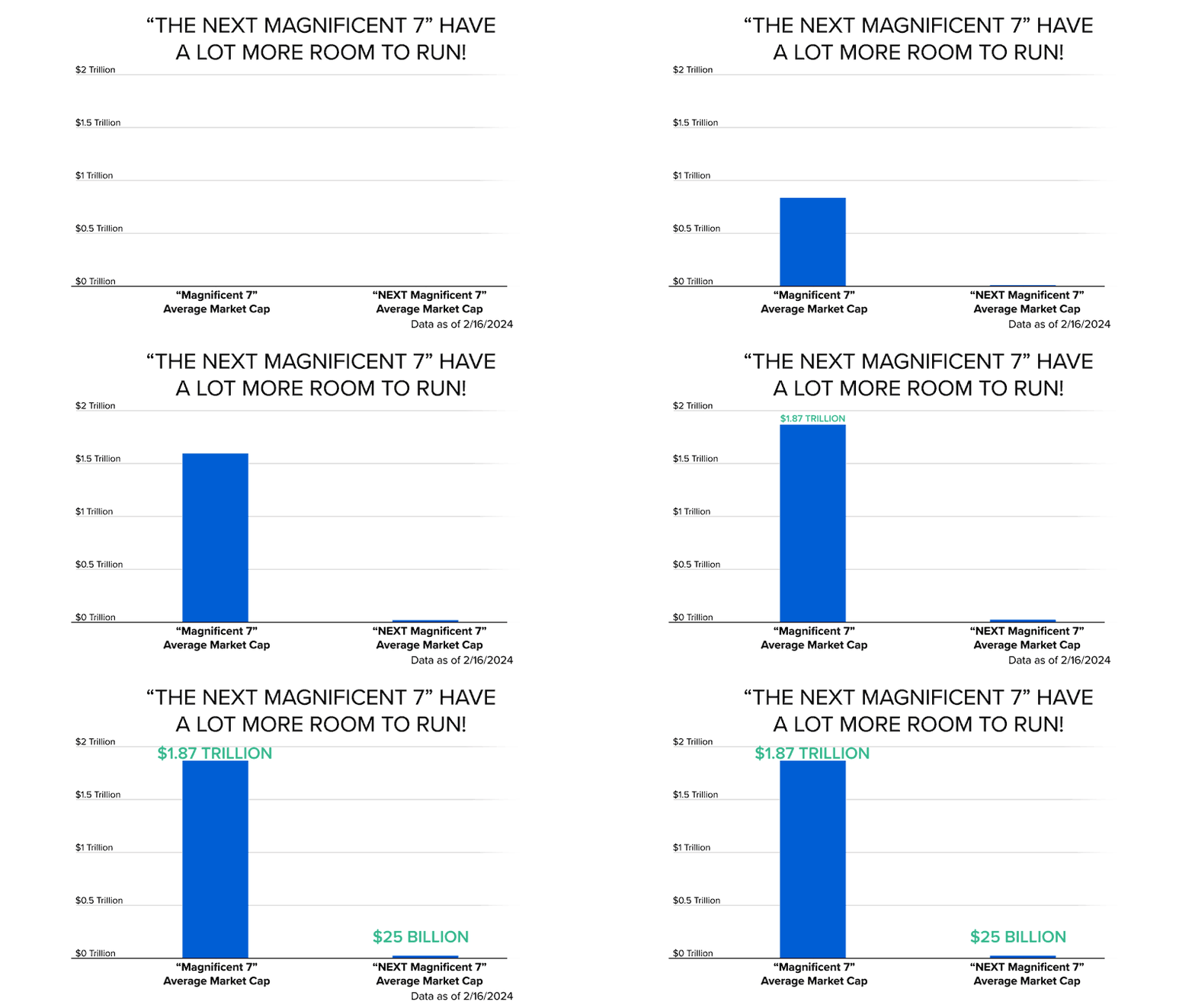
Chart refers to U.S. market.
To say there’s a whole lot more room to run here would be a borderline comical understatement. After all, it’s hard to wrap your mind around the sheer scale of mega caps like Apple, Microsoft, Tesla or Amazon – but this might help:At more than US$600B, Tesla’s market cap is around the size of Sweden’s gross domestic product (GDP).
Recently having joined the US$1 trillion club, Meta’s US$1.2T market cap sits somewhere between the GDPs of Saudi Arabia and Indonesia.
Alphabet, Amazon, and Nvidia are all around the US$1.8T market cap zone, just shy of the GDP of Brazil.
And having become the first two companies to ever cross the US$3 trillion threshold, Apple and Microsoft’s market caps each hover roughly in line with the GDP of the United Kingdom – the 6th largest economy in the world!
Combine all seven and we’re talking about a total market cap around US$13 trillion. By comparison, China (the world’s 2nd largest economy) has a GDP of just shy of US$18 trillion. Japan (3rd largest global economy) is a hair above US$4 trillion – roughly a third of the combined market cap of “The Magnificent 7.”
At some point when stocks get THIS BIG in relation to the rest of the market, you simply reach diminishing returns. There’s only so much wealth in the world at any given point in time, after all. Just think about it… What futuristic iGizmo is Apple going to dream up that can 10X their market value from US$3 trillion to US$30 trillion – the iTeleporter? Apple Time Machine?(Oh by the way, that US$30T market cap would be US$5 trillion MORE than the present United States GDP.)
Which is why “The NEXT Magnificent 7” in our crosshairs are on average 74X smaller. That’s a LOT of extra upside! Not to mention that unlike the seven sectors “The Magnificent 7” have secured an iron grip on (e-commerce, consumer electronics, smart chips, etc.), as I said earlier we believe our “NEXT Magnificent 7” sectors are largely unclaimed territory. If the current “Magnificent 7” were modern-day Manhattan, the Fool’s “Next Magnificent 7” would be 1800s frontier wilderness by comparison. Making this a chance to be a part of a potential new California “Gold Rush.” What’s more, unlike “The Magnificent 7,” each of which The Motley Fool US recommended at least 19 times…Our No. 1 pick for Artificial Intelligence has been rec’d a mere five times across the Fool.
Our top pick to dominate Gene Editing has only been rec’d two times.
Our projected No. 1 winner in the FinTech space has been rec’d just once.
And get this – our top stock for Next-Gen Energy has also been recommended by us just once before.
Compare that to Tesla, which we’ve recommended a whopping 59 times since 2012 alone. (Of course, I doubt any Fools who’ve followed along since that original recommendation are complaining about +9,460% returns.) The neat thing here is you’re certainly going to be getting some stocks you know hardly anything about. Ready to learn a little bit about them?Cybersecurity “Next Magnificent 7” Winner – They serve a whopping 41 million users across the 7,700 enterprise customers that have signed up for the company’s zero-trust cybersecurity platform. Given the huge appetite for protection from cyberattacks, they’ve been able to continue landing new customers even under challenging conditions in the economy, building on 48% sales gains in fiscal 2023.
Further tailwinds are on the way in the form of the federal government, with the revenue from that sector soaring by more than 90% from year-earlier levels for our “Next Magnificent 7” Cybersecurity Winner, due in part to an executive order from the White House calling for greater adoption of zero-trust security practices among government agencies.
Gene Editing “Next Magnificent 7” Winner – One of the first companies founded to focus specifically on CRISPR-based therapeutics, and its founders include a Nobel laureate who was one of pioneers of CRISPR. If you’ve never heard of it, think of CRISPR like a precise genetic pair of “scissors” that offer a way to permanently silence mutant genes and even potentially correct them by introducing edited DNA as a replacement.
Sound invasive? Surprisingly, it isn’t. Their leading treatments are administered intravenously and – while perhaps hard to imagine now – could ultimately be used as off-the-shelf drugs. Just think of eventually being able to pop into your local CVS for gene editing medication!
At just US$2.6 billion in market cap, it’s roughly 1,000X smaller than Apple. And remember, we’ve recommended it just twice EVER at the Fool.
Artificial Intelligence “Next Magnificent 7” Winner – Believe it or not, our winner in the AI space is another cybersecurity company. AI depends on trusted channels so information can freely flow across networks. That requires network, device, and data security to allow AI-enabled software to automate tasks, process data, and make lightning-quick decisions to predict, identify, prevent, and neutralize cyberthreats.
All of that makes AI and cybersecurity a perfect team, particularly with the ever-increasing quantity of cyber attacks companies are having to deal with. Cyber defenses powered by AI are the only way to keep up, and our AI “Next Magnificent 7” Winner is leading the charge. No wonder their stock is already surging, up more than 4X over the past half-decade.
Augmented & Virtual Reality “Next Magnificent 7” Winner – The company formerly famous for creating the Taser has quietly revolutionized its entire business model. Nowadays, 90% of their overall revenue comes from cloud-based subscription products – that’s a radical shift, and our team has taken notice.
Here’s the truly exciting part. They’ve created immersive VR training programs that they license to law enforcement and emergency response professionals, allowing them to train for real-world solutions well in advance of encountering them. As their CEO says, 2023 was the year that virtual reality went from an interesting concept to “ready for prime time.”
No wonder that despite only now beginning to properly tap into their true upside – not to mention plans to expand internationally – their stock is up nearly 5X over the past five years.
Next-Gen Energy “Next Magnificent 7” Winner – This little-known Danish company that’s been recommended just ONE TIME across the entire Motley Fool universe envisions itself as the world’s leading green energy company by 2030. As the world’s largest developer of offshore wind energy – the fastest-growing green energy technology on Earth, projected to expand at a more than 20% annual rate heading toward 2030 – they’re off to a great start.
But what makes this company truly exciting is their commitment to pairing that success with further development in onshore wind… solar… hydrogen… and green fuels.
FinTech “Next Magnificent 7” Winner – Another little-known stock we’ve recommended just one time at the Fool, our FinTech winner manages an e-commerce-focused payment platform with customers in regulated online gaming, social gaming, cryptocurrency, and financial services. Not only are those growing faster than the broader economy, but you’ll notice that many are still nascent markets – giving our company massive room to run, with far less competition than more traditional e-commerce platforms.
Plus, at a mere US$3.7B market cap, it’s roughly 1/800th the size of Microsoft!
Big Data “Next Magnificent 7” Winner – The company made its name by providing open-source database software, which means users can access the company’s core database code for free and even make specialized modifications. However, they offer more advanced software and support for a fee, and that business has grown to more than 35,200 customers in over 100 countries – with sales skyrocketing thanks to rapid adoption of their Atlas cloud “database-as-a-service” product.
In today’s increasingly cloud-first world, our Big Data Winner provides foundational technologies well suited for modern web applications. Partnerships with current “Magnificent 7” companies in Amazon, Microsoft, and Alphabet show they’re being embraced as a key service provider among the cloud-infrastructure giants.
In plain English, this could be THE underlying database platform for the future of the cloud. Little wonder their stock is up nearly 5X over the past five years.
Remember, at just US$25 billion, the average market cap of the stocks we’ve crowned as “The NEXT Magnificent 7” is a mere 1/74th the size of the US$1.87 trillion average market cap of the current “Magnificent 7.”
Chart refers to U.S. market.
Of course, we aren’t just going to hand you a series of seven ticker symbols and call it a day. You’ll get a comprehensive research write-up on each and every single one of our “NEXT Magnificent 7” companies, complete with:A full description of their business model.
Why our team believes the company has so much upside.
And, of course, why we’re so confident in their ability to dominate their particular sector… just like their forerunners in the original “Magnificent 7” have before them.
Normally, this report would cost you $700. But if you want to secure your copy today, I have very good news because…I’m going to give you a FREE copy of “The NEXT Magnificent 7: Seven Under-the-Radar Stocks with Trillion-Dollar Potential” when you join The Motley Fool’s Market Pass with today’s special offer!
You see, here at The Motley Fool, we firmly believe that investing in just seven stocks – even seven stocks with the potential to become “The NEXT Magnificent 7!” – is not the right approach. So, as excited as we are about the seven stocks in this exclusive new report… We want to ensure all of our members are building a diversified portfolio of AT LEAST 25 stocks for the long run. For that reason, today’s VIP offer includes membership to Market Pass, giving you access to:Motley Fool Canada Stock Advisor – The “jack of all trades” investing service that’s beating the market by nearly 2-to-1. [$299 value]
Motley Fool Hidden Gems Canada – The “small-cap specialist” that’s focused on finding under-the-radar, tiny stocks with great value. [$499 value]
Motley Fool Rule Breakers Canada – The “hyper growth hunter” focused on uncovering great companies early in their evolution. [$499 value]
Motley Fool Dividend Investor Canada – The “passive income playbook” for investors looking for high-yield passive income opportunities right here in Canada. [$349 value]
Everlasting Stocks – The “Tom Gardner portfolio” which issues timely recommendations based entirely on the personal investing approach of our CEO and founder Tom Gardner. [BONUS]
This not only gives you immediate access to 400 active stock picks, but you can expect a total of nine NEW recommendations each month. And of course, that’s in addition to our “The NEXT Magnificent 7: Seven Under-the-Radar Stocks with Trillion-Dollar Potential” report.| Motley Fool Canada Market Pass | Including: |
| Stock Advisor Canada | $299/yr |
| Hidden Gems Canada | $499/yr |
| Rule Breakers Canada | $499/yr |
| Dividend Investor Canada | $349/yr |
| Everlasting Stocks | Bonus |
| The NEXT Magnificent 7 | Including: |
| “Seven Under-the-Radar Stocks with Trillion-Dollar Potential” | $700 |
| Total Value | $2,346 | Your Price | $999 | Your Savings | $1,347 |
And I have some more good news because…
Your personal savings might be even larger with any credits you may have available for this upgrade offer!
That’s right. Consider not only everything above that you get access to… but also that any and all current available credits you have will be automatically subtracted from today’s price. For full pricing details, you can scroll down to your personal offer at the bottom of this invitation. Members are often surprised at how many credits they have! So, at the very least it’s worth clicking the button below to see your personal offer. That said, I must note that since so much of the value of this offer is delivered immediately when you join, we simply cannot offer cash refunds on this offer. If a group of short-term traders was able to gain access, they could quickly trade on these timely recommendations and then cancel without paying their fair share. They could push up prices of the stocks and do a huge disservice to investors who are committed to this strategy for the long run.However, you’ll be happy to hear that…

Today’s VIP offer is backed by Ironclad 30-Day Satisfaction Guarantee
Remember, this VIP offer expires promptly at MIDNIGHT on Sunday.
So, when you’re ready to join, simply click the button directly below to lock in the best deal now:With that all said, I must issue one final warning…
Come midnight Sunday, your VIP offer will expire. Before then, you have a big decision to make. A potentially life-altering decision, if our “NEXT Magnificent 7” stocks are everything our team believes they are. Consider the fortunes that have been made by Motley Fool US members via the whopping 229 recommendations of the current “Magnificent 7” we’ve made over the past two decades… 95X your money if you followed our initial recommendation of Tesla in 2011… 221X your investment if you were in on our 2002 Amazon recommendation… And a mind-blowing 445X if you were fortunate enough to follow us on Nvidia back in 2005. Yes, “The Magnificent 7” have certainly had their day in the sun. But after being responsible for more than 60% of the US S&P 500’s gains last year alone, they make up 30% of the overall market and their average market cap is up to nearly US$1.9 trillion. Our “NEXT Magnificent 7?” Just US$25 billion. A mere 1/74th the size, giving them so much more room to run. The fact is, they’re already moving… Together, the “NEXT Magnificent 7” averaged a collective 33% return throughout 2023 alone. We firmly believe they’re just getting started in dominating their various “next era” sectors like gene editing, Big Data, AR/VR, and of course artificial intelligence. I’ll remind you what it took for The Motley Fool to jump on the original “Magnificent 7”: Vision to foresee the future potential of a company ahead of time… Courage to take action before everyone else… And patience to hold through the turbulent times, while ignoring the naysayers… Above all, it takes guts. That creed has served us well in the past. I believe it will serve you well going forward. To join us and get a head start with “The NEXT Magnificent 7” now before they’re front page news, just click the button below.To what’s coming next,

 Jaimin Patel
VP of Membership
The Motley Fool
Jaimin Patel
VP of Membership
The Motley Fool
Returns as of 2/16/2024 unless otherwise stated. Suzanne Frey, an executive at Alphabet, is a member of The Motley Fool’s board of directors. Randi Zuckerberg, a former director of market development and spokeswoman for Facebook and sister to Meta Platforms CEO Mark Zuckerberg, is a member of The Motley Fool’s board of directors.Alicia Alfiere has positions in Alphabet, Apple, and Microsoft. John Mackey, former CEO of Whole Foods Market, an Amazon subsidiary, is a member of The Motley Fool’s board of directors. Buck Hartzell has positions in Alphabet, Apple, Cisco Systems, ExxonMobil, Intel, and Microsoft. Jason Moser has positions in Alphabet, Amazon, and Apple. Nate Parmelee has positions in Microsoft. Sanmeet Deo has positions in Alphabet, Amazon, and Tesla. Seth Jayson has positions in Amazon, Apple, Meta Platforms, Microsoft, and Nvidia. Tom Gardner has positions in Meta Platforms and Tesla. The Motley Fool has positions in Alphabet, Amazon, Apple, Cisco Systems, Meta Platforms, Microsoft, Nvidia, and Tesla. The Motley Fool has a disclosure policy.
Market Pass includes U.S. and Canadian stocks. All billing is in CAD. You will be billed according to your choice below and then $1,999 for each year thereafter.
This product is non-refundable.
Having trouble ordering or have any questions for us? Just send them to [email protected], and we’ll get back to you ASAP!
By submitting your order, you are agreeing to our Subscription Terms of Service and Privacy Policy.