Every day, Wall Street analysts upgrade some stocks, downgrade others, and “initiate coverage” on a few more. But do these analysts even know what they’re talking about? Today, we’re taking one high-profile Wall Street pick and putting it under the microscope….
On Wall Street, growth stocks remain all the rage — and I’m afraid that’s bad news for investors in HP Inc. (NYSE: HPQ).
Despite the abbreviated name, the company once known as Hewlett-Packard remains best known for producing old-tech-economy products such as PCs and printers (and printer ink) — rather than the tablets and smartphones that are making paper-focused devices less essential. As the world goes ever more digital, Wall Street is beginning to worry that HP — and in particular, HP’s printer division — is a business in terminal decline.
Yesterday morning, HP stock was getting dinged by a downgrade from the analysts at Bernstein, who cut the shares from “outperform” to “market perform” on worries over the health of the ink division. But is the news really as bad as it sounds?
Let’s find out.
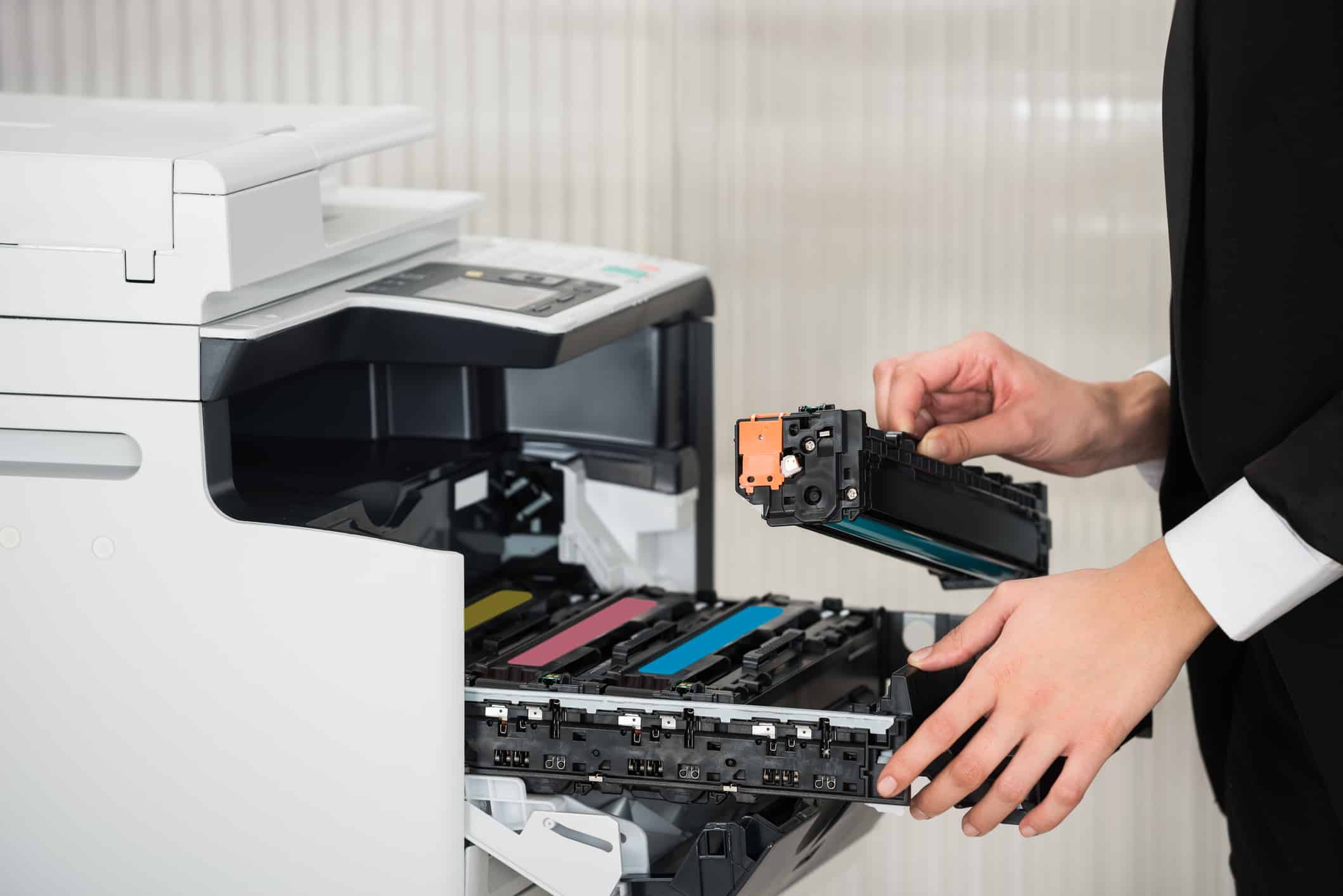
Downgrading HP stock
In the downgrade, Bernstein observes that sales of printing supplies have “declined at a 4% CAGR [compound annual growth rate] since 2011,” and growth is “expected to be negative in both 2019 and 2020” as well. Add it up, and that’s a decade-long trend of negative growth in printer ink, which was once a mainstay of its business.
“We worry,” writes Bernstein, “that printing may be facing greater structural headwinds from the shift to digital and increased pressure from cloned/remanufactured supplies.”
What it means to HP
How big of a deal is this for HP? That’s not easy to discern right off the bat, as the company doesn’t break out “printer ink” as a separate business, instead lumping it in with sales of printer hardware. Still, if you review the printing division’s numbers from HP’s quarterly reports (as helpfully collated for us by our friends at S&P Global Market Intelligence), the trend certainly doesn’t look great.
Quarter over quarter, printing sales declined in each of the last three quarters, with the latest Q3 earnings report showing a 5.3% decline. And sales of printer supplies such as ink were down even more — 7%, according to management.
Printing supplies in general make up 64% of sales from the company’s printing division. Accordingly, even if overall printing sales were up in the last couple of years, the downturn in ink sales appears likely to limit, if not absolutely prevent, growth in printing sales.
As Bernstein terms it, printer ink appears to be a “melting ice-cube,” and one that could swamp HP’s attractiveness as a stock.
A bull case for HP
And yet, even if that’s all true, I still see reasons to like HP stock. For example, sales at HP’s personal systems division (basically, PCs) grew a respectable 13% last year, faster than the growth in printing sales and more than enough to offset declines in “supplies” revenue.
Analysts aren’t looking for any kind of spectacular growth out of HP — 6.7% annual earnings growth is the consensus. But that actually looks like plenty of growth to justify the stock’s price-to-earnings ratio of 6.7, especially when it’s viewed in light of the company’s strong free cash flow (better than reported net income), its almost-zero net debt load, and its generous dividend.
HP pays its shareholders 3.4% annually in the form of dividend checks — about 70% above the market average. And the company’s payout ratio (the percentage of profit required to cover the dividend) is a modest 23%, leaving plenty of room for improvement.
And with all the cash HP is bringing in, there’s plenty of money to pay for further improvement.
S&P Global data shows that over the last 12 months, HP generated nearly $4.4 billion in positive free cash flow, a number that’s been growing for three years straight (despite the problems with sales of printer ink). The stock is valued at just 6.4 times free cash flow; I see HP’s dividend already paying for about half that valuation, and the modest growth rate more than justifies the other half.
Even if it’s not growing by leaps and bounds anymore, HP stock still looks pretty good to me.