Investing in stocks is not just about making the most money. You need to set realistic goals for each stock investment. At the same time, you should reduce the downside risk of your portfolio as much as possible.
First, by buying a stock, you are buying a piece of a company, and so become an owner. You then share the profits of a company if it’s doing well, or you share the loss if it’s losing money.
Second, stock prices are volatile. Behind each stock is a company. Company earnings can be volatile, and bad news or good news can pop up every day, and the market reacts to the news differently. Sometimes, the market can react negatively to seemingly good news. The lesson is not to time the market, but to take whatever opportunity the market gives you.
Choose stable businesses
It’s best to start building your portfolio with companies that have consistently grown earnings and have a track record of returning some of that profit to shareholders in the form of dividends. These kinds of businesses reduce the downside risk of your investments.
No matter how the economy is doing, people still need to use electricity and natural gas. It’s no wonder that three of the top five dividend-growth companies in Canada are utilities. There’s Canadian Utilities Limited (TSX:CU), which has hiked dividends for 43 years, taking the top spot. Fortis Inc. (TSX:FTS) comes in second with 41 years, and ATCO Ltd. (TSX:ACO.X) takes the fourth spot with 21 years.
Another kind of stable business is grocery stores. People need to eat every day. Empire Company Limited (TSX:EMP.A) and Metro, Inc. (TSX:MRU) have both raised dividends for 20 years.
Railroad companies are stable, too. Goods need to be transported to their destinations, and transporting by rail is low cost and safe. Canadian National Railway Company (TSX:CNR)(NYSE:CNI) is the railroad leader with 19 years of dividend hikes.
Lastly, there are real estate investment trusts (REITs) that let you receive rental income passively. The safest yield you can get in that industry is from Canadian REIT (TSX:REF.UN). It has been paying a rising distribution to shareholders for 13 years. REITs are great because they pay you monthly.
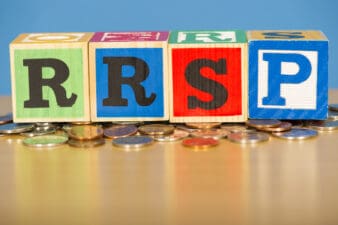
Distributions are unlike dividends, so hold REITs in a TFSA or an RRSP to avoid tax-reporting headaches.
Buy at the right price
By buying at the right price, I mean to buy at proper valuations so as not to overpay for any company. Even for the best businesses, we only want to buy if the prices are fair.
Typically, I look at a company’s price-to-earnings ratio (P/E), compare it to its expected earnings growth in the near future and its past normal P/E (taking out the outliers) from various periods to determine whether its price is fair.
Out of the utilities mentioned above, Canadian Utilities seems to be the best value today. Out of the two grocery stores, Empire Company is at a better value, but I’d expect an average return of 7%. Finally, with Canadian National Railway’s current price of about $77, I expect long-term returns of 9-10%.
In conclusion
Investing for the long term is about buying stable businesses at proper valuations, and holding on for a long time, while monitoring to ensure the business is still doing what you’re expecting it to do.
Looking for the highest returns may not be the best way to invest. Investors intending for long-term investment, should start by maintaining a balanced portfolio of different stable businesses that provide you with an acceptable return of, say, 7-10%. The dividend growth will lead to growing income and the steady capital appreciation of your portfolio.
A growing income is powerful because you can use the money as you see fit, whether to put food on the table, pay the bills, or to reinvest back into the portfolio for more returns and income.