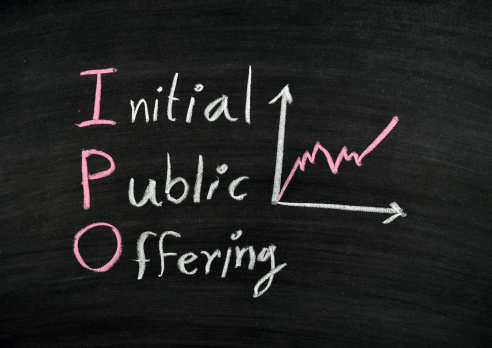
The numbers are in for Canadian-listed IPOs in 2016, and the results aren’t pretty.
There was a total of eight new issues in 2016 raising a total of $466 million — $400 million of which came via the October IPO of Vancouver specialty retailer Aritzia Inc. (TSX:ATZ). PricewaterhouseCoopers LLP (PwC) has been keeping track of Canadian IPO stats since 1998; 2016 was, by far, the worst year yet.
Canadian IPOs 2012-2016
| IPO Year | # of Issues | Funds Raised |
| 2016 | 8 | $440M |
| 2015 | 22 | $3.9B |
| 2014 | 14 | $3.5B |
| 2013 | 30 | $2.7B |
| 2012 | 62 | $1.8B |
Source: PwC
How bad have things gotten when it comes to new issues?
There were 64 IPOs in 2011 and 73 in 2010 — one more than all the IPOs over the past five years. Further, if you back out the largest IPO from each of the years between 2012 and 2016, the IPO market raised just $7.9 billion, or $60.3 million per issue.
However, on a relative basis, the U.S. IPO market didn’t fare much better.
It saw 105 issues raise US$18.8 billion — its lowest number since 2003. The median size per issue was US$95 million — a second consecutive year below US$100 million. This is a telltale sign of a lousy IPO market.
The fact that both countries’ IPO markets were woefully inadequate in 2016 is not the reason I think IPOs are a complete waste of time. Rather, it has everything to do with their performance over the first 12-24 months as public companies.
Stephen Jarislowsky, one of Canada’s greatest investors of any generation, has repeatedly said that you’re better to wait for an IPO stock to come back to earth when they can be bought for less than their initial pricing.
“New issues are typically well promoted,” wrote Jarislowsky in his 2005 book, The Investment Zoo. “My experience is that you can buy nine out of 10 new issues at a lower price a year or two later … I generally avoid new issues…”
So, how have some of the biggest issues performed since going public?
- Aritzia was the top issue of 2016. It went public on October 3 at $16 and is up 8.8% — 410 basis points higher than the iShares S&P/TSX Capped Composite Index Fund (TSX:XIC). However, we’ve only got a single quarter of returns. I expect ATZ to falter in 2017.
- Hydro One Ltd. (TSX:H) went public November 5, 2015, at $20.50 per share. It’s been a public company for 14 months, and it’s up 14.7% — 240 basis points higher than the XIC. It’s definitely lived up to its billing.
- On May 29, 2014, Encana Corp. spun off PrairieSky Royalty Ltd. (TSX:PSK) at $28 per share. It’s up 13.1% after 30 months as a public company. You could have bought PSK stock for less than $28 for a 16-month stretch beginning in July 2015 and ending in September 2016.
- Choice Properties Real Estate Investment Trust (TSX:CHP.UN), the real estate holdings of Loblaw Companies Limited, went public on July 5, 2013, at $10 per share. It’s up 33.1% since then — 520 basis points higher than the XIC. At one point in late 2013, you could have purchased Choice’s stock for less than $10.
- Hudson’s Bay Co. (TSX:HBC) has been a major disappointment since going public on November 26, 2012, at $17 per share. Now trading almost four dollars below its IPO price after more than four years as a public company, investors could have picked up HBC stock for less than $17 for the better part of 18 months after its coming-out party and almost all of 2016. This is definitely the worst performance of the bunch.
Bottom line
Before I started writing this article, I thought the overall performance of the top IPOs would be worse than the XIC. However, after looking more closely at their returns, it’s clear that these five, with the exception of Hudson’s Bay, have done reasonably well.
However, in all five cases, you could have bought their stock on at least one occasion for less than the IPO price. So, if you want to play the IPO game, either sell on first-day gains or buy within 12-24 months when the price is right.
Personally, I wouldn’t touch them, but that doesn’t mean you shouldn’t.