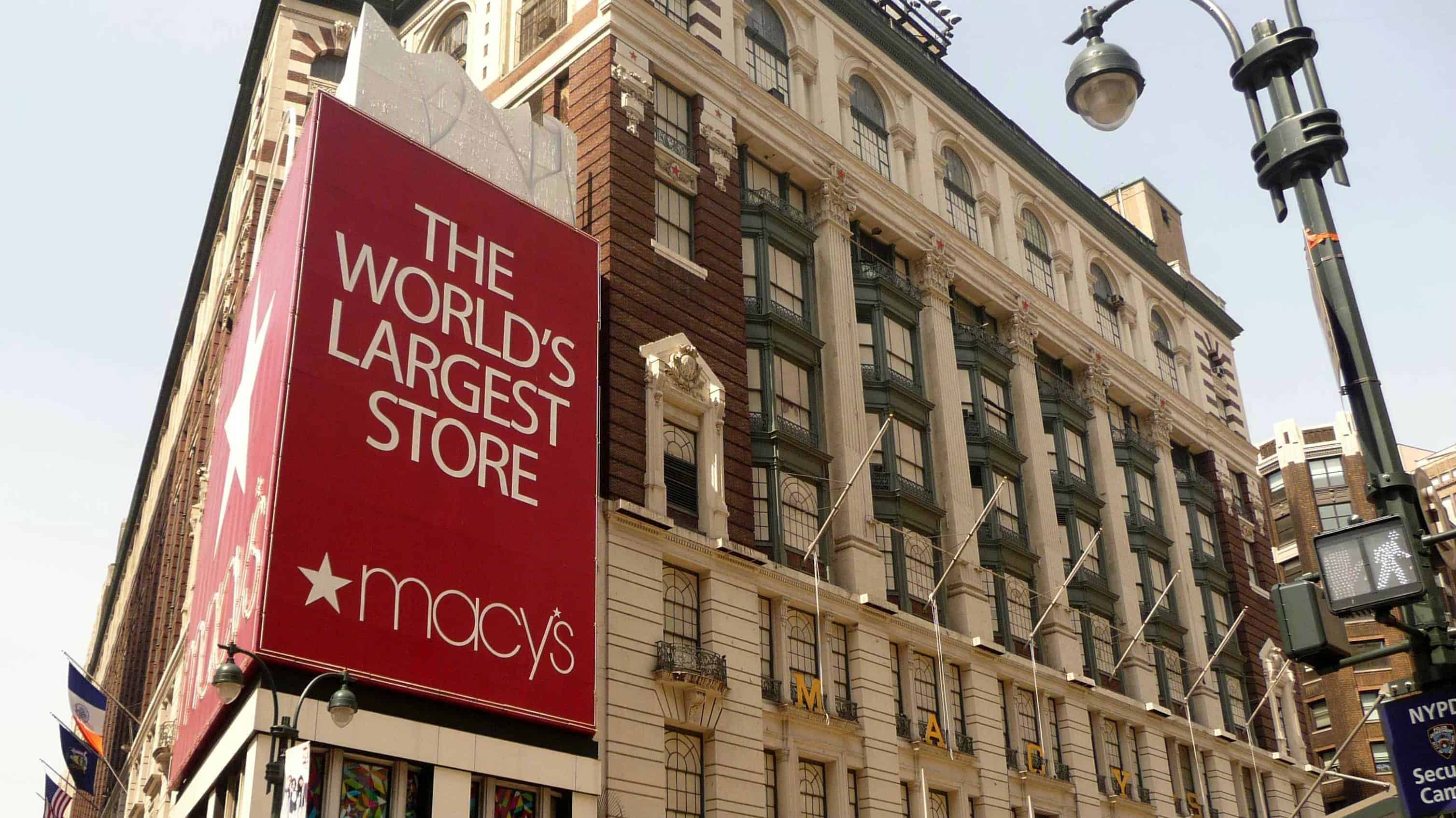
Several U.S. publications in recent days have run articles suggesting there could be 50% upside in Macy’s Inc. (NYSE:M) stock as possible suitors for the department store chain throw their hats into the ring in a winner-takes-all grudge match.
Currently trading around US$33 per share, if the speculation about Macy’s is correct, that puts the total purchase price for the retailer at approximately US$22 billion (market cap of $15.3 billion plus net debt of US$6.1 billion), give or take a few hundred million.
Hudson’s Bay Co. (TSX:HBC) is the only actual suitor at the moment, but many have speculated that Amazon.com, Inc. might also be interested; Amazon’s financial might would definitely put some upward pressure on the ultimate price paid should a deal be consummated.
On February 9, I discussed why it makes sense for HBC to be considering Macy’s. Now I’ll look at how the iconic Canadian company gets there.
Macy’s current trailing 12-month EBITDA is US$2.5 billion, while Hudson’s Bay expects fiscal 2016 adjusted EBITDA of at least US$530 million for a total of US$3.03 billion. At the end of Q3 2016, excluding financials, the average net debt to EBITDA of S&P 500 companies was 1.9, the highest ratio in 10 years.
So, if you double that average to 3.8 times EBITDA, you come up with net debt of US$11.5 billion. Macy’s has US$6.1 billion in net debt and HBC has US$2.1 billion for a combined US$8.2 billion, leaving US$3.3 billion to pay for Macy’s projected market cap of US$15.3 billion.
Hudson’s Bay would have to come up with US$12 billion in financing to make it happen.
That’s where the untapped real estate comes into play.
Activist investor Starboard Value suggested in 2016 that Macy’s real estate could be worth as much as US$21 billion or US$10 billion after taking into account the lease costs of a sale-leaseback arrangement, which would leave Macy’s with little debt while it retains most of its free cash flow.
Personally, I doubt HBC executive chairman Richard Baker would want to part with all of Macy’s real estate in one big transaction, preferring to take the time to extract value from its various Class A properties across the U.S. as it’s done here in Canada.
So, cut that in half, and we’re talking about US$5 billion in shareholder value while retaining the most valuable 50% of its real estate.
That leaves Hudson’s Bay needing US$7 billion to make the deal happen.
With the Saks store valued at US$3.7 billion (US$5,600 per square foot), the Macy’s New York flagship possibly garnering close to US$5.6 billion (one million square feet), and the Lord & Taylor flagship adding another US$655 million, that brings the total potential from these three stores, if sold, to net cash of US$7.7 billion — more than enough to get it done.
Again, I doubt Hudson’s Bay would part with all three of those properties, and it really doesn’t need to.
A more likely scenario would see Baker bring in an investment partner along with its existing real estate partners – –Simon Property Group and RioCan — which would buy preferred shares in a deal reminiscent of the kind Warren Buffett has done for 3G Capital acquisitions such as Kraft Heinz.
Will Hudson’s Bay pay $50 per share? I’m sure it doesn’t want to, but it can if it has to.