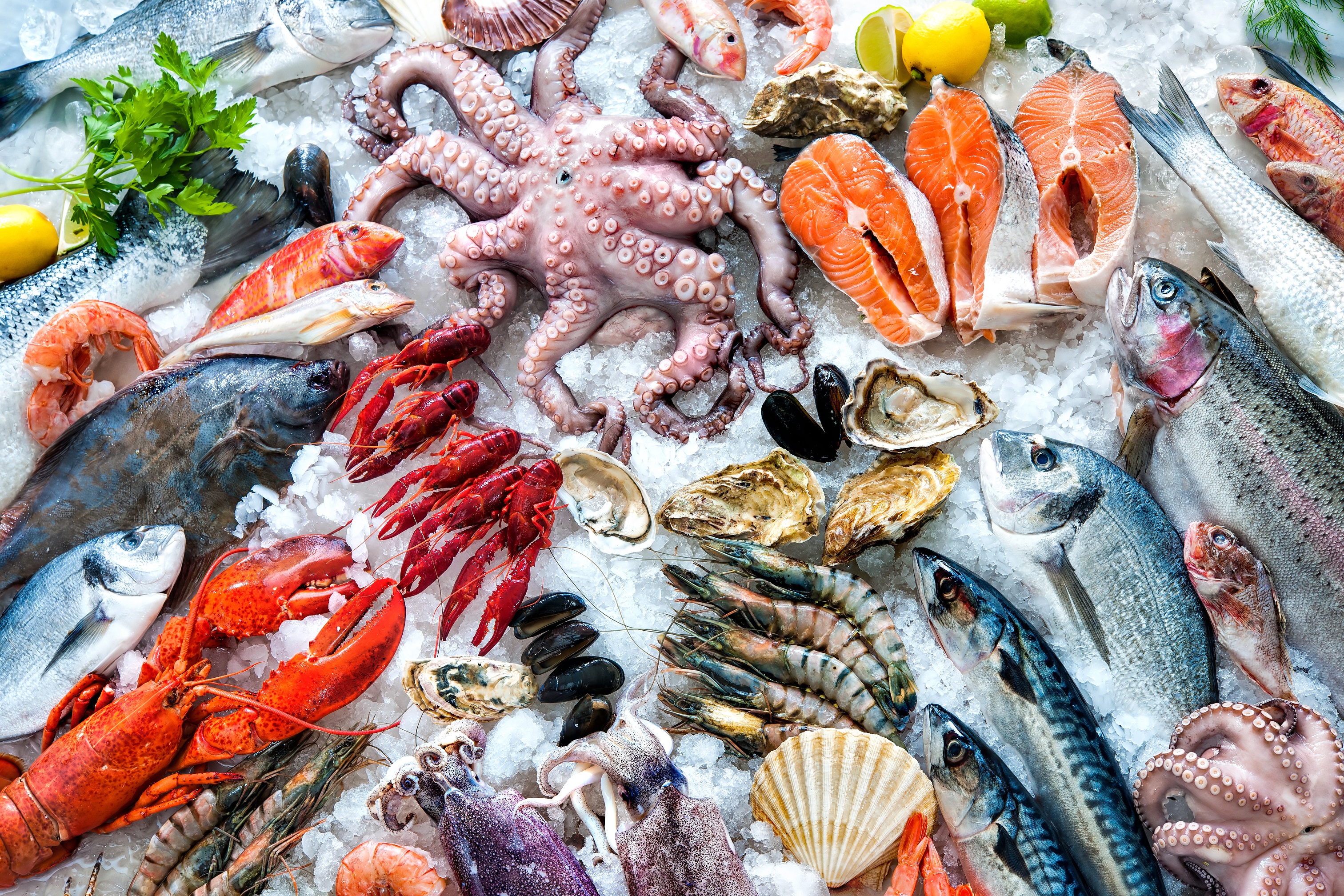
Clearwater Seafoods (TSX:CLR) and High Liner Foods (TSX:HLF) have three things in common.
They’re both leaders in Canadian frozen seafood. They’re both based in Nova Scotia. And they’re both small-cap stocks.
Only one of them, however, is worth owning.
The pros and cons of Clearwater Foods
Clearwater announced its Q2 2018 earnings August 8.
Despite a 4% drop in revenues to $148.1 million in the quarter, it managed to generate a 10.7% increase in adjusted EBITDA to $30.5 million or 20.6% of sales — 210 basis points higher than its adjusted EBITDA margin from a year earlier.
While many Canadian businesses could suffer under Trump’s tariff fight with China, Clearwater is unlikely to be one of them.
That’s because the company sells its products in more than 40 countries, including China. That’s because it gets most of the fish it sells from the markets where it sells rather than shipping them halfway around the world.
“There really isn’t any risk on our radar relative to U.S.-Canada tariffs and China-U.S. tariffs,” a Clearwater representative said in its Q2 2018 conference call. “You can’t speculate on how U.S. suppliers and Chinese suppliers will react to those tariffs. Just about every species of seafood is growing in the China market, and demand appears to be unstoppable.”
China accounted for 17% of the company’s overall revenue in the second quarter, tied with the U.S. for Clearwater’s biggest market by country. By region, Asia accounts for 39% of its revenue; Europe accounts for 31% of overall revenue, and North America accounts for 30%.
That’s a nice trio of geographic revenue streams.
The two biggest negatives when it comes to Clearwater are inconsistent profits and significant debt — the latter is the bigger of the two worries.
At the end of the second quarter, it had $464.5 million in net debt or 133% of its market cap. On a rolling 12-month basis, that’s a leverage ratio of 5.1 ($464.5 divided by adjusted EBITDA of $90.9 million).
The pros and cons of High Liner Foods
A recent article appeared in the Globe and Mail about its chairman and former CEO Henry Demone, who ran the fish-processing company for 23 years until stepping aside in May 2015.
Unfortunately, his second in command Keith Decker was fired after two years in the top job. Demone stepped back into the CEO role until this May when High Liner hired Rod Hepponstall, a 25-year veteran of the North American food industry.
Hepponstall joins the company with its stock in free fall. So far this year, it’s lost 47% of its value. Hence the 7.7% dividend yield.
But it’s not all bad.
It generates 74% of its revenue from the U.S. market and the rest from Canada. Regarding the distribution channels, it does 56% in grocery stores and the remaining 44% in food service.
In May 2017, High Liner acquired a U.S. distributor of frozen shrimp for US$100.6 million. Profitable frozen shrimp now accounts for 18.4% of the company’s annual revenues, second only to frozen cod.
Over the past 10 years, High Liner has grown dividends by 18% compounded annually from 13.5 cents in 2009 to 58 cents in 2018. If you’re worried about its payout ratio, over the past five years, it’s never risen above 55%.
The big negative for the company is that it imports a lot of fish from China for U.S. consumption, and those fish could face significant tariffs. Estimates put those tariff costs as high as US$24 million.
However, the new CEO is in the middle of implementing a 12-18 month restructuring to make the company more efficient. I’m sure it will use this process to examine where it sources its fish and how best to deal with potential tariffs in the future.
While High Liner also maintains a leverage ratio greater than five times adjusted EBITDA, the company plans to reduce that to a multiple of three times adjusted EBITDA as the year progresses and into 2019.
Of the two stocks, I like High Liner better because I believe the dividend is sustainable, which means the company will pay you to wait for it to improve its business.