When I woke up this morning, I was in a bad mood. Not only because a second case of the coronavirus was reported in Canada, but also because my portfolio tanked for the fifth consecutive day.
You may be wondering why I haven’t closed my positions yet. That’s because I use a value approach to investing, whereby I buy and hold stocks for years –and potentially decades.
For those of you who take a more speculative approach to investing, you may be worried about how the coronavirus will affect your portfolio. Truth be told, it could be very detrimental.
The economics of the coronavirus
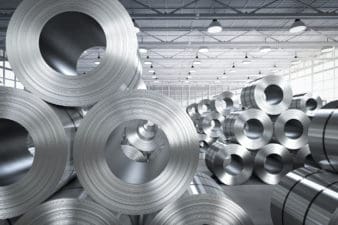
While the threat of being infected by the coronavirus in Canada remains very low, my concern is the impact it is having on the Chinese economy, which is a primary purchaser of Canadian raw materials.
The BBC recently reported that Chinese companies are telling its workers to stay at home. The article goes on to report that the government of the city of Suzhou (a major manufacturing hub) has closed all businesses until at least February 8. At the current rate of transmissibility, more cities have the potential to follow suit.
According to the Government of Canada, China represented our second-largest source for exports in 2018 with $29 billion of goods delivered to the country.
Even a 10% reduction in exports (amounting to $2.9 billion) would have a material impact on Canada’s economy, potentially enough to trigger a domino effect leading to a recession.
Given the fragility of Canada’s commodity and oil and gas sector, we simply can’t afford a reduction in demand. Investors holding stocks in these industries (myself included) are particularly vulnerable.
Many natural resource and commodity companies list China as a top customer, which means share prices have the potential to drop significantly.
If you’re currently holding shares in natural resource or commodity stocks, I recommend you don’t sell. Rather, wait until the price is low enough and have some money set aside to buy in and average down.
That said, I am assuming the companies you invested in are financially sound and it is not pure speculation. Given that it is the latter, you may want to reconsider holding the stock.
Investing during the coronavirus outbreak
Interestingly, one of the best times to invest in stocks are during times of crisis. Take the 2008-2009 recession as an example whereby the Dow Jones Industrial Average and S&P 500 posted double-digit declines. Admittedly, some companies deserved the correction in its valuation; however, those that were financially sound started trading at a discount.
Thus, I don’t recommend investors avoid the stock market during this time. Rather, I would suggest setting aside some money in your TFSA or RRSP and finding companies with solid financials to invest in. Follow the stock and wait for an opportunity to buy in at a discount to current prices.
One stock I would recommend to follow through 2020 is Aritzia (TSX: ATZ). This underrated stock has performed well in an industry that is struggling to stay afloat.
The company reports year-over-year increases in revenues coupled with a 60% unused credit facility, giving it ample liquidity to grow and deliver value to investors.
Foolish takeaway
In the wise words of Warren Buffett, it is better to be “fearful when others are greedy and greedy when others are fearful.” I will leave you investors with this quote to ponder. Fool on!