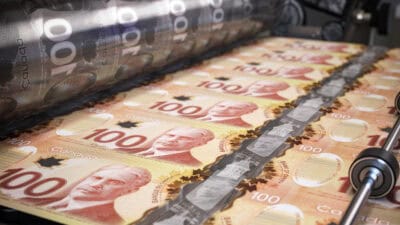
The Canada Emergency Response Benefit (CERB) was launched by the federal government through the Canada Revenue Agency (CRA) in March 2020. This was in response to the immense financial pressure put on Canadians due to the COVID-19 pandemic and subsequent lockdowns.
The CERB program was expected to expire for many recipients in July. However, Justin Trudeau and the federal government elected to extend payments for those who need it for another eight weeks. Moreover, there are murmurs that another extension is being considered.
Unfortunately, the CERB does count as taxable income. That means that recipient will have to consider how much they will owe going into the 2021 calendar year. Today, I want to look at how those receiving CERB payments can mitigate their tax bill going forward.
CERB: Make sure you fulfill eligibility requirements
In early June, I’d discussed how recipients could avoid having the government take back their $2,000/month payments. It is extremely important for applicants to ensure that they fulfill eligibility requirements for this program.
Failure to comply with these prerequisites may bring much harsher penalties than other errors may carry. Recipients may end up paying much more than expected for failing to read the fine print.
This step is one that applicants need to get out of the way from the very beginning. Those who jumped the gun should find out where they made the mistake and try to correct it as soon as possible.
Make note of your income before and after payments
As of early July, there were more than eight million Canadians who had received CERB payments. These recipients have come from diverse income backgrounds. Some are salaried employees who were forced out of paid work due to the pandemic. Others are self-employed and have had to shutter their business in the face of the outbreak.
Your income before applying was part of the eligibility process. However, once you are back to work your income after receiving CERB payments will also be very important. For example, an employee who earned $8,000 until March 31, 2020 and collected $12,000 in CERB for 2020 would bring the total income to $20,000. This individual would have to set aside 20% of their CERB to cover their 2020 tax liability.
Life after the CERB
Earlier this month, I’d discussed whether the CERB could be extended into 2021. Many Canadians, particularly those in Ontario, are in favour of an extension or a transition to a guaranteed income. However, CERB recipients can’t count on this right now. Rather, they should look to generate income through other means.
Hydro One is a great dividend stock for investors on the hunt for reliability and steady income. Utility stocks have proven robust in the face of the COVID-19 pandemic.
Shares of Hydro One have climbed 12% in 2020 as of early afternoon trading on July 27. The stock last paid out a quarterly dividend of $0.2415 per share, which represents a 3.6% yield.