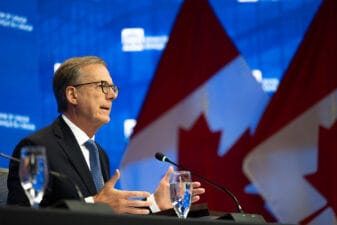
This week, the Financial Services Regulatory Authority (FSRA) of Ontario announced new measures to standardize the financial advisory business across the province. The objective is to set a minimum standard for people who offer financial advice to ordinary savers and investors.
Here’s a brief overview and the top three takeaways from this regulatory move.

Image source: Getty Images
What are the new rules?
The FSRA’s new rules are focused on the titles of “financial advisor” or “financial planner.” Until now, there were no minimum requirements to use these titles which meant banks and investment firms could use the title for anyone. Now, the new rules will implement an accreditation process over the next four years.
Anyone seeking these titles will now have to meet minimum standards for education and be subject to oversight and disciplinary by a new governing body.
Takeaway #1
The fact that there were no minimum standards for such an essential role is a surprise. In much of the developed world, financial advice is tightly regulated. That means savers and investors can expect a minimum level of care, insight, and professionalism from their advisors. They could also expect a streamlined process of addressing grievances and minimizing conflicts of interest in the process.
These new rules mean investors, at least in Ontario, can now expect advisory services that meet global standards.
Takeaway #2
Investors living in other provinces may want to consider whether their own financial planner or advisor meets these minimum standards. Ontario’s move could encourage regulatory bodies in other provinces to tighten the rules, too. All Canadians deserve financial advice that is delivered with professionalism and in good faith.
Takeaway #3
The fact that these advisory roles were lightly regulated for decades could indicate that personal finance isn’t as complicated as it might seem. Basic financial principles, such as lowering debt, increasing savings, investing in index funds, and reinvesting dividends, are all easy to implement.
In fact, these strategies could outperform the professionals.
iShares S&P/TSX 60 Index ETF (TSX:XIU) has delivered a 19% return over the past year, along with a 2.4% dividend yield. Over the past five years, the index ETF has delivered a compounded annual growth rate of 10.4%. That’s excellent performance for what could be the easiest strategy for retail investors to implement.
While everyone needs professional advice occasionally, you could certainly be a successful investor with a little independent research and a disciplined strategy for the long term.
Bottom line
The FSRA of Ontario has announced new rules for financial planners and advisors. This standardizes the industry and subjects advisors to more oversight. Investors in the province can now expect a level of service that is on par with other major economies.
Seeking out professional advice is certainly a good idea. But investors and savers can still be successful with a simple passive investment or dividend-reinvestment plan. A little research, discipline, and patience go a long way. That’s all you need to cement financial independence.