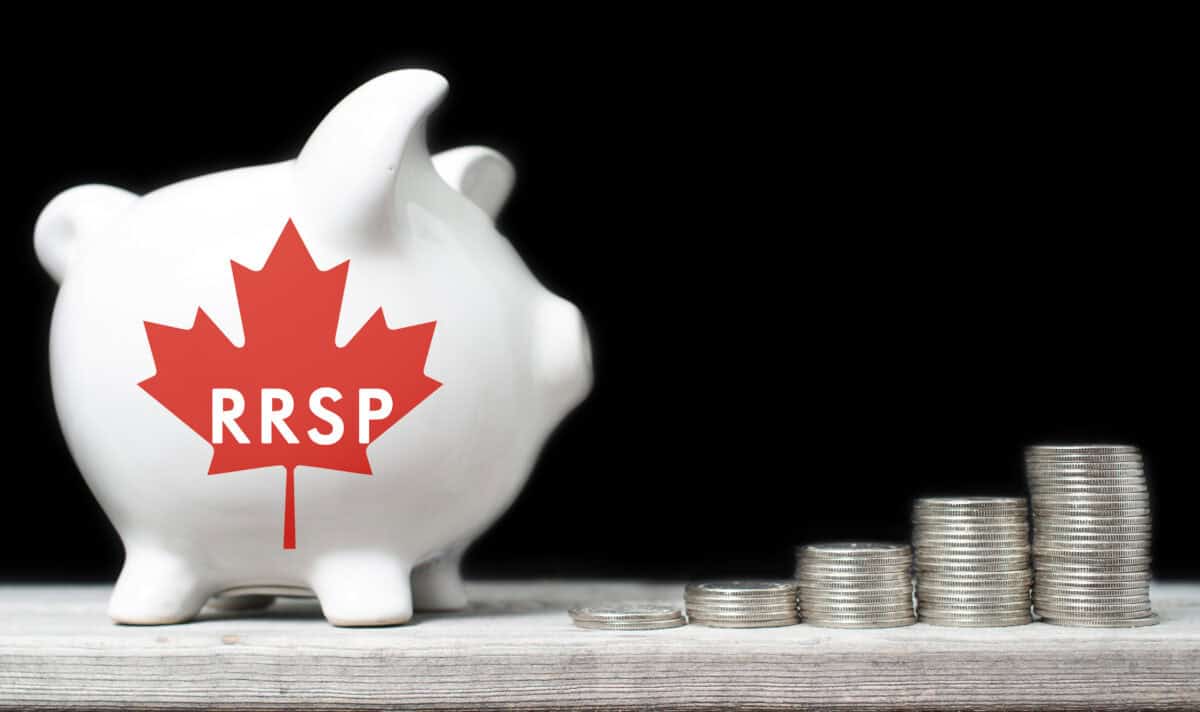
Turning 50 is often a financial wake-up call. Retirement may still be more than a decade away, but the timeline is close enough that investors naturally begin asking whether their retirement savings are on track. For Canadians, the self-directed Registered Retirement Savings Plan (RRSP) is likely to become an increasingly important part of that calculation.
There is no universal RRSP balance that every 50-year-old should have. Several surveys put the average RRSP balance for Canadians around age 50 at roughly $120,000 to $150,000, while the median is about $70,000.
While these numbers provide context, they are poor measures of whether an individual is financially prepared for retirement. Retirement needs depend on expected spending, housing costs, desired lifestyle, retirement age, and the income sources available later in life.
Source: Getty Images
What your RRSP balance really means
A household with a relatively modest RRSP balance may still be in a strong financial position if it owns a substantial amount of home equity or has access to a defined-benefit pension. Conversely, someone with a larger RRSP could face a significant savings shortfall if they expect high retirement spending and have few other income sources.
Pension income is particularly important when evaluating an RRSP balance. Workers with a government or corporate defined-benefit pension may need less personal retirement capital because part of their future income is already established. For investors without a pension, however, the RRSP may need to carry more of the burden of funding retirement.
How to catch up on retirement savings
For investors approaching retirement and concerned that their savings may not be sufficient, increasing contributions is an obvious first step. At age 50, however, the focus should also shift toward making existing capital work harder. A portfolio built around companies that can compound earnings, dividends, and share prices can improve the long-term retirement outlook.
High-quality dividend stocks can be particularly useful within an RRSP strategy. Companies offering reliable and growing dividend income and capital appreciation can provide an effective source of long-term total returns.
Canadian Natural Resources (TSX: CNQ) is one such TSX-listed company. The energy producer has a strong record of returning capital to shareholders, supported by substantial cash flow generation and a diversified portfolio of long-life assets. Its dividend recently rose to an annualized $2.50 per share. Moreover, it extended its streak of consecutive annual increases to 26 years. Over that period, the dividend has compounded at an impressive 20% annually.
Canadian Natural Resources has also delivered substantial share-price appreciation, with its stock gaining more than 73% over the past year and compounding at approximately 34% annually over the last five years.
CNQ’s underlying asset base provides a solid foundation for future cash generation. Canadian Natural’s diversified portfolio of long-life, low-decline oil and gas assets supports relatively stable production while limiting the need for aggressive reinvestment to maintain output. Further, its disciplined capital allocation, debt reduction, and selective acquisitions position it well to deliver solid free cash flow across commodity cycles.
Looking ahead, CNQ’s substantial proved reserves and large undeveloped land provide significant runway for growth.
The bottom line
At 50, the right RRSP balance is less about matching an average and more about whether your savings, pensions, and other assets can support your retirement goals. If your RRSP is behind, increasing contributions and focusing on high-quality investments with strong long-term total-return potential can help close the gap. Dividend-paying companies such as Canadian Natural Resources offer an attractive combination of income, growth, and capital appreciation.
Ultimately, the most important step is to assess your personal retirement needs now and build a disciplined strategy around them.