Back in 1998, author Harry Browne wrote Fail-Safe Investing, a book that introduced the world to a concept called a permanent portfolio. Browne argued that this powerful asset allocation model as a way for investors to participate in upside while the market goes up while protecting themselves in the event of a downturn.
The permanent portfolio consists of the following: 25% of assets in growth stocks (an S&P 500 ETF is an acceptable substitute): 25% of assets in precious metals; 25% of assets in long-term government bonds; and 25% of assets in cash.
It’s easy to see some of the issues with this portfolio. For instance, investors in the permanent portfolio have significantly underperformed over the last few years. Stocks have raced higher — especially in the United States — while gold has languished. Low interest rates have kept government bonds from providing much more than stability. And a 25% cash weighting would have been a significant drag.
But investors should be aware of where we are in the financial cycle. It’s unlikely that the next five years will see investments perform nearly as well as the previous five years. The permanent portfolio really shines during periods of weakness. Investors rush into gold stocks and government bonds when the market sells off. And if markets continue to do well, they still have exposure to stocks.
A permanent portfolio for Canadian investors
Canadian investors looking to build their own permanent portfolio might have something that looks a little like this: 25% in a large TSX 60 ETF (like the iShares S&P/TSX 60 ETF (TSX:XIU); 25% in a basket of large-cap gold stocks like Goldcorp Inc. (TSX:G)(NYSE:GG); 25% in a government bond ETF like the iShares 1-5 Year Laddr Govt Bd ETF (TSX:CLF); and 25% in cash, invested in short-term GICs or high-interest savings accounts.
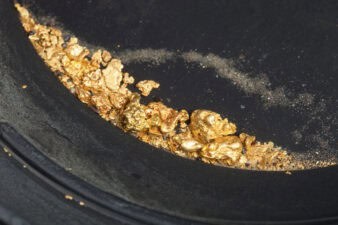
Browne recommends that investors hold physical precious metals versus a gold stock — he specifically likes gold coins — but I think investors should choose Goldcorp instead. First, a producer like Goldcorp will do much better than physical gold when the price of gold does eventually go higher.
This is because of operating leverage, which ensures even a smallish move in gold will be amplified. Remember, it costs the same to get gold out of the ground no matter what the price of the commodity does.
Goldcorp also has an ambitious five-year growth plan, which should see nice production growth. Management wants to then use that increased production to pay down debt, further solidifying the balance sheet for additional opportunities.
Simply put, Goldcorp is one of the best gold stocks out there. It would be a fine substitute for owning physical gold. Besides, owning gold coins comes with one other major downfall. You have to keep them safe. That can be as simple as renting a safety deposit box for smaller investors, or perhaps getting a safe at home. Still, it’s an extra step.
Is the permanent portfolio for you?
The whole point of the permanent portfolio is that it does well during times of weakness. The precious metals exposure also offers a built-in inflation hedge, which provides certain investors peace of mind.
But there are ways to protect your portfolio without putting 50% of it into ultra-safe assets. Investors can load up on dividend-paying blue chip stocks, which provide dividends and a certain amount of price protection during rough times. It isn’t very hard to protect your portfolio while maintaining equity exposure.
I’m also not a big fan of the gold exposure. There are ways to protect against inflation without buying a precious metal that produces no income. And while I think gold is probably due to head higher, commodity prices are always tricky. I can’t predict the price of gold.
Even after saying all that, I can certainly envision a future where the next few years look very good for investors who embraced a permanent portfolio today. After such a long bull market, it’s probably time to get defensive.