Imagine…
It’s 1973. America is mired in inflation. The public is turning against the Vietnam War. And the Dow Jones Industrial Average just closed below its 200-day moving average, a bad omen in some investing circles.
All the while, Warren Buffett is quietly buying shares of The Washington Post. By June, he has purchased 467,000 shares at an average price of US$22.75. His total investment is worth over US$10 million. What could possibly have him so excited amongst all of the doom and gloom?
Warren Buffett’s favourite income investment
While it’s hard to believe now, a world-class newspaper like The Washington Post was once a wonderful business.
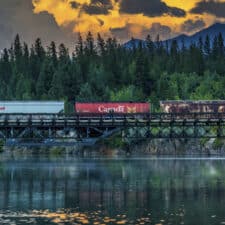
Before the Internet and local television broadcasting, there was no other way for businesses to get their message out. In essence, the newspaper was like a “toll bridge”, connecting companies with their potential customers. The publisher could charge whatever advertising rates – tolls – it desired, and businesses couldn’t do anything about it.
Take a glance through Buffett’s portfolio and you will find many examples of toll bridge businesses. In 1969, he bought the Omaha Sun, along with a group of weekly papers. In 1977, he purchased the Buffalo Evening News and tried to bankrupt his only competitor. When his rival went out of business a few years later, Buffett’s newspaper started making huge monopoly profits.
And Buffett’s toll bridge businesses extend beyond the newspaper industry. In 1979, he purchased ABC television when there were only three networks. The American Express Company is another famous Buffett holding. It collects fees from merchants on millions of transactions.
Notice how these companies all have the same characteristics. They provide a basic service. Their upfront costs are enormous. And because it’s so difficult to enter the business, they’re hard to compete against.
But here’s the kicker: If you’re looking for steady income, there are no better businesses in the world. Toll bridge businesses often throw off big globs of dividends. Maintenance costs are only a tiny fraction of revenues; the rest can be paid out to its owners.
Toll bridges are an excellent hedge against rising prices, too. Revenues increase with inflation. That means any upfront costs can be financed and paid back in devalued dollars over time.
Unfortunately, few toll road businesses are publicly traded. Because these assets are so valuable, most are privately held. However, you can still find them if you know where to look. For example…
Ports: Westshore Terminals Investment Corp (TSX: WTE) owns a port just south of Vancouver. If you want to ship coal out of Western Canada, you have to pay this terminal owner. On every tonne of coal loaded, the company charges a fee that it passes on to investors.
Pipelines: My favorite kind of toll bridge is a pipeline company, such as TransCanada Corporation (TSX: TRP)(NYSE: TRP). These businesses earn a fee on every barrel of oil and gas shipped through their network. It’s an essential service that costs next to nothing to maintain.
Stock exchanges: The TMX Group Limited (TSX: X) operates stock and option markets here in Canada, including the Toronto Stock Exchange. Their business is to connect buyers and sellers. Regardless of which way the market turns, the TMX Group earns a toll on each transaction.
What Warren Buffett can teach us about dividend investing
Of course, Buffett would himself admit that the newspaper business isn’t what it used to be. Technological change has wiped out what was once a highly profitable industry. So while toll bridge businesses certainly are not risk-free, Buffett has still been able to count on them to produce reliable profits.
Ports. Pipelines. Stock Exchanges. Our modern society couldn’t function without these assets. Day after day, these toll bridges collect thousands of dollars in fees. And because they throw off so much cash, they are some of the most dependable dividend payers around.