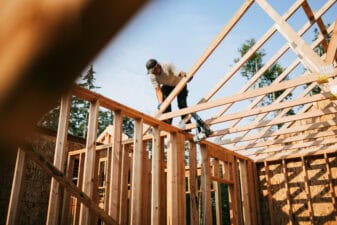
The debate over whether or not Canada is caught in the midst of an epic housing bubble continues to rage, and one regional market where housing prices are marching ever higher is Vancouver. In recent years it would be difficult to find another asset class that has performed as well as Vancouver real estate. With signs that prices will climb higher, here are three startling facts about Vancouver’s housing market.
Now what?
Firstly, average housing prices continue to rise despite the impact of weak commodity prices and slowing economic growth.
For the month of June the average house price in Vancouver shot up by 11.3% compared with the same period in 2015 and was marginally higher than the national average increase of 11.2%. This is a stunning gain, particularly with Canada’s first-quarter GDP missing expectations as the economy continues to feel the impact of weak crude and other commodity prices.
For many analysts and economists, this indicates that Vancouver’s housing market is now firmly caught in the midst of an irrational bubble that, according to economist Paul Ashworth of Capital Economics, can only end in tears.
Secondly, according to the Canadian Real Estate Association, the average house price in Vancouver is now worth over $1 million.
This is quite a startling fact, especially considering that the average price has now almost doubled from where it was a decade ago. This has led to a myriad of claims that Vancouver real estate is now unaffordable for anyone but the most cashed-up buyer.
Finally, data recently released by the government of British Columbia shows that foreign investors only made up a small portion of sales made in June.
For some time now, analysts and market pundits alike have claimed that foreign investment, particularly from China, has been a key driver of perpetually rising housing prices in Vancouver. In response, the government of British Columbia instituted range of methods to collect additional data in order to gain greater insight into implementing measures to curtail rising prices.
Surprisingly, for a 19-day period starting from June 10 of this year, only 3% of all deals made in Vancouver involved foreign buyers, amounting to approximately 5% of the value of all transactions. While some economists claim this may be sufficient to move prices, these numbers are not of the magnitude to be expected if foreign investment is the sole reason for a real estate bubble.
Nonetheless, there has been considerable criticism of these numbers. The primary issue is that such a small sample size does not give a true indication as to the state of the market.
So what?
Whether a housing bubble exists is open to debate, just as are claims that it is poised to burst, but one thing that is certain is that housing prices in Vancouver continue to rise. In fact, a Central 1 Credit Union report from earlier this year predicts prices will continue to rise until at least 2018. There are multiple reasons, such as growing demand and constrained supply, that support this outlook. Interestingly, one Canadian bank appears to be taking a similar view.
By the end of the second quarter 2016, regional player Canadian Western Bank (TSX:CWB) had grown its uninsured mortgage exposure to British Columbia by 27% year over year over $747 million. While it is certainly difficult to predict what the outcome may be with plenty of signs that prices could tumble or rise, it indicates that investors need to take a balanced approach to investing and diversify across asset classes.