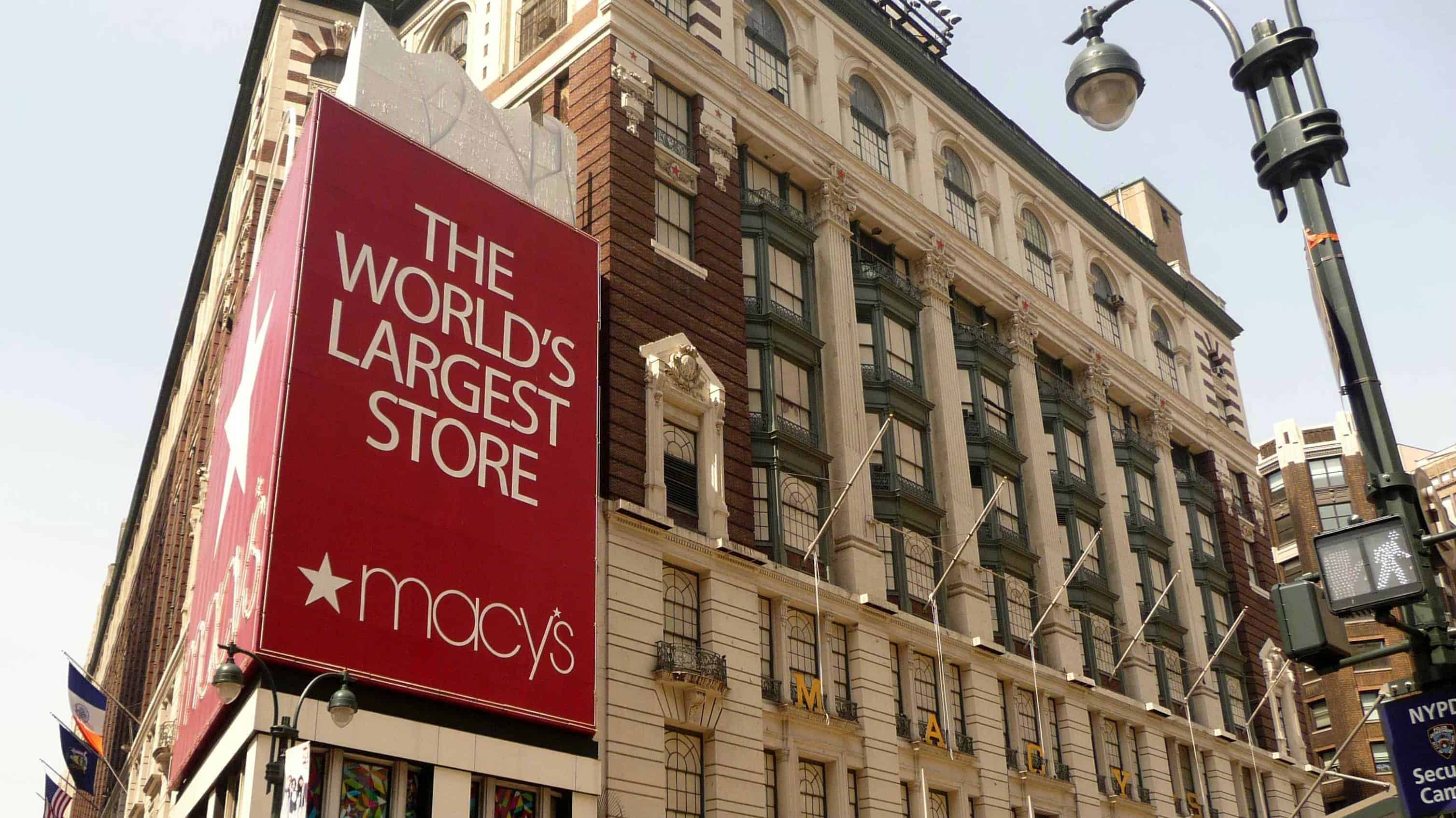
Acquisitions are always exciting times, whether that’s positive or negative excitement. And when news broke that Hudson’s Bay Co. (TSX:HBC) was in talks to acquire Macy’s Inc. (NYSE:M), investors clamoured to understand the deal. Why would Hudson’s Bay, which has a market cap of a little over $2 billion, be looking to acquire Macy’s, which has a market cap of more than US$10.3 billion?
It has a lot to do with real estate. While it might be confusing, what with Hudson’s Bay being a retail company, the reality is that large retail companies tend to own quite a bit of real estate. And Macy’s is no different. That real estate is what Hudson’s Bay is looking to acquire.
To better understand the deal, it helps to look at the sort of acquisitions that Hudson’s Bay has made, starting with its own acquisition. NRDC Equity Partners, a retail and real estate investment firm, bought HBC in July 2008, combining the store with its portfolio of Lord & Taylor stores. In 2013, it acquired Saks, Inc., operator of Saks Fifth Avenue and the Saks Fifth Avenue OFF 5th brands. In 2015, it acquired Galeria Kaufhof, a German department store chain.
The Saks acquisition stands out in particular. It paid US$2.9 billion for the entire chain. Fast forward to November 2014, and Hudson’s Bay took out a mortgage against the flagship store on 5th Avenue in Manhattan, valuing the location at US$3.7 billion.
So now we look at what Macy’s has to offer…
Macy’s is currently trading at a little under US$32 per share with a market cap of US$10.34 billion. In January 2016, Starboard Value, an activist investor, put the Macy’s real estate holdings at US$21 billion on top of its enterprise value, then approximately US$35 a share. That means investors are undervaluing the real estate Macy’s holds quite significantly, which is a unique opportunity for Hudson’s Bay.
Naturally, this should excite investors, right?
Not exactly … While Hudson’s Bay is very much interested in the real estate rather than the retail brands (though it might take those too), the stock also hasn’t been rewarded for its real estate deals. For example, when Saks was acquired in 2013, the stock was trading at a little over $16 a share. By summer 2015, the stock had risen to over $28 a share, which is a nice return. However, since then, the stock has been on a downward spiral, trading at a five-year low during January.
The fundamental problem is that retail brands are suffering quite a bit, and Hudson’s Bay is no different. In September, its guidance was $15.9 billion in sales. In November, it had cut that to $149.9 billion, and now the company is anticipating 2016 sales of $14.4 billion. Because of this, I think investors should avoid this stock for the time being.
I have a different approach if you want to invest in Hudson’s Bay real estate. RioCan Real Estate Investment Trust (TSX:REI.UN) and Simon Property Group Inc. (NYSE:SPG) have each launched a joint-venture with Hudson’s Bay. These REITs, which specialize in retail real estate, are likely better investments. And as those joint ventures go public, these other companies (which aren’t burdened with having to sell real estate) should experience nice bumps.