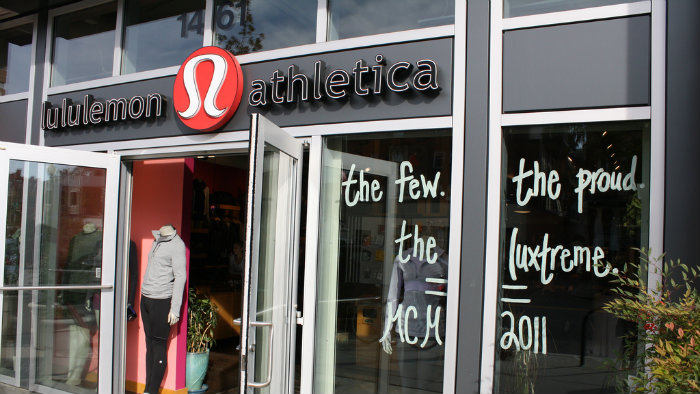
Lululemon Athletica Inc. (NASDAQ:LULU) delivered its fourth-quarter earnings March 30. While they were good and generally better than analyst expectations, its outlook for the first half of 2017 wasn’t nearly as rosy, scaring the heck out of investors and, in the process, knocking more than 20% off the price of its stock.
The shorts will argue that Lululemon’s growth is slowing, making its stock expensive even at 25 times earnings; the longs will argue that Lululemon is operating in a retail environment that’s incredibly fragile, and setbacks like the first-quarter outlook are part of the business — it’s a bit like two steps forward (Q3 2016) and one step back (Q1 2017).
Things will improve, but not without a little volatility in its stock price. The company’s stock had double-digit price swings in seven out of the last eight quarters. It’s not going to suddenly become a low-volatility stock. That said, I do believe patient investors who ride out this storm will be rewarded in the future.
In December, I discussed why I thought there was a more than 50/50 chance that LULU stock would hit $100 in 2017. Given its stock would now have to double over the next nine months, the odds of hitting $100 in 2017 have been reduced to zero.
So, can Lululemon reach $100 by the end of 2018, 27 months from now?
Canaccord Genuity lowered its 12-month price target on LULU stock from $45 to $41 on Lululemon’s guidance, maintaining its “sell” rating on its stock. It clearly doesn’t think so.
I disagree. Here’s why.
The good
- Total comparable sales increased 7% in the fourth quarter (constant dollars) — 170 basis points better than analyst estimates.
- Men’s comparable sales grew 20% in the quarter; its men’s business should hit US$1 billion by 2020.
- The Chinese activewear market is valued at US$28 billion and growing. Lululemon plans to hit $1 billion in revenue outside North America by 2020; China will be a big part of that.
- Gross margins in Q4 2016 improved 390 basis points to 54.2%. For the year, they improved 280 basis points to 51.2%, its best gross margin since fiscal 2013.
- It finished fiscal 2016 with free cash flow of $236 million — a company best.
The bad
Lululemon and its competitors (Nike, Under Armour, VF Corp) are having fits right now meeting consumer needs. For Lululemon, it’s a case of delivering too little in the way of bold colours to its core customer; others speculate that denim continues to find its way into the shopping bags of consumers, taking market share from athleisure wear manufacturers like Lululemon.
“We’ve clearly identified the issues: an assortment lacking depth and color for spring,” said CEO Laurent Potdevin in Lululemon’s conference call. “Our teams have been course-correcting issues, with early indications reflecting positive impact on performance. We will see more color in selected styles as early as next week.”
The company flat out blew its buying in the first quarter. You’re not always going to get it right in retail.
I’d be far more disappointed if it were something really important like a reversal in its gross margins, which have been steadily improving over the last few quarters. It’s selling a lot more merchandise at full price, and that’s helping the merchandise margin.
The ugly
A single sentence threw investors into a tizzy: “For the first quarter of fiscal 2017, we expect net revenue to be in the range of $510 million to $515 million based on a total comparable sales decrease in the low-single digits on a constant dollar basis.”
That’s right, Lululemon expects total comparable sales to drop by single digits in Q1 2017 — considerably lower than the 8% increase in Q1 2016. There’s no way to candy coat the difference, which is why it lost almost $2 billion in market cap in March 30 trading.
Bottom line
In my December 2016 article referenced above, I said the following about LULU stock: “Since 2011, Lululemon stock has had six corrections of 20% or more — an average of one per year.”
Well, you can make that seven since 2011.
If you can’t handle extreme volatility, you shouldn’t own LULU stock. But those who can have another discounted buying opportunity. Make the most of it.