There is one investor in the world we should thank for more wealth creation than anyone else. His name is Benjamin Graham. He wrote an incredible book called The Intelligent Investor and is considered the father of value investing. Because of Graham’s teachings, we have investors like Warren Buffett, who’s often considered the greatest investor in the world. But he’s not the only one who has learned from Graham’s lessons.
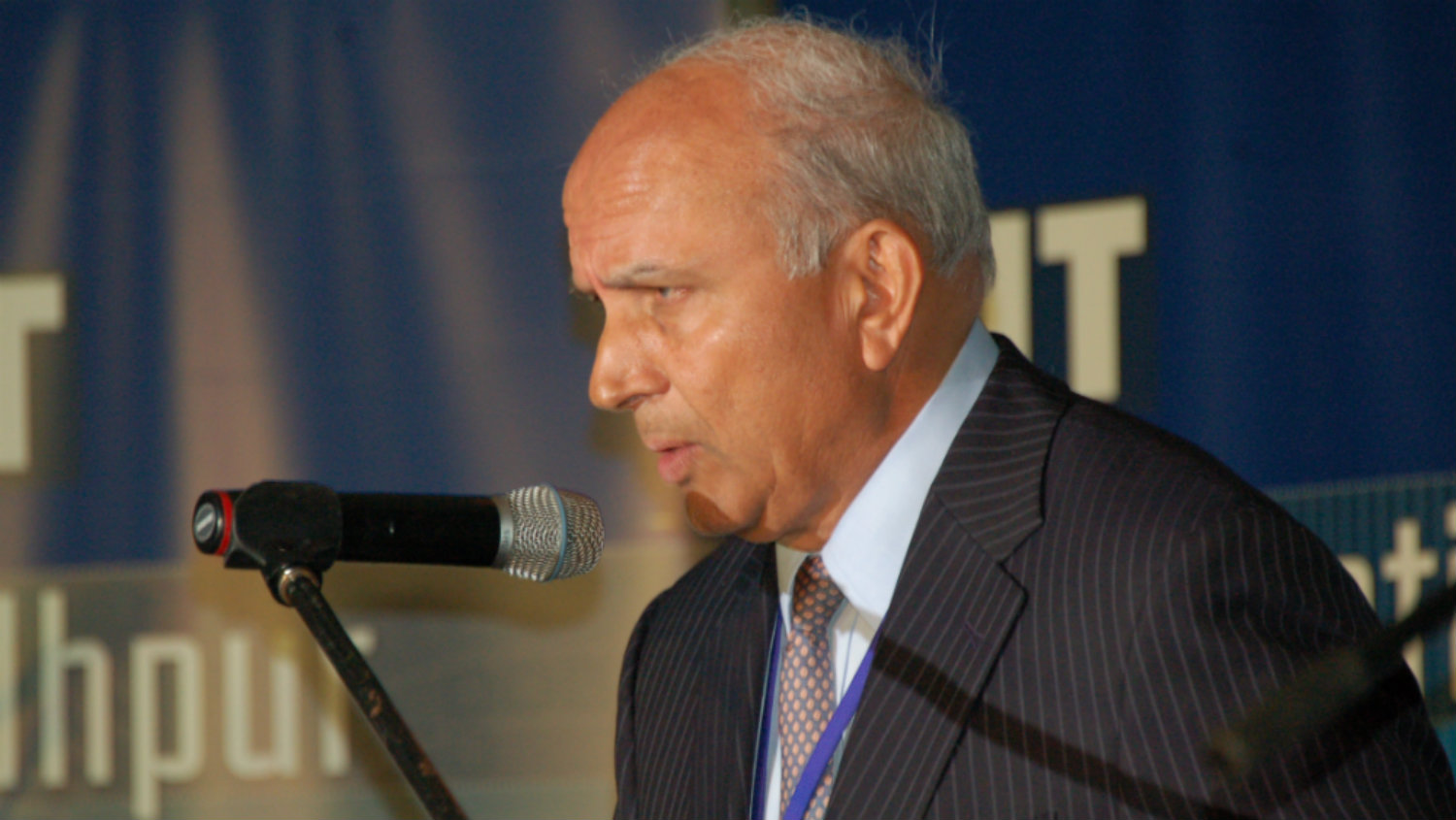
Prem Watsa is often called Canada’s Warren Buffett. If we look at his business, Fairfax Financial Holdings Ltd. (TSX:FFH), it’s easy to understand where that comparison comes from.
Buffett is the CEO of Berkshire Hathaway Inc. (NYSE:BRK.A)(NYSE:BRK.B), which has been able to achieve such massive scale that it has gobbled up entire companies; it’s spent tens of billions on railroads and manufacturers. Although Watsa has not achieved quite as much growth as Buffett, the strategy is exactly the same for both companies, and it’s all grounded on insurance.
Insurance companies sell policies to individuals or companies, offering to cover some incident. In exchange, the insurance company receives a premium on a monthly or yearly basis. There are a few ways to make a profit with that money.
The first is to simply take in more premiums than what is paid out to insured entities. When analyzing insurance companies, look for a combined ratio below 100%. This is its incurred losses and expenses divided by the earned premium. And if we look at Fairfax’s, it has done a great job at this. Its consolidated combined ratio (all of its subsidiaries) was 92.5%. Subsidiaries such as Crum & Forster, a property and casualty insurance company, came in at 98.2%, while Zenith, a workers’ compensation insurance business, came in at 79.7%.
The other way to make money in the insurance business is to take the premiums and reinvest them. Unfortunately, these numbers have been weak because Watsa has had a hedge strategy in place for the past five years. Essentially, he was waiting for the stock market to tank, which would result in his shorts making a lot of money. But once Trump won office, he realized that this was an unrealistic scenario, so he closed his shorts.
Ultimately, 2016 wasn’t a good for Fairfax Financial. It had a US$1.2 billion net loss in its investments, which pulled the company into the red with a total loss of US$512 million across its entire holding company. Nevertheless, this is only the fourth time in 31 years the company has reported a loss. In 1985, when Watsa took over, its book value per share had a compound annual growth rate (CAGR) of 19.4%, but the stock price has experienced a 18.6% CAGR.
For those that are considering buying Fairfax, the reality is clear to me. Every investor makes mistakes sometimes, and Watsa, unfortunately, tried to time the market with a speculative short. However, through a series of acquisitions, the company is only getting more powerful and increasing its yearly premiums. So long as the combined ratios remain below 100%, Fairfax will have the funds to invest, thus increasing book value even more. And since it has lost 19% since the beginning of October, shares are much cheaper.
Invest in Canada’s Warren Buffett and buy Fairfax Financial.