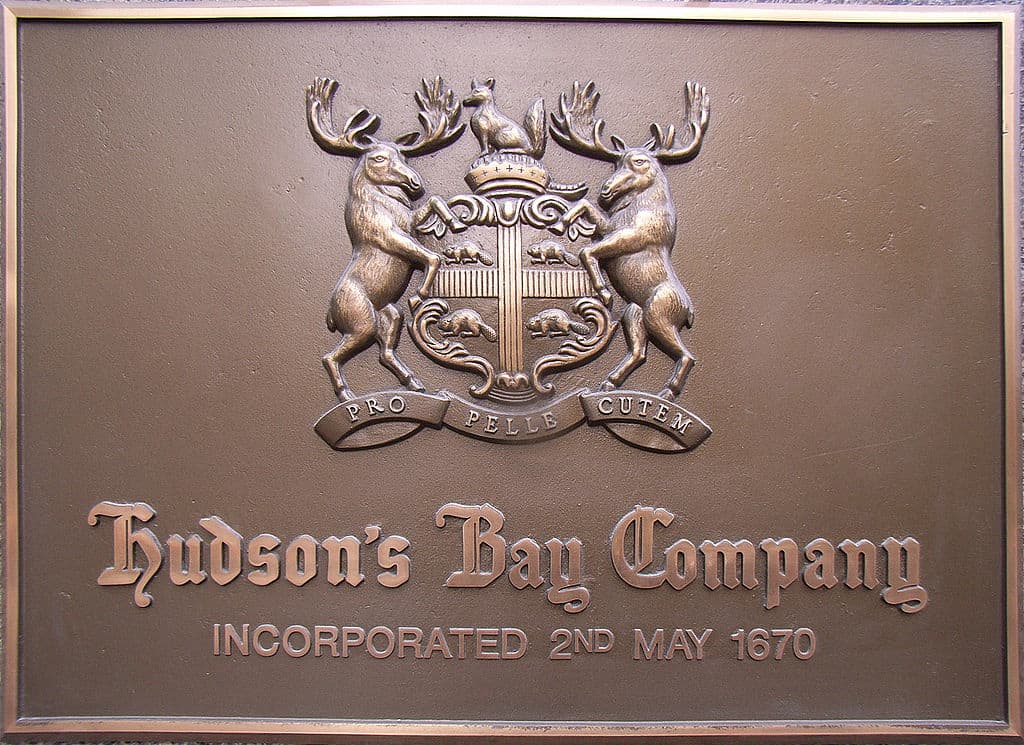
Hudson’s Bay Co. (TSX:HBC) CEO Jerry Storch had some nice words about the opening of its first store in the Netherlands September 5. It got me thinking about the fight going on between Richard Baker, the company’s executive chairman, and largest shareholder, and Jonathan Litt, the U.S. hedge fund manager pushing HBC to unlock the true value of its real estate holdings.
The company continues to stand behind its push into Europe, despite Litt recommending the company pull out of Europe, sell Saks, and focus on the Canadian retail market.
It’s always nice to have Americans arguing over what’s best for Canada’s oldest companies. It’s even more frustrating that someone with less than 5% of HBC’s stock can so dramatically impact our country’s oldest company.
Valuable real estate
The value of some of HBC’s real estate assets is undeniable. Samir Manji, the former CEO of Amica Mature Lifestyles, an operator of retirement homes now owned by the Ontario Teachers’ Pension Plan, recently appeared on BNN quoting $50 per share as HBC’s true value.
However, that doesn’t make its move into Europe a frivolous one.
“(Europe) is not nearly as over-stored as the U.S. — it is not even close,” said Storch talking about its move into Europe. “The U.S. is the densest market in the world for retail, and Canada is about one-third less than the U.S. Europe is just a fraction, even, of Canada.”
He’s right, you know.
The U.S. has about 24 retail square feet per capita compared to 16 in Canada, 11 in Australia, five in the U.K., four in France, and two in Germany. Yet Germany has US$6,323 in retail sales per capita, about 60% of those in Canada from just one-eighth the retail square footage per capita.
Europe will be fine
The company plans to open 17 HBC locations in the Netherlands and another three Saks Off 5th stores selected from a list of 60 that closed when Dutch retailer Vroom & Dressmann went bankrupt in 2015.
“There was a big gap in the Dutch market between a very high-end luxury player and the discount chains. The Dutch people kept telling us, ‘We don’t want the Inno brand,’ Storch said. “We couldn’t believe it. Even the guys at the hotel restaurant would tell us, ‘No, bring Hudson’s Bay here.”‘
Inno was the Belgian subsidiary it acquired as part of its $3.9 billion deal to buy Galeria Kaufhof in 2015.
Canada and the Netherlands have shared a common bond since World War II. It makes sense for Canada’s oldest company to plant its flag there.
Litt is right about one thing
The weak link in HBC’s retail business is Saks, which only delivered sales growth of 1.7% in the latest quarter, despite an American economy that keeps getting stronger. To exit Saks would allow the company to significantly pay down its debt or find another target in South America or Asia.
That might not be what Litt wants to hear, but at least it extracts some value from its existing real estate.
“Hudson’s Bay is a real estate company, full stop,” Litt wrote in an open letter to investors in June. “If there is a smarter and better use of any or all of the locations, stores should be closed and redeveloped and put toward their optimal use.”
Bottom line
Although HBC’s retail business isn’t doing well, it’s still generating positive earnings before interest, taxes, depreciation, amortization, and rent (EBITDAR), which means it’s still a going concern and can pay its bills.
To hastily speed up the selling of its real estate will most definitely hurt its ability to operate its retail business successfully.
As a country that’s about to lose Sears Canada to the dustbin of history, do we need Litt dictating what kind of company Hudson’s Bay should be?
Richard Baker gave Target Corporation the perfect opportunity to grow its business in Canada, but Target messed that up.
Personally, I’m not sure anyone has all the answers.
However, given that Baker’s been invested in HBC since 2008, a heck of a lot longer than Litt, I think he’s the one that should continue to transform the business.