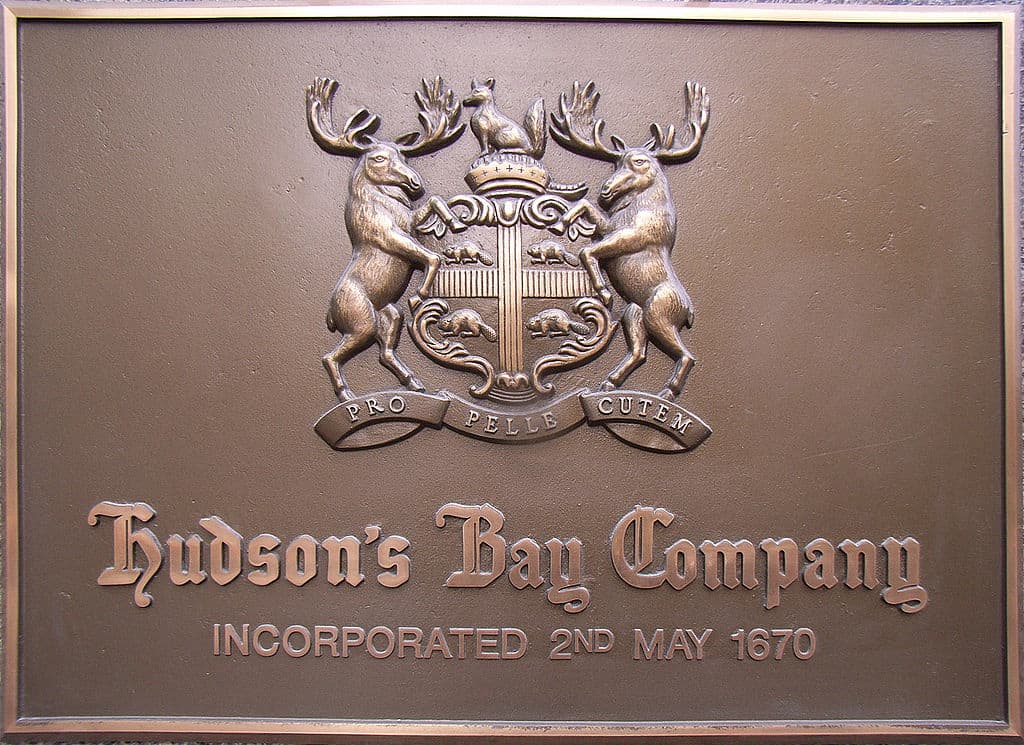
It’s been several days since Hudson’s Bay Co. (TSX:HBC) announced that it was selling its Lord & Taylor flagship store in New York City for US$850 million, getting a US$500 million equity injection and entering a strategic relationship with WeWork Companies — a New York-based startup that provides office space to creative types around the world.
Three pieces of good news, and the stock dropped in price.
Richard Baker, HBC’s executive chairman and interim CEO, can’t win for losing. Activist investors, like Land & Buildings’s Jonathan Litt, have been pushing HBC to maximize shareholder value by re-purposing its one-of-a-kind real estate to the highest and best use — i.e., something other than a department store.
So, when Baker delivers in spades after everyone and his dog has been on his case to do something, no one seems to care, pushing HBC’s stock price lower.
I’m sorry, but investors have got to get their heads out of their butts and consider what’s really happening here.
Baker pulls a rabbit out of his hat
It’s uncanny, but just the other day, prior to the WeWork announcement, I was reading an article in Forbes about the founders and how its valuation had ballooned to 10 times HBC’s. With a roster of investors that any company would die for — Softbank Group, Fidelity Investments, Benchmark Capital, etc. — partnering with these guys isn’t something that happened over night. Baker’s relationships in New York City, especially when it comes to real estate, made this happen.
I’m sorry, but what more do you want from the man? He got top dollar for the real estate, he got a well-financed strategic partner, and he got to keep Lord & Taylor open in a prime location on Fifth Ave.
Win. Win. Win.
The downside
The big concern, as far as investors are concerned, is that HBC effectively sold 21.8% of the company for $12.42 per share with a 5% preferred share dividend for up to eight years when they must convert to common. It’s a lot like the structure Warren Buffett uses, and one that provides a win/win for all involved.
I don’t see anything terribly wrong about it.
HBC knew it had to get creative to shore up its finances, and this definitely fits the bill. Fool contributor David Jagielski discussed this very topic October 24, suggesting its debt levels prior to the WeWork announcement was much too high at 2.3 times equity. Baker’s actions considerably reduce the company’s leverage.
Also troublesome is the fact the reduction in square footage at its Fifth Avenue Lord & Taylor store to 125,000 from 676,000 reduces revenues at the location. That too isn’t a big problem, because, according to Baker, it’s currently underperforming and realistically is just too much space given the existing retail environment.
“The average Lord & Taylor store is 125,000 square feet. We know that 650,000 square feet for a premium department store in a middle of Manhattan is too big,” Baker told the Business of Fashion. “Saks Fifth Avenue, just up the street and also 650,000 feet, is hugely productive and we only want more space there for retail because it’s a luxury retailer.”
Bottom line on latest deal
This sale and strategic relationship illustrates the ability of Richard Baker to deliver for shareholders. In five years’ time, investors might look back at this as a bigger deal than the 2011 sale of Zellers’s leases for $1.8 billion, because retail at the time wasn’t suffering nearly as much.
“Land and Buildings believes that the real estate alone is worth $35 a share. If that’s true and Hudson’s Bay commits to selling some of its major holdings, you could see a strong return on investment,” said Fool contributor Jacob Donnelly October 25. “Even without that, though, Hudson’s Bay is in a strong financial position thanks to this deal. Taking a position may make sense.”
Forget may. It does make sense.