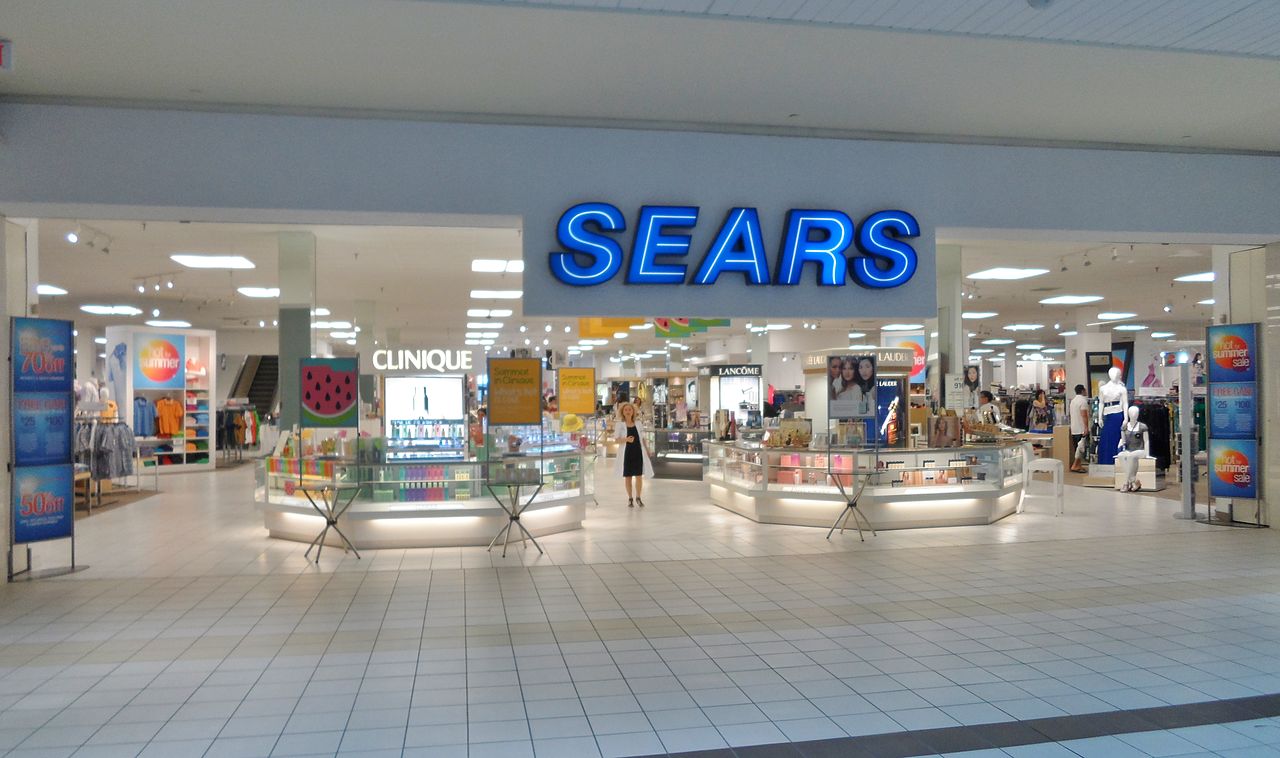
On October 13, Sears Canada Inc. received court approval to liquidate its remaining stores, marking the end of a retailer more than half a century old. The store closures have resulted in the job loss for over 12,000 Canadian workers. It is worth sifting through what went wrong at Sears Canada, so investors can avoid the pitfalls of a story that is becoming very common in the present-day retail sector.
Traditional brick-and-mortar retail continues to get hammered
Brick-and-mortar retailers have experienced an extremely difficult decade, as the retail industry has undergone transformational change. The rise of online retail giant Amazon.com, Inc. has pushed dozens of retailers to the brink. Toy retailer Toys “R” Us declared bankruptcy in 2017, and clothing retailer Mexx was forced to cease operations in 2014.
Hudson’s Bay Co. (TSX:HBC) has struggled mightily, as it has reported successive disappointing earnings. Internal debate has raged within Hudson’s Bay over whether it should commit to monetizing its real estate holdings rather than fighting a losing battle in retail. This is somewhat of a double-edged sword for Hudson’s Bay, as its brick-and-mortar footprint has always been a drag on operating costs.
In a late October article, I’d discussed the sharp rise of e-commerce retail sales in Canada. E-commerce retail sales climbed 41% year over year, according to an August 2017 report from Statistics Canada. Many companies now face an uphill battle to modernize e-commerce platforms, while simultaneously tackling declining profitability when it pertains to the traditional retail model.
Canada Goose Holdings Inc. (TSX:GOOS)(NYSE:GOOS) has put a huge focus on its e-commerce platform and has a small footprint in the form of several flagship stores. Shares of Canada Goose have increased 30.9% month over month as of close on November 22.
Sears Canada shows the ugly side of turnaround efforts
In a recent article, I’d discussed the departure of Hudson’s Bay CEO Jerry Storch and speculated that this likely telegraphed a capitulation to an activist shareholder who had been calling for the company to take advantage of its real estate holdings. In an early October meeting, Storch said that closing stores could begin “a process of slow dissolution” and added that “once the spiral starts, it can’t be stopped.”
Billionaire hedge fund manager Eddie Lampert has served at Sears Holdings Corp. for over a decade as chairman and was appointed as CEO of Sears Canada in January 2013. Lampert spent billions in share buybacks, while receiving criticism for failing to invest in retail operations. In spite of its plummeting retail sales, Sears reported a profit of $244 million in its last quarterly report before declaring bankruptcy.
Sears Holdings launched a spin-off REIT called Seritage Growth Properties in 2015. Seritage is able to develop properties to drive toward monetization, while Sears benefits from lower rent on said properties.
Investor takeaway
The rise of e-commerce should drive investors to retailers like Canada Goose, and even Aritzia Inc. (TSX:ATZ), over clothing companies with large brick-and-mortar footprints.
Investors can draw clear parallels between the crisis that faced Sears Canada and the ongoing developments at Hudson’s Bay. If history is any indication, the continued push toward real estate does not bode well for the future of its retail operations.