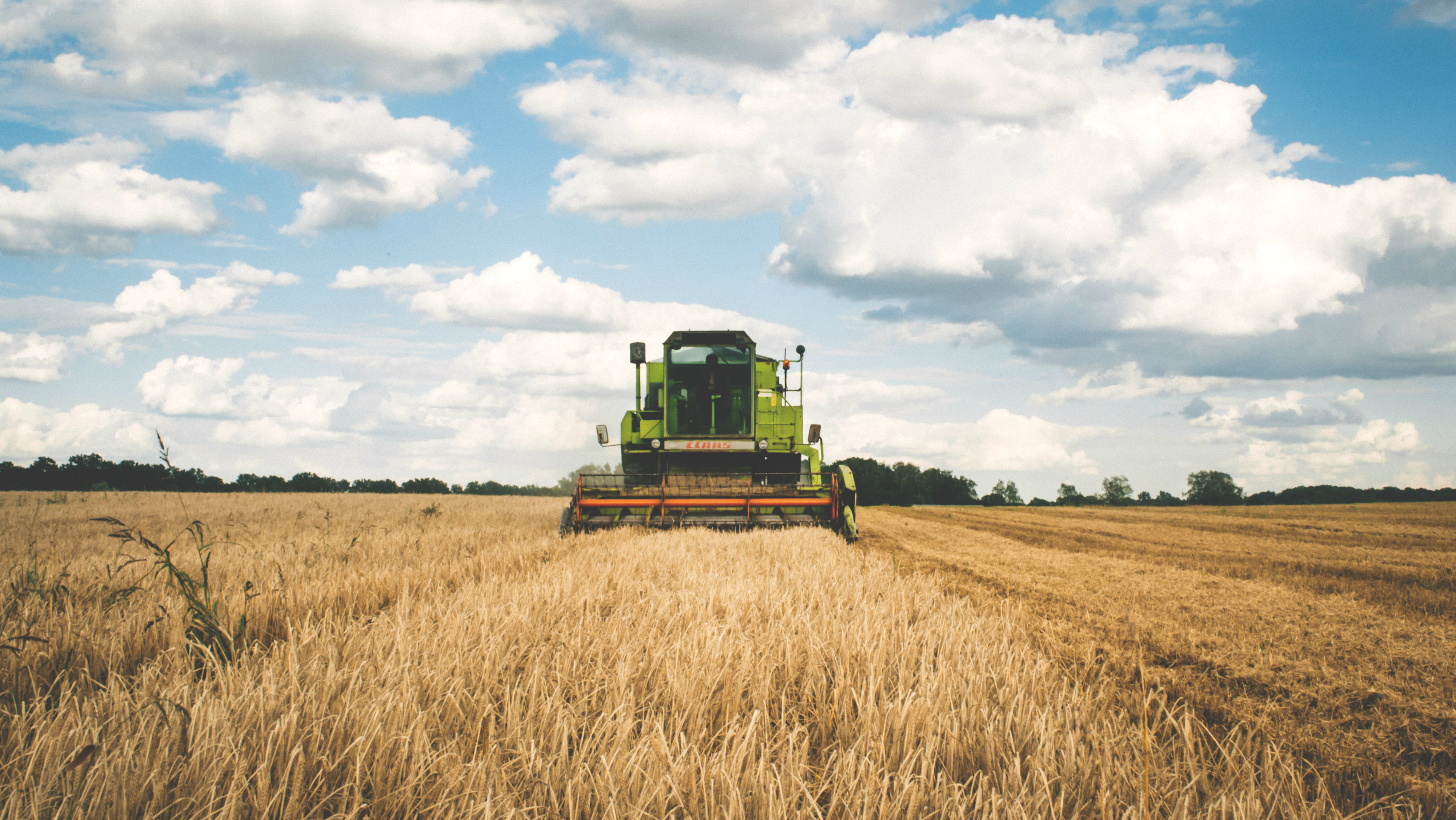
With the historic drought in commodity prices firmly in the rear-view mirror, prices of raw goods, from wheat and corn to soybeans and barley, are on the rise again.
These five businesses are either directly or indirectly linked to commodity prices and agri-business and, as a result, stand to outperform thanks to recent rally in the prices for raw goods.
One of the best examples of a company linked to commodity prices and the health of the agricultural community happens to be Nutrien Ltd. (TSX: NTR)(NYSE: NTR).
In case you’ve never heard of Nutrien before, you actually probably have, and you just didn’t know it. That’s because Nutrien is the new company formed at the start of this year out of the merger between Potash Corp. and Agrium. That mega-merger created one of the largest agri-business companies anywhere in the world.
But how is the company linked to commodity prices?
In years when prices for raw goods like wheat, corn, and soybeans are doing well, that ends up putting more cash in farmers’ pockets when harvest season inevitably rolls around. That’s important because, more often than not, those farmers take those surplus profits from the year’s harvest and use them to invest in next year’s crop by purchasing additional quantities of products, like the fertilizers and applications that Nutrien sells.
That helps them to boost “yields,” or the amount of crop that can be produced from an acre of land the following year.
Now, if you want to take that theory one step further, if next year’s crop ends up yielding more than the last, it’s a cycle that should — barring any unexpected shocks — continue to compound.
That can end being very good news for Canada’s leading dairy processor Saputo Inc. (TSX: SAP). Dairy farmers benefit from improved harvests. They can feed their herds more, helping to produce more milk that Saputo can then process into cheeses, yogurts, and creams.
Still yet another company that does well when agri-businesses are succeeding is American-based retail chain Tractor Supply Company (NASDAQ: TSCO).
Tractor Supply sells all kinds of products to support the “rural lifestyle,” so it only makes sense that when those involved in agricultural and outdoor businesses are doing well, those consumers will only naturally have more disposable income to spend on tools, clothes, and other home improvement products.
In the same vein as Tractor Supply is the world’s leading off-road vehicle company, Polaris Industries Inc. (NYSE: PII). While you certainly wouldn’t expect to find many of Polaris off-road ATVs in many cities or suburban communities, you are going to see them a lot more frequently in rural settings.
It’s perhaps not that surprising then that sales of Polaris vehicles tend to be tied to the health of the commodity markets. Polaris vehicles are also frequently used by oil and gas companies, and energy prices will usually move in the same direction as the prices for other commodities, reinforcing the pattern.
Another company, AGT Food and Ingredients Inc. (TSX: AGT) is one of the largest suppliers of value-added pulses, staple foods, and food ingredients in the world. AGT buys raw materials like lentils, peas, beans, and chickpeas and processes them into value-added products that end up on grocers’ shelves.
It’s basically the epitome of a big volume, low-margin business.
But when the prices for those raw goods are rising, the added margin that AGT charges in selling those products to consumers essentially goes straight to the company’s bottom line.
Stay Foolish.