Income-seeking investors who are attracted to high dividends and reliable stock prices will want to put their money in banking stocks and reconsider their oil investments.
Canadian Imperial Bank of Commerce (TSX: CM)(NYSE: CM) is a strong buy, proposing an impressive yield at a reasonable level of volatility for a Tax-Free Savings Account (TFSA) or Registered Retirement Savings Plan (RRSP). This week, the Bank of Canada reiterated long-run expectations for sustained low-interest rates going into 2020. Low interest rates bode well for the financial sector, as the additional capital allows banks to expand balance sheet assets and produce additional revenue for shareholders.
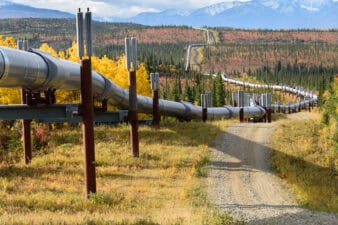
High returns and stable price expectations in finance are a relief for informed investors worried about how the geopolitical landscape in the oil industry will impact their TFSA and RRSP returns. Oil price volatility does not favour Canadian oil companies like Enbridge (TSX: ENB)(NYSE: ENB). North American oil companies struggle to compete against low-cost imports from Iran, evidenced by a decrease in Canadian oil exports of 21% in 2018.
Canadian Imperial Bank of Commerce
CIBC is known as one of the most financially solvent banking institutions in the world. With a global reach to the Caribbean, Asia, and Europe, CIBC serves 10 million customers. In 2018, CIBC’s return on equity was 16.6%, well above the current 5.38% dividend yield. The spread between the ROE and the dividend yield is a signal to investors that CIBC offers a dependable income stream. The stock currently sells at a P/E ratio of 9.19 — lower than the industry average of 14.26.
CIBC plans to diversify earnings growth in North America throughout the rest of 2019. Based on past performance, shareholders can expect an increase in average assets of 5%. The average asset value measures moving average asset performance across the most recent two fiscal years. Smart Canadian investors should increase their holdings of CIBC to capitalize on strong risk-adjusted returns in the Canadian financial sector.
Enbridge
Enbridge consistently faces legal trouble over capital investment projects, such as the North Dakota pipeline dispute, eroding the net present value (NPV) of its investments. NPV uses a discount factor to reduce the expected dollar value of cash inflows and outflows by risk, cost of capital, and inflation. Project delays push out anticipated income from investments and raise project financing costs through capitalized interest.
Although Enbridge offers an attractive dividend yield of 6.05%, the P/E ratio is high at 32.64. To put this in perspective, Enbridge has a stock price of $36.25, and earnings per share have been declining since 2015. The 2018 free cash flow yield of negative .2% provides further proof that shrewd investors would be better off staying out of the obsolete oil industry. Essentially, the company offers investors a low return on equity with an untenable dividend yield.
Why avoid oil?
United States president Donald Trump applied new sanctions on Iran last week in response to Iranian president Hassan Rouhani’s defiance against requests to cease uranium enrichment. The decision is an omen to volatile oil prices, as OPEC exempts Iran from its recent decision to reduce oil output. Iran remains a wildcard after raising production in 2016 following the U.S. Iranian Nuclear Deal, resulting in a precipitous drop in oil prices.
Geopolitical risk, environmental activism, and constant legal battles are an oil industry killer. The biblical red ink on Enbridge’s balance sheet insinuates that this Goliath cannot contest the impact of grassroots activists and geopolitical upheaval. As investors wait for Enbridge to throw in the towel on archaic oil production and embrace the future of emerging technologies in renewable energy solutions, banking offers more sustainable dividends and higher returns.