There’s a growing consensus that 2020 could be a dangerous year for investors. Surveys from Bank of America and the National Association for Business Economics show that economists and fund managers believe the risk of recession is at a multi-year high.
If you’re approaching retirement or are already in retirement, the next 12 months could be critical. While it’s never prudent to time the market, it’s imperative that you prepare accordingly. Investing during retirement is just as important as saving for retirement. Unprepared investors could see years of savings vanish in a matter of weeks. If you’re skeptical of this happening, just take a look at previous recessions. Here’s a hint: they weren’t pretty.
At the minimum, you need to understand how your portfolio will be impacted. Knowing your risk is half the battle.
These sectors are vulnerable
If a recession hits, some sectors will be hit harder than others. Review your asset allocation to determine where you’re vulnerable.
Real estate is the most obvious sector that should experience deep pain during a downturn. A few factors contribute to this risk.
First, several Canadian markets are almost certainly in bubble territory. “Let’s drop the pretense,” warned the chief economist at Bank of Montreal last year. “The Toronto housing market, and the many cities surrounding it, are in a housing bubble.” He noted that some prices are experiencing “the fastest increase since the late 1980s, a period pretty much everyone can agree was a true bubble.”
Second, Canadians aren’t ready for a downturn in housing prices. “It’s concerning that households aren’t building up buffers and prepping for retirement like they used to,” noted Toronto-Dominion Bank. Millions may end up underwater on their mortgage payments, and because a significant amount of household wealth is tied up in home equity, falling prices could have a pervasive effect on the economy.
The next sector that could be punished is energy. Millions of Canadians rely on the energy sector for income. When oil prices flutter, the economy is invariably impacted. In 2014, for example, nearly every part of the economy was stable or growing, yet the oil price collapse pulled Canada into a brief recession.
Importantly, Canada is heavily reliant on oil sands production. Alberta, for example, has one of the largest oil reserves in the world. These projects are higher cost than other sources, with breakeven prices often ranging between US$40 and US$50 per barrel. Oil prices wouldn’t need to dip much to push a significant number of Canada’s energy producers into loss-making territory.
Additionally, even railroad stocks should be hit during a recession. Fewer goods will be purchased and transported, of course, but the biggest impact will be from the energy sector. Over the past decade, railroads have generated billions in additional profit by offering crude-by-rail services. If oil prices dip, railroads will lose some of their biggest customers.
Own resilient stocks
Not every stock will suffer from a downturn.
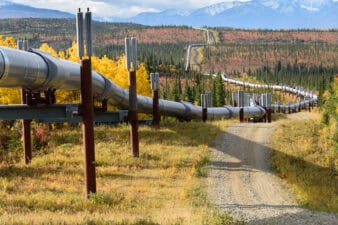
Enbridge, for example, is the largest pipeline company in world. Pipelines are pseudo-monopolies and have incredible pricing power. In 2014, when oil prices were slashed in half, Enbridge stock actually rose in value. As long as companies keep pumping oil, they’ll need to transport it. In many instances, Enbridge’s pipelines are the only game in town.
Canadian Utilities is another recession-proof option considering a huge portion of its earnings are rate regulated. This means the government has already approved how much it can charge customers, often years in advance. This pricing doesn’t change if a recession hits. Because electricity demand is incredibly stable year to year, Canadian Utilities stock should be able to weather any economic storm.