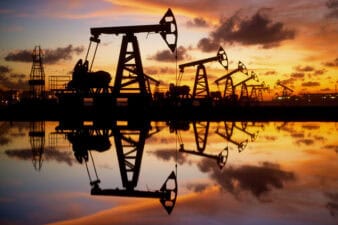
The latest oil price collapse is having a sharp impact on the outlook for the energy patch and oil stocks. To contain the financial contagion triggered by the coronavirus, the Trump Administration announced a US$2 trillion stimulus package.
After the package, which is expected to pass Congress, was announced stocks rallied significantly. The Dow Jones Industrial Average climbed by a notable 14% yesterday while the S&P/TSX Composite rose by a stunning 17%. A renewed sense of optimism regarding the economic outlook will do little to reinvigorate Canada’s energy patch, however.
Weaker oil here to stay
Coronavirus fears triggered the latest oil price collapse. Crude’s sharp decline was magnified by the disintegration of the OPEC deal on production cuts. The international Brent benchmark has plunged by a whopping 56% since the start of 2020, while the North American benchmark West Texas Intermediate has lost 55%.
The abrupt end of the OPEC deal saw Saudi Arabia and Russia, the world’s second- and third-largest oil producers, embark upon a price war. Riyadh announced that it will flood global energy markets with crude, boosting production by up to three million barrels daily. Moscow has embarked upon a similar strategy, vowing to bolster oil output by 400,000 barrels daily.
In order compensate for weaker prices and falling fiscal revenue, many non-OPEC nations including Brazil and Colombia are focused on bolstering oil production.
This will inundate energy markets which have been suffering from a supply overhang since late 2014 when oil prices collapse because of growing U.S. shale oil production. That will only cause the massive existing oil supply glut to expand.
The measures implemented by governments across the globe to contain the coronavirus pandemic have caused demand for crude to tumble. Travel bans, restricted movement, curfews and social distancing have all led to a decline in the consumption of fuels and related petroleum products.
Those measures also make it likely that the stimulus announced by many central banks, including Trump’s US$2 trillion package, will have little positive effect on the economy while they remain in place.
The fear is that a combination of significantly crimped demand and a surge in supply will overwhelm global oil storage capacity. When that occurs, oil prices will fall further still, with some pundits anticipating that Brent could fall to under US$10 per barrel — a disaster for Canada’s energy patch.
Poor outlook
Even if oil doesn’t collapse further, there’s the likelihood of further bankruptcies in the energy patch. Weaker sub US$40 per barrel oil here to stay. Many Canadian drillers were expecting WTI to average US$50 or more during 2020 so they could generate enough cash flow to fund exploration and development programs while repaying debt.
The latest price collapse has forced many upstream drillers to enter survival mode. They are slashing dividends, shoring up cash flows and balance sheets so they don’t go bankrupt. The most vulnerable are those with substantial debt and exposure to Canadian heavy crude.
The benchmark Western Canadian Select (WCS) heavy oil price has plunged to a record low of under US$10 per barrel, which sees many Canadian energy companies pumping heavy crude at a loss.
One driller that will struggle amid the extremely difficult operating environment is Baytex (TSX: BTE)(NYSE: BTE). It has lost 80% since the start of 2020 and will fall further despite the latest stimulus measures.
Baytex has net debt of $1.9 billion and 27% of its oil output is composed of heavy crude. A breakeven price of around US$40 per barrel means that in the current operating environment Baytex is pumping oil at a loss. Baytex is therefore likely shutter its heavy oil operations.
When that occurs, Baytex’s earnings will fall further, placing even greater pressure on its already precarious financial position. If oil is sharply weaker for a sustained period, Baytex will need to sell assets to survive, causing its oil reserves, production and ultimately cash flows to fall.
Baytex is a highly unattractive investment — and it’s unlikely to emerge from the current oil price collapse unscathed.