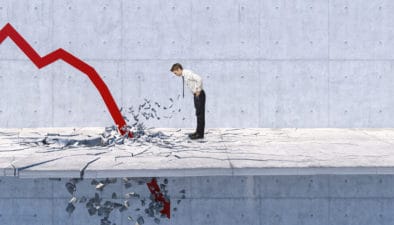
There is a strong disconnect between the stock market and the economy. The S&P/TSX Composite Index has surged 44% from its March sell-off, while Canada’s gross domestic product (GDP) fell 11.5% in the second quarter. When the famous value investor Warren Buffett hoarded cash and sold off troubled stocks in the March crash, he received a lot of criticism for his actions. But it seems like the 90-year-old Oracle of Omaha is preparing for the upcoming recession.
Warren Buffett’s experience with recession
In his 75 years of investing experience, Buffett has successfully invested through many market crashes. This is the first time the stock market saw a pandemic-like crisis. But even the Great Depression and World War II were unprecedented crashes. Every crisis brings a surprise element. Buffett’s words of wisdom are generally right, but there is no one-size-fits-all solution. Every crisis needs a different approach.
Unlike other crises, where the stock market reflected the state of the economy, the March market crash saw quick recovery. The NASDAQ Composite Index and the S&P 500 Index have already recovered to pre-pandemic levels. The TSX Composite Index has also shown a significant recovery, which is backed by three factors.
First is low interest rates, which have made capital easily available. Many companies have increased their liquidity with short-term debt. Moreover, lower interest rates have encouraged investors to switch to stocks.
Second is fiscal support, which the government provided within weeks of lockdown. In the previous crisis, it took the government several months to act.
The third is the bullish sentiment of investors towards stay-at-home tech stocks. These stocks are trading at record valuations. The Warren Buffett Indicator shows that equities are more than 80% overvalued. Some analysts believe that a dot.com-like bubble is building up.
I don’t agree with the Buffett Indicator, as the stock market has changed considerably. Technology stocks are taking a larger share of the market, and many companies’ stock prices reflect their global sales, which doesn’t reflect in a country’s GDP.
Buffett is preparing for a looming recession in the post-pandemic economy
Earlier this year, Buffett sold airline stocks and some bank stocks. His company Berkshire Hathaway had a $137 billion cash pile. He was never in favour of keeping high liquidity, as cash depreciates the value of money.
When he decided to buy stocks this year, he chose energy and gold stocks. Buffett’s $10 billion acquisition of Dominion Energy’s natural gas transmission business complements Berkshire Hathaway’s energy portfolio. However, his $600 million investment in Barrick Gold comes as a surprise, as he never preferred the yellow metal.
You can interpret Buffett’s move as an act of recession-proofing his portfolio. Barrick Gold stock surged 63% from its March low and is trading near its 2012 level. The gold price is trading at its all-time high, surpassing the 2011 levels. The last time gold price and gold stocks saw such a rally was between 2009 and 2011 when the economy was recovering from the Financial crisis.
Barrick Gold stock will surge during the recession and until the economy recovers. Gold rises in a recession, as fiscal support significantly increases government deficit. At the same time, Buffett is holding on to a huge pile of cash. As the government aid ends and the debt market dries up, capital will become scarce. Companies will need significant capital to revive their balance sheet. At that time, they will turn to investors like Berkshire Hathaway for distressed capital. This is where Buffett’s patience will pay off.
Investor corner
Like Buffett, even you should recession-proof your portfolio. Enbridge (TSX: ENB)(NYSE: ENB) will stand to benefit from the post-pandemic economy. As the travel restrictions ease and factories reopen, the demand for oil and natural gas will increase, and so will their prices. Many utilities will use Enbridge’s pipelines to transmit oil and natural gas to customers. This will increase its stock in the post-pandemic economy. Even if there is a recession, the company will continue to pay a high dividend yield of 7.8%.