Enbridge Inc (TSX:ENB) is one of the highest yielding large cap TSX stocks out there. It pays a $0.89 quarterly dividend, which annualizes to $3.56. At today’s stock price of $46.60, that gives a yield of 7.6%.
So, Enbridge stock pays out a lot of dividend income. If the dividend never changes, then a $100,000 investment in ENB will yield $7,600 per year. That’s pretty good, in many cases beating the yield you can get operating rental houses, and certainly beating the average stock’s yield.
However, there is just one problem: Enbridge’s payout ratio is currently greater than 100%. This means that it pays out more in dividends than it earns in profit. If this situation continues indefinitely, then the company will end up having to borrow money just to pay out dividends. That’s not sustainable. In this article, I will explore why Enbridge has such a high dividend yield and whether it is sustainable.
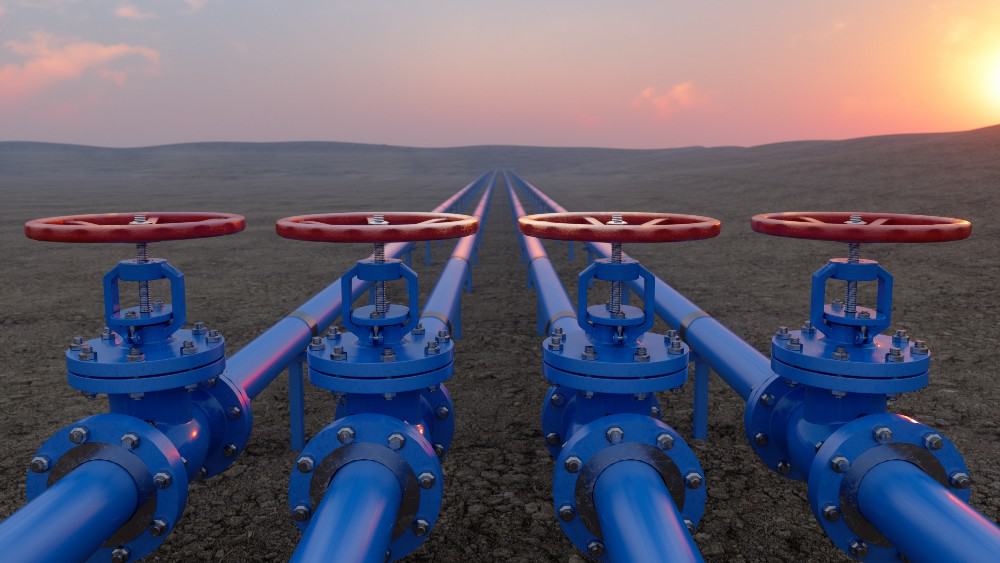
Image source: Getty Images
Why Enbridge’s yield is so high
The reason why Enbridge’s dividend yield is so extraordinarily high is because its stock price has fallen while its dividend payout has increased. When this happens, a high yield is the inevitable result.
Unfortunately, ENB’s dividend has arguably too much. As mentioned previously, the stock pays out $0.89 per quarter, or $3.56 per year. In the trailing 12-month period, the company did $4.30 in free cash flow, and $2.50 in earnings per share. Therefore, the company’s GAAP earnings don’t cover the dividend, and free cash flow only barely covers it, with an 82% FCF payout ratio. Enbridge says that its payout ratio using “distributable cash flow” – its own “pet” cash flow metric – is just 70%. That may be the case, but companies have quite a lot of leeway in how they calculate these non-GAAP metrics. They can’t always be relied on.
Is the dividend sustainable?
I’ve explored the data on ENB’s payout ratio(s) pretty thoroughly, so now I will turn to my interpretation:
ENB’s dividend as it stands now does not put the company in danger, but it wouldn’t be wise to keep raising the payout at a very rapid clip. In the past, ENB was known for raising its dividend at something like 19% per year: that wouldn’t be wise today.
Above, I pointed out that Enbridge’s dividend is unsustainable with an earnings-based payout ratio and sustainable with a free cash flow-based payout ratio. It might sound like I’m saying, “mixed picture, avoid,” but it’s not so simple. Free cash flow is far more respected as a measure of dividend-paying ability than GAAP profit is. GAAP earnings are notoriously influenced by things like stock price fluctuations and currency exchange rate moves. As someone who thinks FCF is a better measure of dividend-paying ability, I’d say Enbridge’s dividend is reasonably safe.
However, it could stop being safe if ENB’s management aims to do truly superior dividend growth in the future. Enbridge in the past was known for enormous dividend growth. Today, it just has too many mandatory capital expenditures to keep it up. Most recently, a judge ordered ENB to re-route a massive section of its Wisconsin pipeline! This kind of CAPEX costs a lot of money, so I’m not expecting massive growth in free cash flow from Enbridge going forward. The one-year dividend growth rate (3.15%) is probably more instructive than the 10-year CAGR dividend growth rate (14.1%).
Basically, I think that those buying Enbridge today will collect the dividend safe and sound, but won’t see much in the way of capital gains. If you’re targeting something like an 8% CAGR return, this energy stock is worth considering.