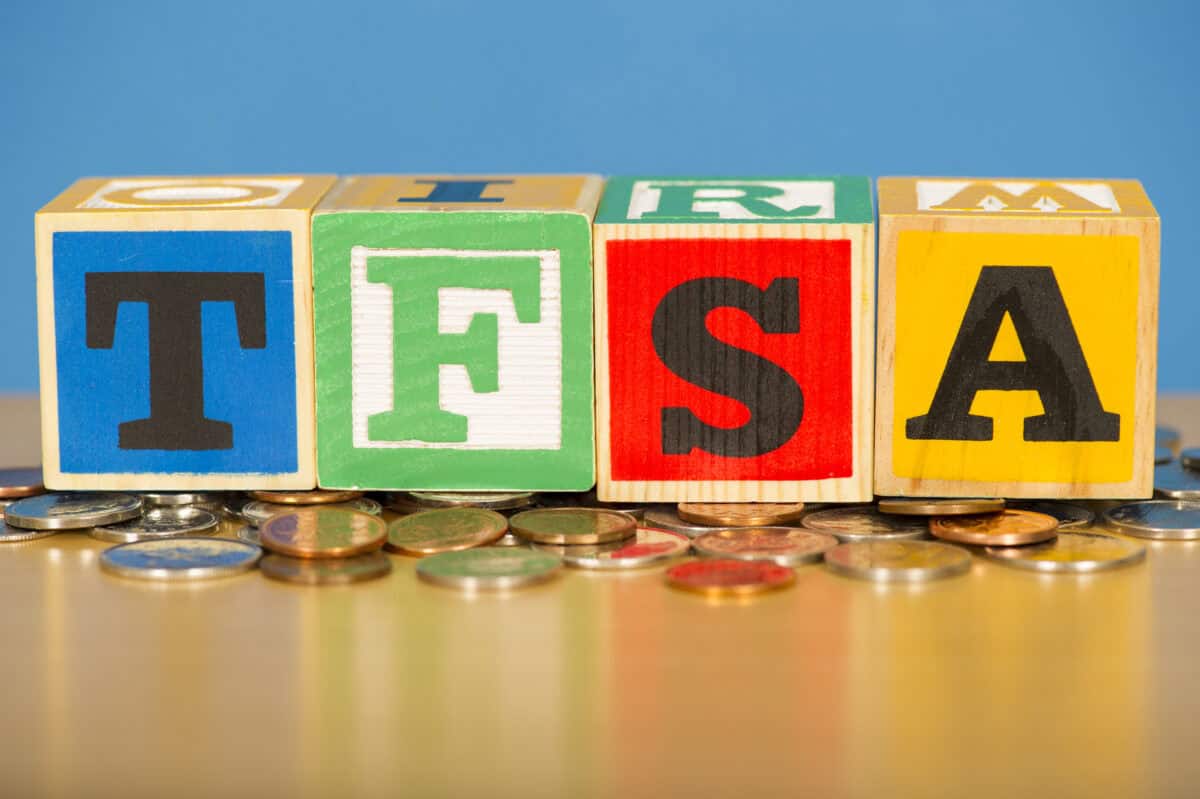
The Tax-Free Savings Account (TFSA) is one of the best tools for Canadians to build wealth. It allows you to grow your investments without paying taxes on the gains. As we dive deeper into 2025, the market is facing challenges — yet this could be the perfect opportunity to maximize your TFSA returns. Here’s how to make the most of your TFSA in today’s environment.
Source: Getty Images
Navigating market corrections for better investment opportunities
Despite the volatility and uncertainty in the markets — especially with global tensions like the U.S.-Canada trade war — market corrections present opportunities. Historically, the stock market tends to grow in the long run. The key for investors is to remain patient and view market corrections as a chance to acquire quality stocks at lower prices.
When the market dips, it’s often the ideal time to pick up undervalued stocks with strong long-term potential. For those who are willing to take on some risk, buying quality shares during corrections could provide excellent returns when the market recovers. With the TFSA’s tax advantages, any growth or dividend income from these investments is completely tax-free.
Balancing risk with safe, steady options
For conservative investors who want to avoid the risk of losing capital, there are still plenty of opportunities to grow wealth within a TFSA. Guaranteed Investment Certificates (GICs) are one such option. These are low-risk investments that guarantee your principal back, along with interest payments. Although GICs offer lower returns, they’re great for conservative investors who are willing to accept a fixed return for safety.
Currently, the best one-year GIC rates hover around 3.7%, which is a solid option for risk-averse investors. Placing GICs in your TFSA allows you to earn interest without paying any taxes on it, which are otherwise taxed at your marginal tax rate in a non-registered account.
Growth potential with ETFs and stocks
For investors who can tolerate moderate risk, a balanced portfolio consisting of both bonds and stocks might be the right approach. A 60% stock and 40% bond portfolio is a popular choice, and an easy way to access this type of diversification is through an exchange-traded fund (ETF) like iShares Core Conservative Balanced ETF Portfolio (TSX: XCNS). This ETF is designed to provide broad exposure across asset classes and regions, and it re-balances automatically to maintain its target allocation.
Over the past five years, iShares Core Conservative Balanced ETF has delivered a total return of 7.1% annually, making it a potentially good choice for TFSA investors looking for steady, long-term growth. Additionally, it has a management expense ratio (MER) of just 0.20%, making it a cost-effective way to invest.
For those seeking higher returns, building a custom portfolio of individual stocks can be rewarding — especially when buying at favourable prices during market corrections. Take Royal Bank of Canada (TSX: RY) as an example. During the pandemic market crash in 2020, RY shares were trading around $70. Fast forward to today, and the stock is valued at over $160, which is more than double. Additionally, the dividend yield has increased from 6.2% at the time of purchase to a yield on cost of about 8.5% for long-term holders.
While Royal Bank shares are not yet at “bargain” prices, there’s a chance they could drop again if market conditions continue to fluctuate, making them an attractive buy for TFSA investors looking to maximize returns. Bargain prices would be around $120 per share, but it’d take a whole lot of bad news and some time to get there — if it were to get there in this correction.
Maximizing your TFSA: Strategic asset allocation is key
The key to maximizing your TFSA returns in 2025 is finding the right balance between risk and reward. Whether choosing low-risk GICs, a diversified ETF, or carefully selected individual stocks, diversifying across cash, bonds, and stocks will help mitigate risk while positioning your portfolio for long-term growth.
Keep in mind that regular contributions to your TFSA — combined with smart asset allocation — will compound over time, giving your investments the chance to grow tax-free. While 2025 may present some challenges in the market, it also brings significant opportunities for savvy investors to capitalize on the fluctuations. So, use the current market conditions to your advantage and maximize your TFSA’s potential.