Valued at a market cap of $7.8 billion, South Bow (TSX:SOBO) operates a 4,900 km liquids pipeline franchise connecting western Canadian crude oil to U.S. Midwest and Gulf Coast refining markets.
It features the Keystone Pipeline System as its largest asset, with strategically located storage terminals in Hardisty, Cushing, and Houston. South Bow pays a quarterly dividend of $0.50 per share and maintains an investment-grade debt structure with stable cash flows.
It focuses on strengthening its strategic corridor to enhance customer optionality while meeting current North American energy demands and preparing for future market requirements through asset optimization and growth opportunities.
Given its annual dividend payout, South Bow offers shareholders a forward yield of over 5% making it attractive to income-seeking investors.
Let’s see if this TSX dividend stock should be part of your dividend portfolio in 2025.
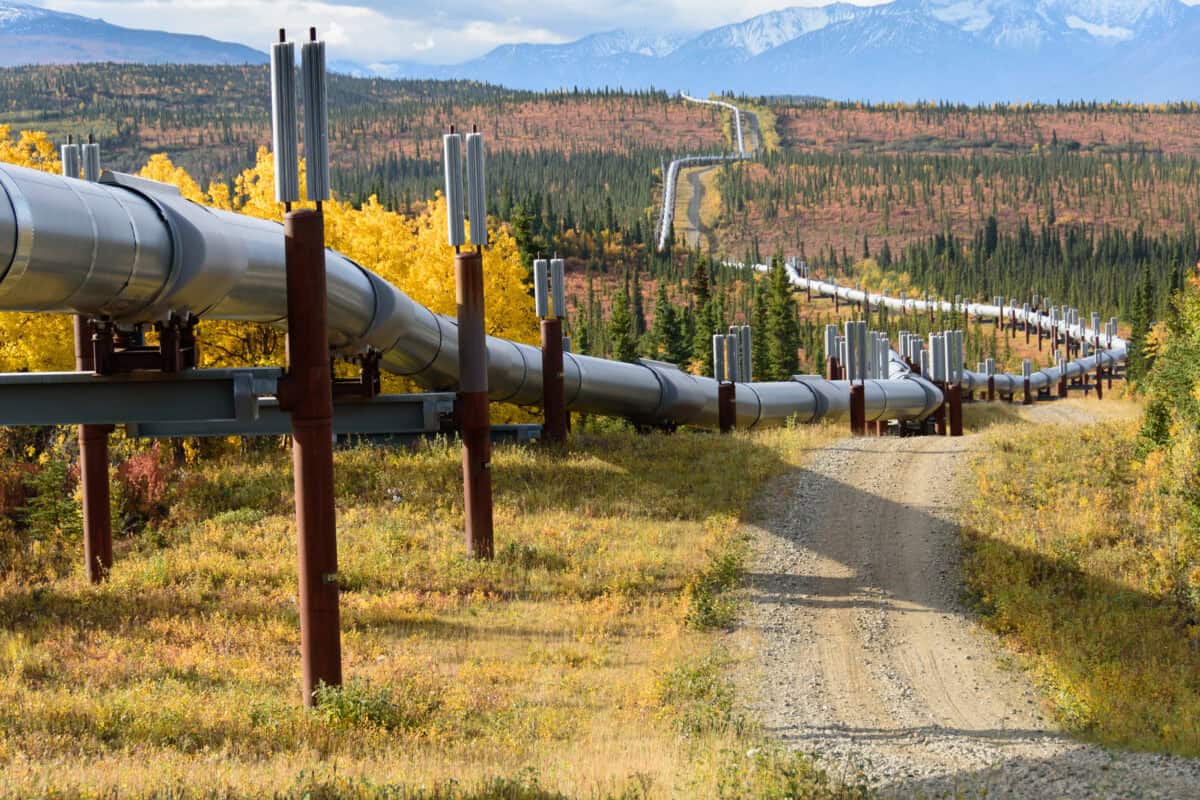
Source: Getty Images
Is South Bow a good stock to own right now?
South Bow demonstrated the resilience of its pipeline business model in the second quarter (Q2) of 2025. In the June quarter, the energy infrastructure company generated $250 million in normalized EBITDA (earnings before interest, tax, depreciation, and amortization) despite facing operational challenges from the Milepost 171 incident.
South Bow’s highly contracted cash flows and strategic positioning continue to shield it from market volatility while management addresses safety concerns and prepares for future growth.
The April pipeline incident at Milepost 171 resulted in approximately $60 million in total costs for response, repair, and cleanup, with insurance expected to cover most expenses.
Chief Operating Officer Richard Prior emphasized that the pipeline remains safe to operate and can fulfill contractual commitments of 585,000 barrels per day while complying with regulatory corrective actions. A third-party root cause analysis is expected by September, with preliminary findings showing the pipe and welds met industry standards.
CEO Bevin Wirzba highlighted South Bow’s agility as a standalone company, noting faster response and remediation capabilities compared to its previous structure.
Financially, South Bow reaffirmed its 2025 normalized EBITDA outlook of $1.01 billion, with 90% of earnings contracted and insulated mainly from tariffs and market fluctuations. The company raised its distributable cash flow guidance to $590 million, reflecting $15 million in tax savings from U.S. legislation changes and $30 million in interest income.
South Bow’s strategic corridor connecting western Canadian crude to U.S. Gulf Coast markets positions it well for anticipated supply growth. With TMX pipeline operations beginning, management expects renewed capacity constraints by early 2027, creating opportunities for South Bow’s batch system that delivers the fastest transit times to premium markets.
Is the TSX stock undervalued?
South Bow is forecast to increase its free cash flow from $407 million in 2024 to $724 million in 2029. If the TSX stock is priced at 15 times forward FCF, which is reasonable, it should gain roughly 40% by the end of 2028. If we adjust for dividends, cumulative returns could be closer to 46%.
South Bow approved a quarterly dividend of $0.50 per share, maintaining its commitment to shareholder returns. With deleveraging set to begin when Blackrod Connection Project cash flows start in late 2026, it appears well-positioned to capitalize on North America’s evolving energy infrastructure needs while addressing current operational challenges.