The Tax-Free Savings Account (TFSA) sounds simple. Capital gains are tax-free. Dividends are tax-free. Interest is tax-free. Withdrawals are tax-free. That is mostly true.
But there is one important asterisk that more and more Canadian investors are slowly discovering. If you hold U.S. stocks, U.S.-listed exchange-traded funds (ETFs), or even Canadian ETFs that own U.S. stocks, there is a hidden cost inside your TFSA.
Specifically, a 15% foreign withholding tax charged by the U.S. Internal Revenue Service (IRS). Here’s what that means and what you can do about it.
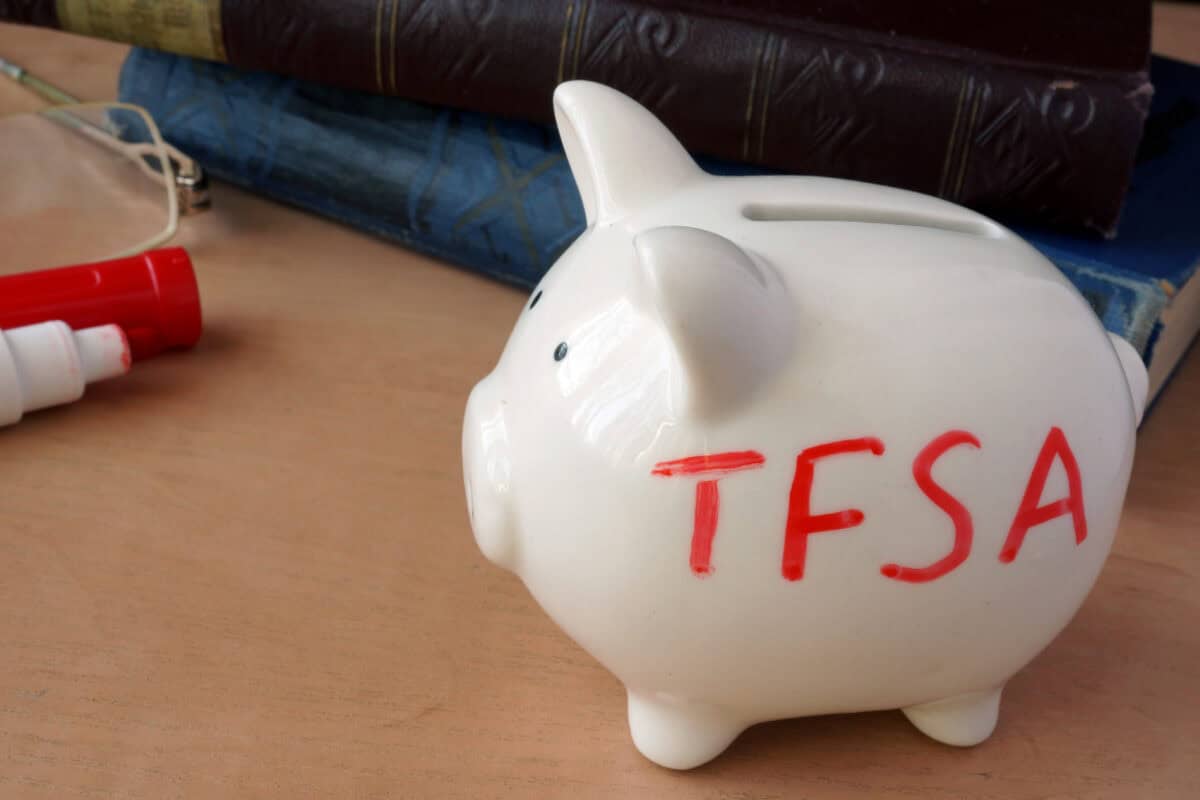
Source: Getty Images
The 15% foreign withholding tax explained
Under the Canada-U.S. tax treaty, dividends paid by U.S. companies to Canadian investors are subject to a 15% withholding tax.
In a taxable account, you can usually claim a foreign tax credit. But inside a TFSA, you cannot recover it. The money is simply withheld before it ever reaches you.
For example, if you own a U.S. ETF yielding 1%, you do not actually receive 1%. After the 15% withholding tax, your effective yield becomes 0.85%. You might think, “That’s only a 0.15% difference. Not a big deal.”
In a single year, maybe not. But over decades, reinvested dividends are a major driver of total return. Even small reductions compound into meaningful differences over time.
This applies to U.S. stocks listed on U.S. exchanges, U.S.-listed ETFs, and Canadian-listed ETFs that hold U.S. stocks. In the case of Canadian ETFs holding U.S. stocks, the withholding tax happens before the dividend even lands inside the ETF.
How can you reduce or avoid it?
There are a few ways to manage this, each with trade-offs. If you insist on holding U.S. exposure inside your TFSA, one way to minimize the damage is to focus on companies or ETFs that pay very little in dividends.
Many growth-oriented sectors, such as technology, communications, and consumer discretionary, have relatively low yields. For example, ETFs tracking the NASDAQ-100 — an index of 100 large-cap U.S. growth stocks — historically pay modest dividends.
One Canadian-listed example is Invesco NASDAQ-100 Index ETF (TSX: QQC), which charges a 0.20% expense ratio.
Another approach is to own U.S. companies that do not pay dividends at all. Some businesses prefer to reinvest profits internally or repurchase shares rather than distribute cash. That means no dividend, and therefore no withholding tax.
A classic example is Berkshire Hathaway (NYSE: BRK.B), which has historically not paid dividends.
Instead, it compounds capital internally and occasionally repurchases shares. It also sits on a massive cash pile of roughly $380 billion and owns a diversified collection of public stocks and wholly owned operating businesses.
If your goal is specifically to collect U.S. dividends without losing 15%, the more tax-efficient place to hold them is your Registered Retirement Savings Plan (RRSP).
The IRS recognizes the RRSP under the Canada-U.S. tax treaty. That means direct U.S. stocks and U.S.-listed ETFs held inside an RRSP are exempt from the 15% withholding tax.
Important caveat: this exemption applies to direct U.S. securities. Canadian-listed ETFs that hold U.S. stocks do not receive this benefit, even in an RRSP.