Do you want to generate $500 per month in tax-free income using a tax-free savings account (TFSA)?
It might seem like a tall order, but it’s very much do-able.
According to S&P Global, the publisher of the S&P/TSX Capped Composite Index, the TSX has a 2.4% trailing yield. I say “trailing” because that’s the yield a TSX index fund investor earned over the last 12 months. It’s hard to say what an index’s future yield will look like.
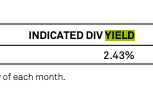
At a 2.4% dividend yield, it takes $246,913 of invested capital to generate $500 per month in average dividend income. In 2026, the maximum amount of accumulated TFSA contribution room – ignoring those who realized large gains in the past – is $109,000. That’s for Canadians who were at least 18 years old in 2009 and have not yet contributed to a TFSA. Therefore, unless you’ve already realized large investment gains, it’s difficult to get to $500 per month in passive TFSA income. With that said, it is do-able, provided you meet the age requirement. In this article, I’ll explore how you can generate $500 per month tax-free in a TFSA.

Source: Getty Images
The yield it takes
For the remainder of this article, I’m going to assume that you haven’t already been investing in a TFSA and maximizing your balance. If you’ve been investing diligently in TFSAs since 2009, you might theoretically have a balance of $1 million or more. I’ll ignore that possibility in this article, and instead assume that your TFSA contribution room is $109,000 – the maximum for someone who turned 18 in 2009 and hasn’t yet contributed.
So, our goal is to get to $500 per month in passive income from $109,000. What will that take?
$500 per month is $6,000 per year. To achieve that much income with a $109,000 TFSA balance, you need roughly a 5.5% yield. That’s fairly high by the standards of today’s markets – more than double the average yield on the TSX. Nevertheless, it is do-able, and it doesn’t require that you push it with “crazy high yield stocks” either.
How to achieve such income
There are two ways to achieve $500 in monthly TFSA income with a $109,000 account:
- To invest in a REIT that literally yields 5.5% paid monthly.
- To buy a diversified vehicle that can get you about 5.5% per month on average.
For the first option, consider RioCan Real Estate Investment Trust (TSX: REI.UN). RioCan is a famous Canadian REIT that invests mainly in mixed use properties. Its properties usually have residential units on the upper levels and commercial ones on the lower levels. Some of its properties are high value “trophy properties,” including The Well in Toronto; 83 Bloor Street West; and Yonge Shepherd Centre. These prestigious properties are highly desirable, contributing RioCan’s respectable 97.8% occupancy rate.
RioCan pays a dividend of $0.0965 per unit. That works out to $1.16 per year. At today’s price of $21.81, REI.UN yields 5.3%. A $109,000 investment in it yields $5,787, or nearly $500 per month. Here’s the math on that:
| COMPANY | RECENT PRICE | NUMBER OF SHARES | DIVIDEND | TOTAL PAYOUT | FREQUENCY |
| RioCan | $21.81 | 4,998 | $0.0965 per month ($1.158 per year) | $482.307 per month ($5,787 per year) | Monthly |
Now of course, throwing all of your money into RioCan isn’t a responsible thing to do. The second (and better) option would be to put your money into a diversified ETF yielding close to 5.5%. Nevertheless, the example above shows just how much passive income generating power dividend stocks have.