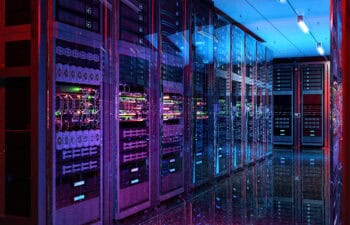
Data centres are becoming a supply-chain problem. That may sound strange at first. Most investors think about power, chips, servers, and cooling when they look at the data-centre buildout. But behind every new artificial intelligence (AI) facility sits a long list of moving parts. Companies need semiconductors, networking gear, construction materials, energy equipment, labour, land, permits, and reliable delivery schedules.
That’s where Kinaxis (TSX: KXS) starts to look interesting.

Source: Getty Images
KXS
Kinaxis makes cloud-based supply chain software. Its platform helps large companies plan demand, manage supply, model scenarios, track inventory, and respond when something changes. The company works with global manufacturers and distributors that need faster decisions across complex operations.
That matters more than ever as data-centre growth strains supply chains. A single project can depend on chip availability, electrical equipment, steel, cooling systems, grid connections, construction timelines, and customer commitments. If one piece slips, the whole plan can change.
Kinaxis leaned right into that opportunity. In June, the company introduced Kinaxis Maestro for Data Centers, a purpose-built offering for organizations powering the data-centre economy. The goal is to help companies make better capacity, supply, and investment decisions when demand shifts quickly and mistakes can become extremely expensive.
Into earnings
The latest results support the broader investment case. In the first quarter of 2026, Kinaxis stock reported total revenue of US$165.6 million, up 25% from last year. Software as a Service (SaaS) revenue climbed 21% to US$102.9 million. Adjusted earnings before interest, taxes, depreciation and amortization (EBITDA) rose 62% to US$53.6 million, giving the company a 32% adjusted EBITDA margin.
Those numbers show a software business with both growth and profit discipline. Many tech companies can grow revenue but struggle to turn that growth into earnings. Kinaxis looks stronger because its recurring software base gives it visibility, while improving margins give investors proof that scale can work in their favour.
Another strength comes from the type of customer Kinaxis serves. Supply-chain planning isn’t a nice-to-have tool for a large manufacturer. When inventory piles up, parts run short, or demand changes suddenly, companies can lose real money. That makes the software sticky once customers build it into daily operations.
Looking ahead
The company also benefits from AI in two ways. First, its customers may need better planning tools because AI infrastructure demand keeps changing the supply chain. Second, Kinaxis stock has added AI capabilities to its own platform. Maestro uses AI-infused orchestration to help companies spot issues and model decisions faster.
That said, investors still need to respect the future risks. Kinaxis stock trades like a growth stock, so valuation can become a problem if revenue slows or margins disappoint. Even now it trades at a higher 37 times earnings. Software deals can take time to close, especially with large enterprise customers. Competition also remains intense, as bigger software players want a slice of supply-chain planning budgets.
There’s also a risk of overconnecting the stock to data centres. Kinaxis remains a broad supply-chain software company. Its future doesn’t depend only on AI infrastructure spending. That’s not a weakness, though. It means investors get exposure to data-centre growth without buying a company that relies on one narrow theme.
Bottom line
For long-term investors, Kinaxis stock offers something different on the TSX. It’s a Canadian tech stock with recurring revenue, strong margins, and a growing role in helping global companies manage complexity.
The data-centre buildout could keep pushing demand higher for years. If that happens, the companies behind it will need better planning, faster decisions, and tighter control over supply chains. Kinaxis stock sits right in that path.