ARC Resources (TSX: ARX) shareholders just voted overwhelmingly in favour of the company’s takeover by energy giant Shell (NYSE: SHEL). The deal, first announced in April, is now clearing its final hurdles. Here’s what’s happening and what it means for your portfolio.
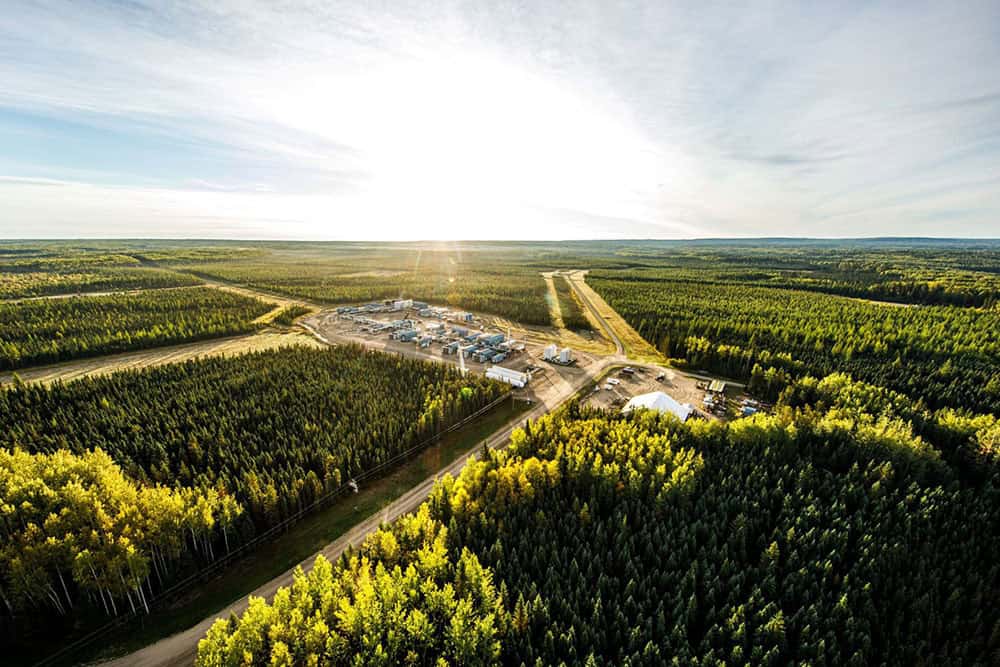
Source: ARC Resources Ltd.
How Will the ARC-Shell Deal Work?
Shell, together with its subsidiary Shell Canada Limited, has agreed to acquire all of the outstanding common shares of ARC Resources, a pure-play Montney natural gas producer based in Calgary. The deal is structured as a plan of arrangement, a common method for large Canadian mergers, and values ARC at roughly $22 billion including assumed net debt.
Under the terms of the agreement, for each ARC share you own, you’ll receive:
- 0.40247 of a Shell share, plus
- $8.20 in cash
Put together, that works out to $32.80 per ARC share — a 27% premium over ARC’s closing price on April 24, 2026, the last trading day before the deal was announced.
When Is the Deal Happening?
ARC shareholders approved the acquisition during a special meeting held this week. Roughly 99.54% of votes cast were in favour of the arrangement.
The next major milestone is court approval. The Court of King’s Bench of Alberta was scheduled to hear the application this week. Several regulatory approvals have already been secured, including clearance under Canada’s Competition Act, the Canada Transportation Act, and the U.S. Hart-Scott-Rodino Act. A few approvals remain outstanding, including under the Investment Canada Act.
Assuming those pieces fall into place, the companies expect the deal to close sometime in the second half of 2026. Once it does, ARC shares will be delisted from the Toronto Stock Exchange.
What Exactly Is Going to Happen With the ARC Buyout?
- ARC shareholders will exchange their shares for a mix of cash and Shell stock.
- Shell will absorb ARC’s Montney assets, adding what it describes as long-duration, high-quality gas resources to its Canadian footprint.
- ARC will keep paying its regular quarterly dividend of $0.21 per share until the deal closes. A payment was expected July 15.
- Once closed, former ARC shareholders who keep their Shell shares will become eligible for Shell’s quarterly dividend, currently US$0.372 per share.
Example
Say you own 1,000 ARC shares. Once the deal wraps up, you’d land with:
- Roughly 402 Shell shares, plus
- $8,200 in cash
(Exact figures depend on final exchange-rate calculations and any adjustments before closing.)
Do I Have to Do Anything With My ARC Stock?
Not really, at least not yet. The mechanics of exchanging your ARC shares for cash and Shell stock will happen automatically once the deal officially closes. Your brokerage should handle the conversion, and the new Shell shares (plus your cash) should show up in your account without you lifting a finger.
That said, keep an eye out for any instructions from your brokerage closer to the closing date, especially if you hold shares outside a standard Canadian brokerage account, because Shell trades primarily in London and Amsterdam, with its shares also accessible in the U.S. through American Depositary Shares.
Is This a Done Deal?
It’s about as close to done as these things get. Shareholder approval is locked in, most regulatory boxes are checked, and the court hearing was scheduled for the very next day after the shareholder vote. Still, a handful of conditions remain, and ARC’s own regulatory filings caution that there’s no guarantee every condition gets satisfied on schedule. If the arrangement were to fall apart under certain circumstances, ARC would owe Shell a termination fee of $600 million. That sum underscores how committed both sides are to getting this across the finish line.
Why Is Shell Buying ARC Resources?
For Shell, this acquisition is about scale and gas. The acquisition strengthen Shell’s integrated gas business and lets it build a new growth platform in Canada, built around ARC’s Montney resource base. Shell has also pointed to potential upside in unlocking LNG-related value, leaning on its existing global gas infrastructure — including its stake in the LNG Canada export project — to move ARC’s production to international markets.
For ARC shareholders, the appeal is straightforward: Investors are getting bought out at a premium price, will receive near-term cash, and can keep invested in the energy sector through Shell stock, which is a much larger, globally diversified company.
Should You Buy ARC Stock Now?
With the deal this far along, shares of ARC will probably keep trading close to the value of the cash-and-stock deal, minus a small discount for the residual risk that something will derail the finalization. So there’s not a lot of room left for a big pop from here.
If you already own ARC and are comfortable holding Shell stock afterward, you don’t necessarily need to do anything. The deal is designed to convert your position automatically. If you’re looking to start a position in Montney gas, you’ll want to think about whether you’d prefer to buy ARC now, wait to buy Shell directly once the deal closes, or look elsewhere in the sector entirely.
Claude Sonnet 5 contributed to this article.