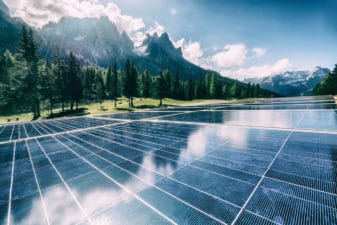
As much as we’d like to believe it’s going to happen, clean energy isn’t about to supply all the world’s energy needs. In fact, experts tend to agree that we’re about a century away from really replacing our energy infrastructure with renewable energy.
If the world’s energy needs were static, it wouldn’t be such a daunting task to replace dirty fuel with clean energy. But thanks to explosive growth in China and wealth growing in other parts of the world, our demand for energy is increasing, and quickly. Governments can subsidize renewable energy all they’d like, but the fact is that existing technology can’t keep up to our increasing energy needs.
Around the world, markets are responding in different ways. In North America, the solution is to increase the use of natural gas as a fuel. It’s abundant, cheap, and relatively clean, at least when compared to coal. In Europe, the answer was increasing the usage of nuclear power, until the 2011 Fukishima disaster in Japan exposed the weakness in that strategy.
In Asia, especially in energy-hungry China, the only real solution is coal. Yes, China is building huge amounts of renewable energy, but coal still represents the cheapest and most reliable fuel, especially since the country is sitting on the world’s third largest coal reserves.
We all know the weakness of coal fueled power — it’s dirty. While filters do a good job of cleaning out most of the bad stuff, burning coal still has one major drawback; it produces a lot of carbon dioxide. The burning of coal even exceeds vehicle exhaust as the largest source of greenhouse gas.
Still, there are a lot of advantages of using coal. We still have at least a century’s worth of it sitting in the ground. It’s cheap, easy to mine, and is much easier to ship than oil or natural gas. If only we could find a way to make it cleaner, coal would be a terrific fuel for our power plants.
The Chinese think they’ve figured out this problem. As outlined in Wired magazine, a prototype power plant has been built in Tianjin, China’s third largest city, that uses a complicated system to filter out the carbon dioxide emitted from burning coal, ending with the carbon dioxide being pumped underground where it would react with rocks and other minerals. After about a century, this would form new minerals.
So far, the process is complicated, costly, and scientists aren’t even sure it works. It takes a huge amount of manpower to figure out even small changes in the process. The facility in China cost more than $1 billion to construct. But if it works, the process will revolutionize coal fueled power plants.
This is very good news for Canada’s two largest coal producers, Teck Resources (TSX: TCK.B)(NYSE: TCK) and Sherritt (TSX: S). If the technology works and becomes commonplace, demand for these companies’ coal is going to be brisk. The price of coal should also do well, which will both increase the value of the mined coal and the coal still in the ground.
It’s also positive for western Canada’s largest power producer, Transalta (TSX: TA)(NYSE: TAC). Currently, more than 50% of the company’s capacity consists of coal-generating plants. Like most other power producers in North America, it is currently expanding into natural gas plants, but carbon dioxide capturing technology would ease government involvement in its existing coal plants. The company would also be free to build additional coal plants, which have several advantages over other fuels.
Foolish bottom line
The world’s energy needs are slated to grow substantially. Unless renewable energy becomes a whole lot more efficient, it’s not about to make a huge difference. Natural gas is a good fuel in areas where the fuel is plentiful and prices are cheap, neither of which apply to most parts of Asia. This leaves coal as the only logical choice.
If we can find a way to minimize the environmental impacts of coal, it has the potential to be the source of a lot of the world’s energy. This is good for coal miners, and for their investors.