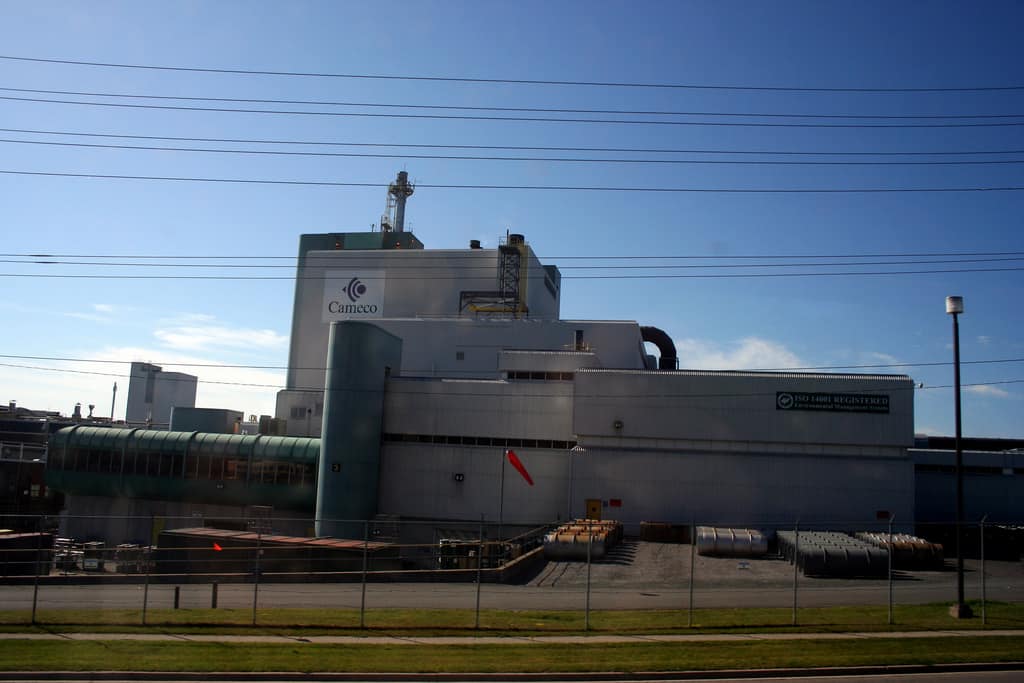
Shares in uranium miner Cameco Corp. (TSX: CCO)(NYSE: CCJ) have been pummeled and are down by 9% over the last year; shares are almost a third of their post Global Financial Crisis high reached in early 2011. While Cameco bounced back strongly over the last six months to be up by 38%, there are signs that any further upside is limited.
Now what?
The biggest factor weighing on Cameco’s stock price is the growing unattractiveness of nuclear power, which gained considerable momentum after Japan’s 2011 Fukushima disaster.
In the wake of a major earthquake, a tsunami hit, disabling the cooling of three nuclear reactors at the Fukushima nuclear plant, causing their cores to largely melt down. There were fears that contaminated water and fissile material had leaked from the reactors, but there were no deaths or illnesses attributed to radiation poisoning.
The accident led to enormous protests against nuclear power in Japan and triggered a four-year moratorium which was lifted last August. This disaster highlighted the risks associated with nuclear power and the potential for catastrophic damage caused by radiation leaks.
In the aftermath of the catastrophe, the price of uranium tumbled and has yet to recover; it’s now only slightly higher than its lowest price in over a decade.
The disaster has had a sharp impact on Cameco and its financial performance. For 2016, net earnings plunged by 195% year over year to a loss of $62 million, and it is doubtful that its performance will improve any time soon.
The Fukushima disaster and cataclysmic damage that can occur if a nuclear power plant fails are not the only reasons for the unpopularity of nuclear power. Sources of renewable energy are becoming cheaper because of technological advancements.
According to research from advisory firm Lazard, wind power is cheaper than nuclear power, while solar, geothermal, and biomass power can have a lower cost per megawatt hour produced. These forms of electricity generation have a significantly lower environmental impact in the event of critical failure.
Importantly, the costs associated with installing and producing electricity from these sources of energy continues to fall because of technological advances. This will make them even more competitive against nuclear power and fossil fuels.
The main argument in favour or nuclear power is that, like coal-fired electricity, it provides a stable source of electricity to meet base-load demand, whereas many renewable sources of electricity are typically incapable of doing so.
Nevertheless, natural gas–fired power generation — while producing more carbon emissions than nuclear power — is stable and emits roughly half the carbon of coal. Abundant supplies of natural gas coupled with significantly lower prices have made it a cost-effective means of producing electricity, and it has a far lower environmental impact than other fossil fuels and is cheaper than nuclear power.
For these reasons, the market for uranium remains limited. It is unlikely that there will be any enormous ramp-up in nuclear power globally, which is what is really needed to spark a sustained lift in demand for uranium.
The impact this is having on uranium prices is being exacerbated by excess supply. The major diversified miners, like Rio Tinto Plc (ADR) (NYSE: RIO), are always looking for opportunities to grow production.
A number of governments are also seeking to increase their uranium exports. This includes Namibia where the Rössing uranium mine owned by Rio Tinto is located. The cash-strapped nation’s government wants to double uranium production and expects it to become a key export as well as driver of economic growth.
So what?
Cameco’s depressed stock price reflects the poor outlook for uranium, and it is unlikely to bounce back any time soon, if ever. This is because other safer forms of renewable electricity generation are become more economic, and lower prices coupled with low carbon emissions have made natural gas a preferred interim solution for battling climate change.