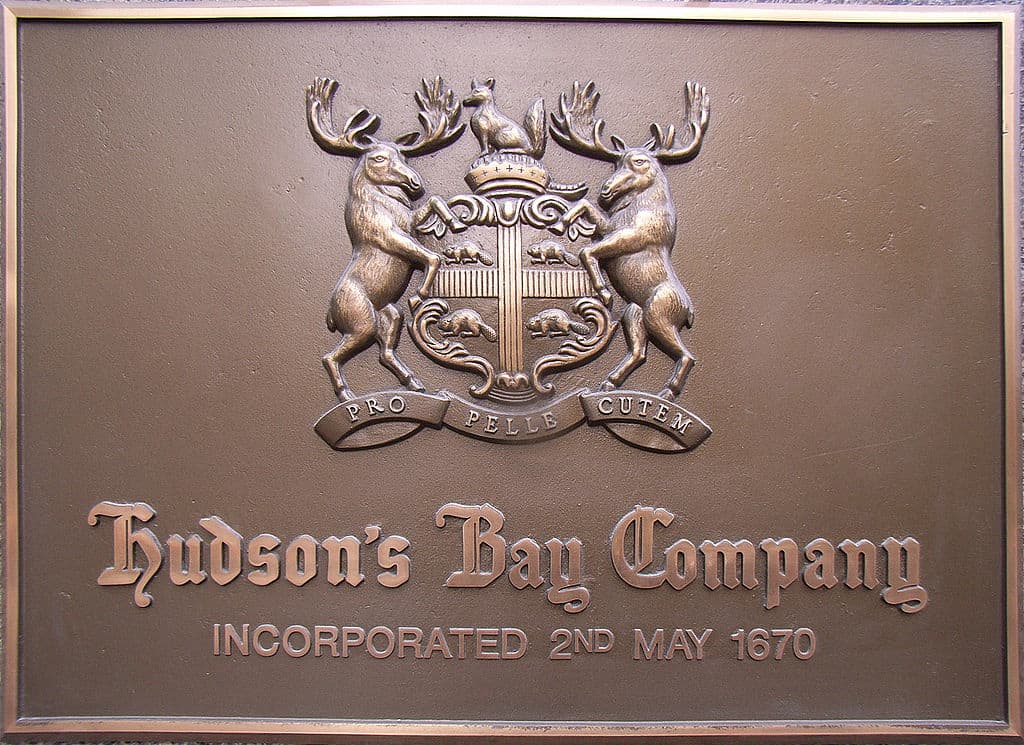
When considering investing in Hudson’s Bay Co. (TSX:HBC), you’re likely thinking about this as a retail play. You’re asking if the company can compete with the online juggernauts and if the business is generating strong sales with the latest fashion trends. You want to understand its strategy for e-commerce so that, in the event the stores fail, you’ve still got a strong online presence.
But what if I told you that, although Hudson’s Bay is a retailer, the real play here is the real estate the stores are located in? And what if I told you that if Hudson’s Bay found a way to unlock that value, investors would seriously reap the benefits.
Let’s look at a real-life example to explain this clearly.
In 2013, Hudson’s Bay purchased Saks, Inc. for US$2.9 billion. In the deal, it acquired the Saks Fifth Avenue flagship store and the Saks OFF 5th brand. Investors were devastated, accusing the company of significantly overpaying. Eighteen months later, the company took out a mortgage against the Fifth Avenue flagship store for US$3.7 billion. In other words, after 18 months, the company had gained US$800 million on its acquisition — and that didn’t even consider the OFF 5th brand.
While investors were upset that Hudson’s Bay had overpaid for a retail business, management was ecstatic because it acquired amazing real estate that it believed would be more valuable in the future. Management was right.
If we were to look at all of the real estate Hudson’s Bay owns and determine a net asset value, we’d likely find that shares of the company are grossly undervalued. According to Connecticut-based activist investor, Land & Buildings Investment Management, which owns 4.3% of the company, the value of the real estate is approximately $35 per share. With shares around $10 per share, you’re looking at a serious discount if the company were trading at its real estate value.
The easiest way to capture this value would be for Hudson’s Bay to spin off its real estate into a separate company, and then become a tenant to that real estate company. This would allow investors to focus on the real estate versus being stuck with a suffering retail brand.
There’s just one problem with this strategy: if Hudson’s Bay’s real estate were to become its own company, it would still be reliant on Hudson’s Bay to succeed. If Hudson’s Bay were to falter, it might stop paying rent, and that would hurt the real estate company. The only real way for a real estate spin-off to succeed would be if it had tenants other than Hudson’s Bay.
But here’s the question: Should you invest in HBC?
There remains a lot of uncertainty around the retail business, and I expect things to get worse before they get better. Nevertheless, if you’re gunning for a real estate play and believe this company is going to create a spin-off, it might be worth picking up shares.