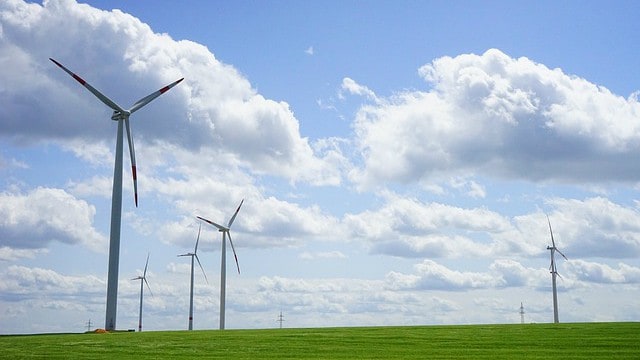
Renewable energy stocks have increasingly come into the spotlight over the past few years, particularly as empowered consumers have begun to request renewable energy options from their utilities.
Renewable energy companies have long been considered inefficient and expensive when compared to traditional fossil fuel-based sources of energy. This stereotype has been largely proven false, as the current generation of renewable energy facilities can compete on both efficiency and price with fossil fuel facilities.
From an investment standpoint, there are several great renewable energy stocks for investors to consider that promise both growth and a handsome dividend.
Innergex Renewable Energy Inc. (TSX: INE) has solar, wind, and hydro facilities scattered across Canada, the U.S., and France. Innergex owns or has an interest in 52 sites with a net capacity of 1,094 MW.
One of the most compelling reasons to consider an investment in a renewable energy company like Innergex is thanks to what is known as a power-purchase agreement (PPA). Power utilities are contracted to provide power to the communities they serve in return for a stable source of revenue. Even better, revenue rates are fixed, and the contract duration can typically span upwards of 20 years.
Of the 52 facilities that Innergex owns or has an interest in, over 40 have contracts expiring at least a decade from now, with several expiring in 2050 or later.
While this factor alone may turn some investors to investing in utilities, critics often note that the stable source of revenue comes at the cost of anemic growth, as utilities will typically need to acquire a competitor or wait for the organic growth of the market it serves before expanding facilities or moving to new markets.
Much of this concern holds true for Innergex; the stock has been relatively flat over the past 12-month period and increased approximately 24% over the course of the past five years. This level of growth is by no means anemic, but considering the growth of the overall market over that same time reveals a slew of similar investments that appreciated much more than Innergex.
The real reasons investors often turn to Innergex is for the dividend the company offers. Innergex offers a quarterly dividend of $0.165 per share, which amounts to a very impressive 4.55%. Over the past five years, Innergex has raised the dividend on a nearly annual basis and seems likely to continue that trend.
In terms of results, Innergex announced quarterly results for the period ending June 30, 2017, earlier this month, which, among other things, showed strong growth.
Revenues for the quarter soared to $109.5 million, bettering the figure from the same quarter last year by 25%. Adjusted EBITDA fared even better, soaring 29% over the same quarter last year, coming in at $85.9 million.
Earnings for the quarter came in at $14.1 million, or $0.12 per share, equal on a per-share basis — the amount earned in the same quarter last year.
During the quarterly update, Innergex announced that the company’s 31st hydro facility in Canada, located in Boulder Creek, British Columbia, became operational towards the end of May. Innergex also announced the acquisition of two additional wind farms in France with a capacity of 119.5 MW.
Is Innergex a good investment?
Innergex has a great dividend, a strong commitment to growth, and it operates in a segment of the energy sector that is poised to grow rapidly over the next decade. Even in the U.S, where the Trump administration has pulled back from environmentally friendly and sustainable sources of energy, Innergex is largely shielded from further pullbacks as U.S.-based facilities account for the smallest part of the company’s portfolio.
In my opinion, Innergex remains an intriguing option for investors looking to buy into the renewable energy sector while reaping the benefits of a great dividend.