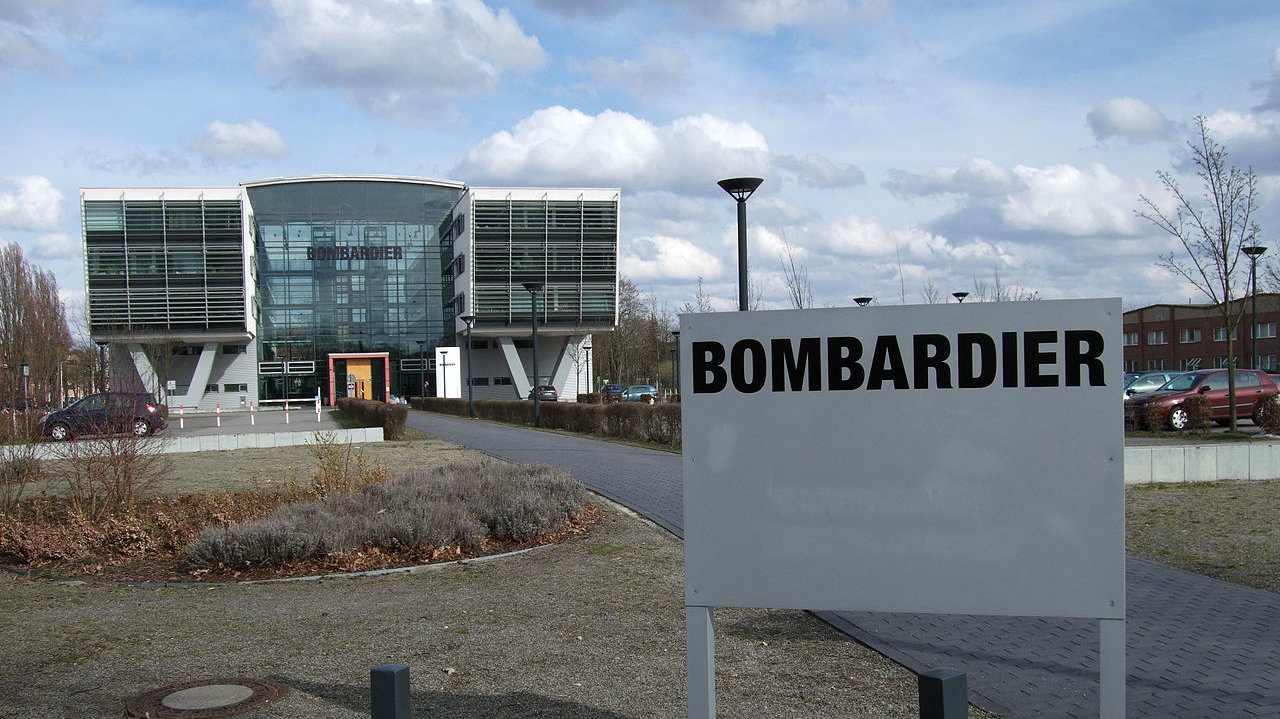
After reading much of the coverage on the Bombardier, Inc. (TSX:BBD) dispute with American rival Boeing Co. (NYSE:BA), it appears to me that the overall consensus among many Canadian journalists covering this dispute is that (1) the big, bad American dog is just picking on the little, polite, tame Canadian dog; (2) the allegations that Bombardier is dumping its planes in the U.S. market via government subsidies is completely erroneous; (3) Boeing is not competing in this space, so it should have no qualm with Bombardier’s CSeries planes; and (4) the Canadian government is right to be stepping in on behalf of Bombardier.
While Boeing certainly is the bigger dog in the fight, what many perhaps do not know is that Boeing is the sole survivor of an onslaught brought on since the 1970s by heavily subsidized European airplane manufacturer Airbus SE, Brazilian firm Embraer SA, and a number of other strong global competitors from emerging markets, which have eaten away at U.S. (and global) market share at a pace that has left Boeing as the prominent American player in the global market, decimating the American aerospace industry.
It is also important to note that the dispute over Canadian subsidies is not new – Brazilian firm Embraer has been complaining for years about the unfair advantage Bombardier has received in the narrow-body plane space — complaints which have largely fallen on deaf ears. With the larger American company Boeing petitioning the U.S. government to step in and protect its domestic market in a similar way that the Trudeau government has pledged support to protect Bombardier and its workers, Boeing is banking that the U.S. government will indeed choose to keep jobs at home — something the Trump administration has vowed to do. When a Brazilian firm cries foul, it is one thing, but when an American company does the same, suddenly it’s a case of bullying.
The World Trade Organization has ruled in favour of Boeing in the past, ruling that Airbus’s subsidies were illegal. While this dispute has lasted decades, the expectation is that when the appeal process ends, Airbus may be in significant trouble; it appears Boeing is attempting to prevent said subsidies from impacting its domestic market, as it has seen in previous cases over the past 50-odd years.
The U.S. Department of Commerce defines “dumping” or “illegal subsidies” as follows: “when a foreign producer sells a product in the United States at a price that is below that producer’s sales price in the country of origin (‘home market’), or at a price that is lower than the cost of production.” You make the determination if Bombardier would fall in this category.
In attempting to put a dollar amount on the subsidies Canadian aerospace company has received over the years from the Canadian government, a number of studies have been done to attempt to quantify the amount. One piece of analysis from The Globe and Mail pegs Bombardier’s total federal and Quebec government support at $4.1 billion over the past 50 years based on what is available via Access to Information filings. To put that number into perspective, that amounts to nearly the entire market capitalization of Bombardier. Bombardier and the Canadian government have been surprisingly stingy with the amount of information they release, making subsidy amounts hard to measure, indicating the actual amounts may be much, much higher.
Taxpayers should be rioting in the streets, demanding Bombardier pay back $4.1 billion (minimum) in inflation-adjusted subsidies in the form of dividends to the Quebec government (after all, the government owns a 49.5% stake in the CSeries project — a fact which still astounds me). Instead, most Canadians are standing in solidarity with Bombardier.
Global competition is just that. When governments have to step in to make a company competitive, pumping taxpayer money into a black hole or into the pockets of a few rich families, it is only after widespread revolt that things will change.
Stay Foolish, my friends.