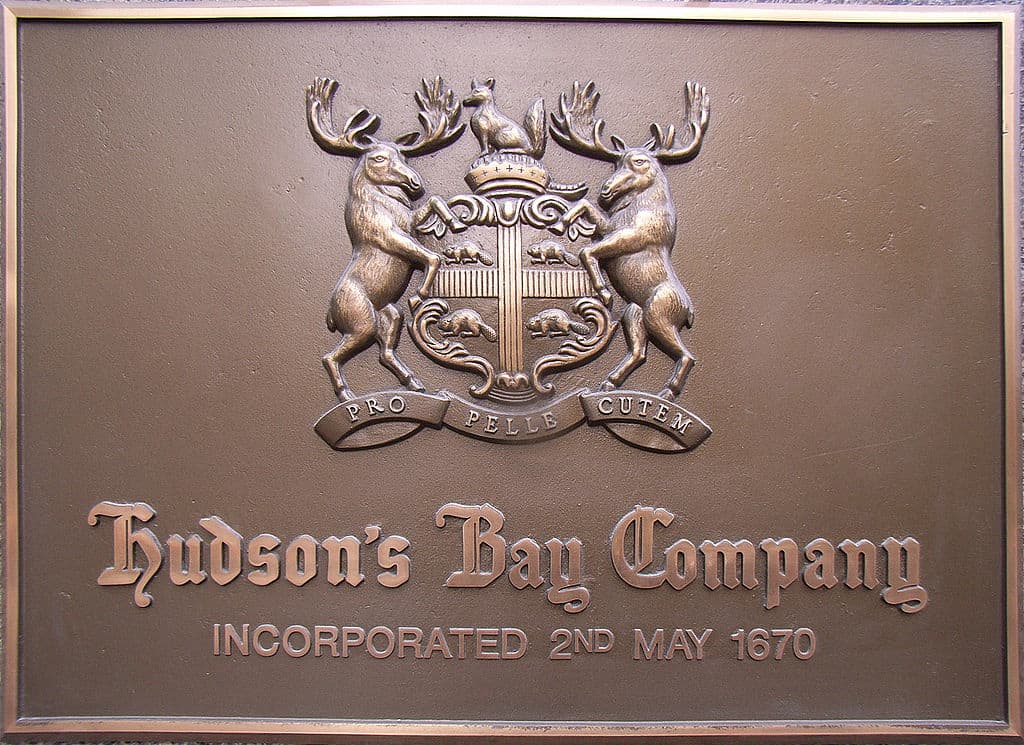
On October 20, Jerry Storch, CEO of Hudson’s Bay Co. (TSX:HBC), announced that he would step down from the company effective November 1. Storch formerly served as CEO at the recently bankrupted Toys “R” Us, and in his departure he said that he was confident Hudson’s Bay would be able to navigate the evolving retail environment.
At a Shoptalk conference on October 9, Storch said that closing brick-and-mortar locations was not a viable path forward for retail companies. He emphasized the growth of e-commerce as a necessity for modern retailers. However, Storch also said that the company would consider selling some of its prized locations if the offer was right. Whatever the reasons for the separation, the departure of Storch comes at an interesting time in which the company is at a crossroads.
Hudson’s Bay has been locked in an internal battle as one of its key shareholders has launched a campaign arguing that the company must commit to making the most of its real estate holdings rather than trying to resurrect its fading retail numbers. Land and Buildings Investment Management, which possesses close to a 5% stake in shares of the company, has threatened to remove company directors if it does not adequately move forward.
If Hudson’s Bay does not seek to develop its real estate holdings into high-end condominiums or turn to boutique retailers, it has maintained the option to go private. Land and Buildings has suggested that the company is already pursuing privatization in consulting with JPMorgan Chase & Co. and Bank of America Corp. Reports suggest that principal shareholder and executive chairman Richard Baker is attempting to raise the equity to go private.
Shares of the company dropped significantly following news that luxury department store chain Nordstrom, Inc. had suspended its attempts to go private after struggling to obtain financing. Hudson’s Bay stock has declined 9.3% in 2017 as of close on October 20 and 29% year over year.
In June, Hudson’s Bay announced that it would lay off 2,000 employees in North America, mostly in the United States, in an effort to save more than $350 million per year when the transformation is complete. The company released its second-quarter results on September 5.
Digital sales were up 12.7% and 19.8% at department store banners, illustrating the strong growth the company is seeing in its e-commerce sector. However, it posted a net loss of $201 million compared to a loss of $142 million in Q2 2016. Year-to-date gross profit as a percentage of retail sales was reported at 40.9%, representing a decline of 80 basis points in comparison to the previous year. The stock also provides a modest dividend of $0.01 per share with a 0.7% dividend yield.
Should we expect more big announcements before the end of 2017?
If Hudson’s Bay faces the same struggles as Nordstrom in attracting equity firms to finance privatization, it will no doubt be subject to increased pressure from Land and Buildings to make the transformation to real estate. Its second-quarter note made a specific mention of management’s intentions to make the most of its real estate holdings moving forward.
It is probably no accident that the company is saying goodbye to a retail veteran in the midst of this debate.