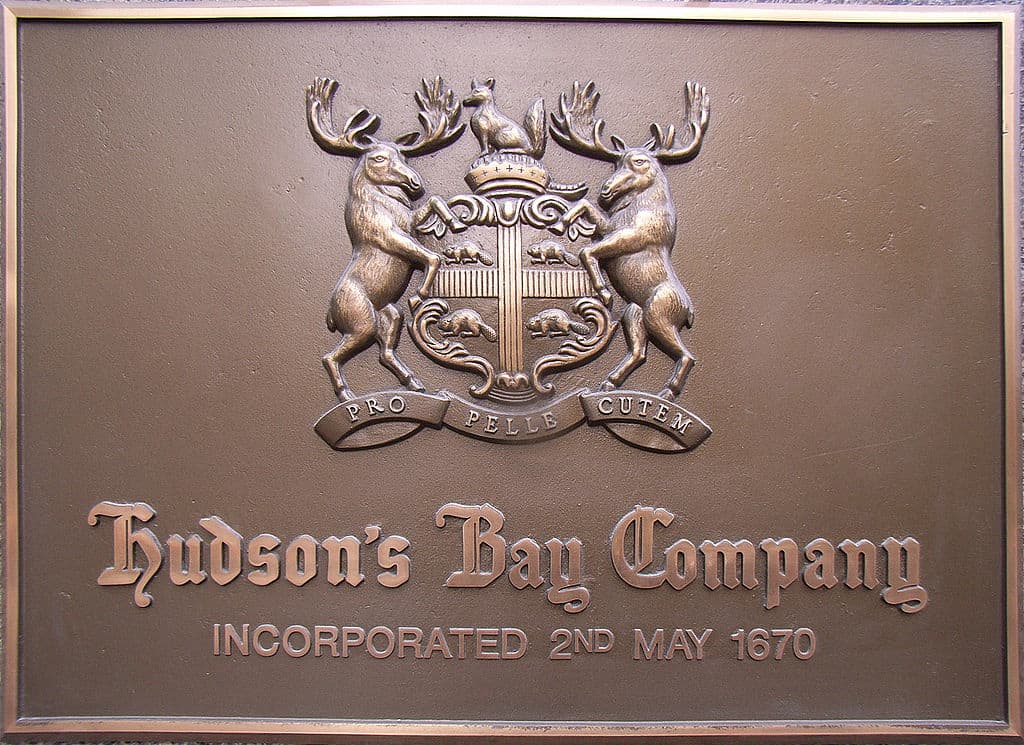
Few investors can argue the fact that the retail segment is under a significant amount of pressure from both internet e-commerce giants as well as the continuing proliferation of mobile-first shoppers. As a result, traditional brick-and-mortar retailers like Hudson’s Bay (TSX:HBC) are feeling the pinch to either drastically innovate their business models or continue to lose store traffic and sales, ultimately meeting the same fate as other iconic retailers that have closed their doors over the past few years.
Hudson’s Bay escaped disaster and was on the road to recovery several years ago, as the company jettisoned underperforming stores and brands and managed to acquire an enviable portfolio of luxury retail brands in the U.S.
Unfortunately, that revival was short-lived, as Hudson’s Bay began a series of additional acquisitions that included online retailer Gilt and a major retailer in Europe. Hudson’s Bay sold off Gilt earlier this year and, on the back of weak sales numbers, even announced a series of store closures for the iconic Lord & Taylor brand in the U.S.
HBC’s European venture is taking a back seat
One of the more ambitious acquisitions of the past few years by Hudson’s Bay was for the European chain Galeria Kaufhof. The deal itself cost Hudson’s Bay $3.9 billion and was envisioned at the time as a means for Hudson’s Bay to get an established foothold into the European retail market — something North American retailers have long struggled to do.
Earlier this month, Hudson’s Bay announced a deal to merge Galeria Kaufhof with Austrian-based Karstradt. Hudson’s Bay will realize $616 million from the deal that will be used to reduce debt. The combined business from the merger will see Hudson’s Bay take a 49.99% ownership in the company, which includes several other Hudson’s Bay- and SIGNA-owned brands such as Signa’s Galeria INNO and Karstadt sports stores.
The deal also calls for the creation of a real estate venture that will comprise an even 50-50 ownership and over $4.9 billion (€3.2 billion) in assets.
Hudson’s Bay CEO Helena Foulkes noted that the deal will allow the company to focus on the North American market, which, given the most recent quarterly results, couldn’t have come at a better time.
HBC’s Q2 results — good enough?
Hudson’s Bay reported results from the second fiscal quarter earlier this month, which saw the company report revenue of $2,160 million — a decrease of $44 million over the same quarter last year. Comparable sales witnessed a small drop of 0.4%, while comparable digital sales saw an uptick of 10.8%.
Overall, the company reported a net loss of $147 million, or $0.62 per share, in the most recent quarter compared to a net loss of $100 million, or $0.55 per share, reported in the same quarter last year. Despite that significant loss, Hudson’s Bay still managed to come in better than the $0.67-per-share loss that analysts were expecting.
Apart from offloading the European arm of the business, one area where Hudson’s Bay shown some promise was in margins. The company managed to realize higher margins in the quarter, which was attributed to improved sales from its full-price margin rates, particularly when compared to the clearance sales.
Should you buy Hudson’s Bay?
Retail investments are beginning to carry an increased risk, particularly as shopping preferences and habits continue to evolve with greater online shopping and fewer in-person shopping trips. That being said, Hudson’s Bay’s divestiture of its European brands is a great decision, as is the company’s stated intention to focus on finding efficiencies and fixing the North American retail operation.
While I have no doubt that Hudson’s Bay will turn around and become a viable investment option in the future, at this point, there are just far too many other great investment options on the market.