Canadian energy stocks are caught in a crisis. Natural gas is in a multi-year slump caused by supply substantially outpacing demand. Even rising consumption of natural gas as a cleaner alternative to coal-fired electricity generation has done little to lift prices. Since the start of 2020, the clean fossil fuel has lost 11% despite its latest rally.
This has sharply impacted the fortunes of North American energy stocks. Many are struggling to meet their financial obligations, creating the potential for a sharp uptick in industry bankruptcies. This shouldn’t deter you from buying natural gas producer Canacol Energy (TSX: CNE).
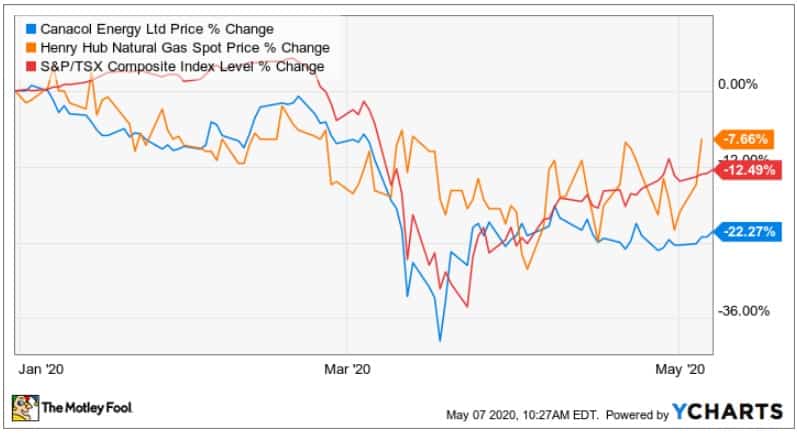
After losing 22% for the year to date, Canacol appears extremely attractively valued, which makes now the time to buy what is one of the best Canadian energy stocks available.
Energy stock with a market advantage
Canacol is in the unique position where it can lock-in prices for the natural gas that it produces, which are significantly higher than the North American Henry hub benchmark. For 2020 Canacol has contractually secured US$4.80 per thousand cubic feet (MCF) sold, which is 2.5 times greater than the Henry Hub price of US$1.96 per million British thermal units (MMBTU). That gives Canacol a significant financial advantage over North American natural gas producers.
Comparatively lower expenses are also bolstering Canacol’s profitability. Labour and many other costs associated with operating in Colombia’s petroleum industry are less than North America, giving Canacol an additional financial edge.
For 2019, Canacol received an average price of US$4.76 per mcf sold net of transportation expenses. After deducting royalties and operating expenses of US$0.66 and US$0.28 per mcf, respectively, Canacol earned an operating net back of US$3.82 per mcf sold.
This was significantly higher than its North American competitors and explains why Canacol has remained profitable when many other drillers are losing money on the natural gas produced.
Unique energy market conditions
Many U.S. oil producers are flaring the natural gas produced as a by-product of their oil operations, as extremely low North American prices make it uneconomic to process and sell the natural gas produced.
Canacol can contractually lock-in a higher price in Colombia because of the South American country’s energy crisis. Even after decades of investment in hydrocarbon exploration and development Colombia has not made any major oil or natural gas discoveries, leaving the Andean nation with limited energy reserves.
That has been exacerbated by the political and economic crisis in Venezuela which was responsible for its natural gas exports to Colombia ceasing. Colombia’s natural gas supplies are also declining because of rising decline rates at its aging offshore gas fields.
These supply constraints coupled with growing consumption in the Latin American nation have led to a large and growing supply shortfall. That will only worsen as investment in Colombia’s petroleum energy declines because of sharply weaker oil prices. This long-term shortfall in natural gas production will support higher prices for the foreseeable future.
Foolish takeaway
Canacol’s growing production and rising sales volumes due to improved access to Colombian energy markets, the driller’s earnings will continue expanding at a solid clip. This makes it one of the best Canadian energy stocks available.
If you buy Canacol today, you will pay a deep 168% discount to the net asset value of its proven and probable natural gas reserves.
This illustrates the considerable capital gains ahead. Canacol’s regular sustainable dividend yielding a juicy 5.8% will reward you while waiting for its stock to rally.