Warren Buffett recently dumped his entire holdings in the four major U.S. airlines. This is believed to have added around US$6 billion to Berkshire Hathaway’s cash holdings, lifting his war chest of cash to around US$140 billion — and sparking sparked considerable speculation about the intentions of one of the world’s most closely watched investors.
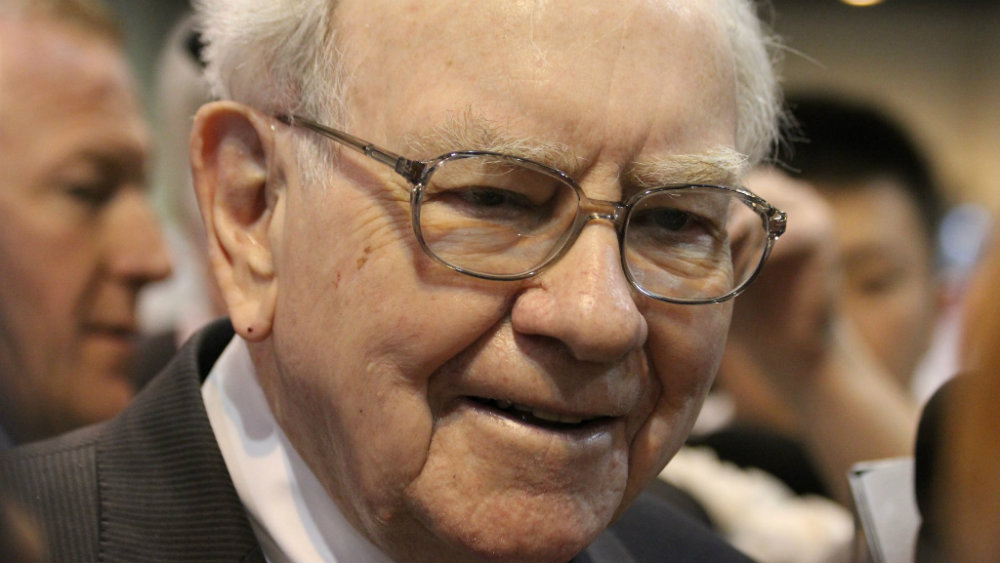
Image source: The Motley Fool
What do Buffett’s actions mean?
Buffett incurred a considerable loss on his investment in the four major U.S. airlines — an industry he has scorned for decades. He once famously quipped at the 2013 Berkshire Hathaway meeting: “Investors have poured their money into airlines … for 100 years with terrible results. ... It’s been a death trap for investors.”
Markets were confused by Buffett’s sizable investment in the four major U.S. carriers, Delta Airlines (NYSE: DAL), Southwest Airlines, American Airlines and United Airlines, which was worth around US$9.5 billion at the end of 2019. It is believed that Buffett crystalized a large loss upon selling the investment, which is estimated to have generated around US$6 billion in cash.
Nonetheless, with Delta’s CEO advising at the start of April that it was burning through US$60 million a day and posting a US$534 first quarter 2020 loss, the outlook for airlines is worsening. Even more so, when considered that Air Canada’s President and CEO stated it will take three years for flight demand to return to 2019 levels.
Like Delta, Air Canada posted a large first quarter loss of over $1 billion, which was mainly driven by foreign exchange losses and an 80% plus capacity reduction.
Second quarter 2020 losses for airlines will be worse.
These events illustrate that Buffett has made the right decision.
An important lesson to learn
Buffett’s action stress an important and often ignored lesson for investors. While it is painful to incur losses, don’t be afraid to sell loss making stocks if fundamentals are so poor that there is no chance of the company recovering to previous highs.
There are many examples of companies that have failed because of secular changes to the markets in which they operate. Among the most notable of these is the bankruptcy of leading photography company Kodak and the fall of once mighty Sears, which at one point was the world’s largest retailer. A combination of disruptive technology, changing consumer habits and hubris led to their demise.
Airline industry is evolving
In a post coronavirus world, airline fundamentals have changed. Greater regulation and government scrutiny of travel and tourism will impact the airline industry for the foreseeable future.
Many countries have even closed their borders and banned international flights. Australia doesn’t anticipate accepting international travellers until 2021, while South America’s third-most populous country, Argentina, suspended all flights until September 2020.
To survive the current harsh operating environment, where cash flow could dwindle to zero and earnings plunge deeper into the red, many carriers have loaded up on debt. Delta’s long-term debt grew 43% between the end of 2019 and first quarter 2020 to a whopping US$12.7 billion, while current debt grew by a stunning 90% to US$4.3 billion.
At the end of April, Delta announced that it intended to acquire another US$3 billion of debt. While that bolsters its ability to survive the current harsh operating environment it eventually needs to be repaid. The sharp increase in debt means significantly higher financing costs, which will eat into Delta’s profits.
For these reasons, it’s difficult to see airlines recovering to anything resembling their pre-coronavirus status for three of more years. That makes many, especially those like Delta which have loaded up on debt, unattractive investments.
Looking ahead
Buffett’s decision to dump his airline holdings has hit confidence in the industry hard. Nevertheless, Air Canada is a contrarian bet that’s more appealing than Delta because it operates in a less competitive market where it is the dominant player.
Air Canada is not as indebted as Delta, however. By the end of April, it had drawn$1 billion from existing credit facilities and added $1.6 billion in short-term loans.
Air Canada has many levers at its disposal, including tapping debt and equity markets for capital and even a potential bailout from Ottawa. While airlines are highly unappealing investments in the current difficult environment, Air Canada is an attractive contrarian play on an air travel recovery.