Publicly listed companies raise capital from the investing public who in turn make money from shares bought, through price appreciation and dividends. The objective of most investors is to reduce volatility, prevent a potential loss, and generate market-beating returns.
Legendary investor Warren Buffett once said, “Never invest in something you don’t understand.” Thus, picking the right stock is a challenge because it requires research and evaluation. However, the GOAT of investing also said, “Diversification is a protection against ignorance.”
Canadian investors are fortunate because exchange-traded funds (ETFs) are available on the TSX. Such funds have advantages and are better investment choices over individual stocks in certain situations.
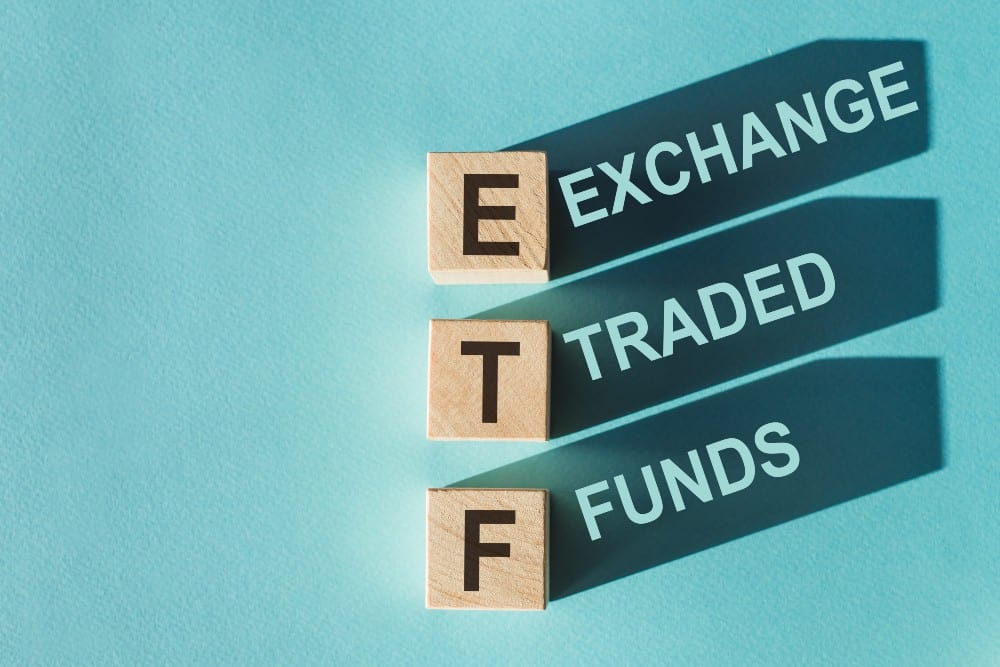
Image source: Getty Images
1. Instant diversification
An ETF is a basket of different investments that includes stocks, bonds, commodities, and cash. The real benefit of ETF investing is instant diversification. Since ETF providers track the performance an index or a particular sector, you can choose a broad range of companies or the best bundle, depending on your preference and risk appetite.
2. Difficulty in choosing stocks
Many investors turn to ETFs when they experience difficulty in hand-picking stocks that can outperform and deliver better returns. For example, energy was the top-performing sector last year and continues to surge in 2022.
Investors who want exposure to Canada’s energy sector can skip the process of selecting individual names by investing in BlackRock’s iShares S&P/TSX Capped Energy Index ETF (TSX: XEG). The ETF’s targeted exposure is to energy companies and it seeks long-term capital growth by replicating the performance of the S&P/TSX Capped Energy Index.
Some people think ETFs deliver average returns. XEG’s unique characteristics make it a solid investment choice. As of February 1, 2022, 56.67% and 42.60% of the fund are invested in the oil & gas exploration & production and integrated oil & gas companies.
At $13.01 per share, XEG outperforms the TSX year-to-date (+22.97% versus +0.66%). Notably, the ETF’s total return in the last three years is a respectable 50.53% (14.58%). If you invest today, the overall return in the near term should be higher since the fund pays a 1.80% dividend.
XEG has 22 energy stocks as of this writing, with Canadian Natural Resources (25.55%), Suncor Energy (24.72%), and Cenovus Energy (11.47%) as the top three holdings. The asset manager rebalances the portfolio every quarter.
3. Unclear growth potentials
Sometimes it’s hard to assess the upside potential of stocks, particularly those in the high-growth technology sector. If performance drivers of individual names are unclear to you, consider taking a position in iShares S&P/TSX Capped Information Technology Index ETF (TSX: XIT).
BlackRock is also the asset manager of this ETF whose targeted exposure is to Canada’s information technology companies. By replicating the S&P/TSX Capped Information Technology Index’s performance, XIT hopes to achieve long-term capital growth.
The fund is weighed heavily in application software (53.75%), internet services & infrastructure (18.45%), and IT consulting & other services (16.77%). TSX’s tech sector and XIT are down 13.12% and 13.15% year-to-date. However, both have impressive returns of more than 220% in the last five years. XIT currently trades at $13.01 per share.
Relatively inexpensive
ETFs provide investors alternatives that could be advantageous in specific situations. Furthermore, ETF investing is ideal for beginners because it’s relatively inexpensive.