On the road to net-zero, the Government of Canada is implementing bold climate change policies, one of which includes a requirement for all car and passenger truck sales in the country to be zero-emission vehicles (ZEV) by 2035.
And since EVs are far more common than hydrogen fuel cell vehicles, EVs will likely dominate the road.
A revolution to replace traditional fossil-dependent vehicles is already underway, and its impact can be seen across a variety of businesses and assets associated with EVs. A prime example is the explosive rise in demand for battery metals.
So, if you believe in the EV revolution, and can hold battery metal stocks until 2035, here are three you should consider buying, each representing one of the three primary battery metals.
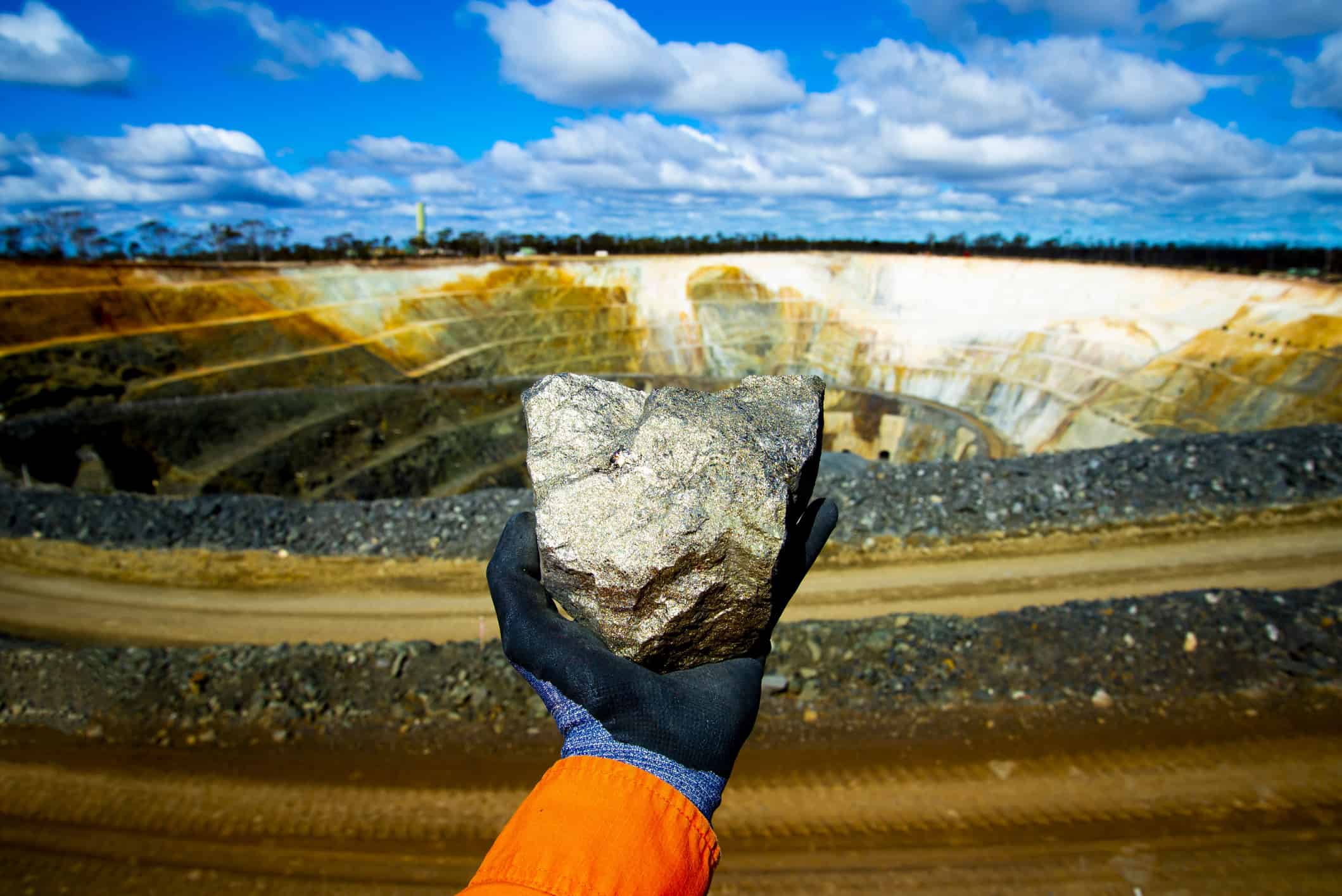
Source: Getty Images
A nickel stock
Nickel is one of three essential battery metals, even though it’s still chiefly used by the steel-making industry. The mass production of EVs will transform the nickel market, causing demand for this metal to surge. You can gain exposure to it by investing in a company like Lundin Mining (TSX: LUN). This company has an impressive international portfolio of base metal properties in six countries.
Lundin is widely known as a copper company, as most of its revenue comes from copper, but a sizeable portion (11%) comes from the battery metal nickel.
Currently, the stock is going through a rough phase and has fallen over 57% from its 2021 peak. This brutal correction, while disheartening from a capital appreciation perspective, has pushed the yield up to a juicy 5.3%. Lundin also pays out an inaugural performance dividend. Currently, the stock is undervalued and discounted, making it a smart buy for long-term future growth.
A cobalt stock
Australian Jervois Global (TSXV:JRV) offers exposure to not one but two battery metals – cobalt and nickel. It has cobalt-producing assets in Finland and the U.S. (Idaho), and a refinery for both cobalt and nickel in Brazil. The company focuses on sustainable mining and refining practices, which makes it an attractive pick from an ESG investing perspective, more so than a typical EV stock.
Jervois Global experienced phenomenal growth in the post-pandemic market – over 650% in roughly two years. It’s going through a correction that is pushing the stock closer to its pre-pandemic value, but there’s still a long way to go.
The stock may keep falling for a while. If you can buy in just before it starts growing again, and hold it long-term, you may see robust growth that surpasses the post-pandemic growth.
A lithium stock
Lithium completes the trio of most prominent battery metals, and one of the best stocks to gain exposure to it (at least in North America) is Lithium Americas (TSX: LAC)(NYSE: LAC). It’s headquartered in Vancouver and has operations in the U.S. and Argentina.
The company has two projects in Argentina, one of which it fully owns. The U.S. project is still in the development stage and has a projected mine life of over 40 years.
The Lithium Americas stock has gone through multiple growth phases in the past decade, but it’s been more volatile than ever before in the last couple of years.
Waiting for the stock to fall below or even near its pre-pandemic value might be counterproductive, so you may want to consider buying once it starts dipping after the current bullish phase.
Foolish takeaway
The future is green and investing in metals that underpin the green tech revolution just makes sense. Keep in mind, however, that a potential risk of investing in these battery metal stocks is the possibility that better battery technology will come along to replace lithium-ion batteries. Having said that, there’s a minimal chance we will see such a breakthrough before 2035.