Canada Pension Plan (CPP) contributions are mandatory for working Canadians, whether employed or self-employed. The Canada Revenue Agency (CRA) deducts a percentage of your income throughout your working years. The reward for your contributions is a pension or income for life when you retire.
CPP benefits are fully taxable. Your interaction with the CRA does not end when you start receiving your retirement pension. This applies whether you start at age 60, 65, or later. Unfortunately, CPP replaces only one-third of your average pre-retirement income (a 33.3% replacement rate at the enhanced level). In addition to maximizing CPP, pensioners often seek alternative sources to fill this gap.
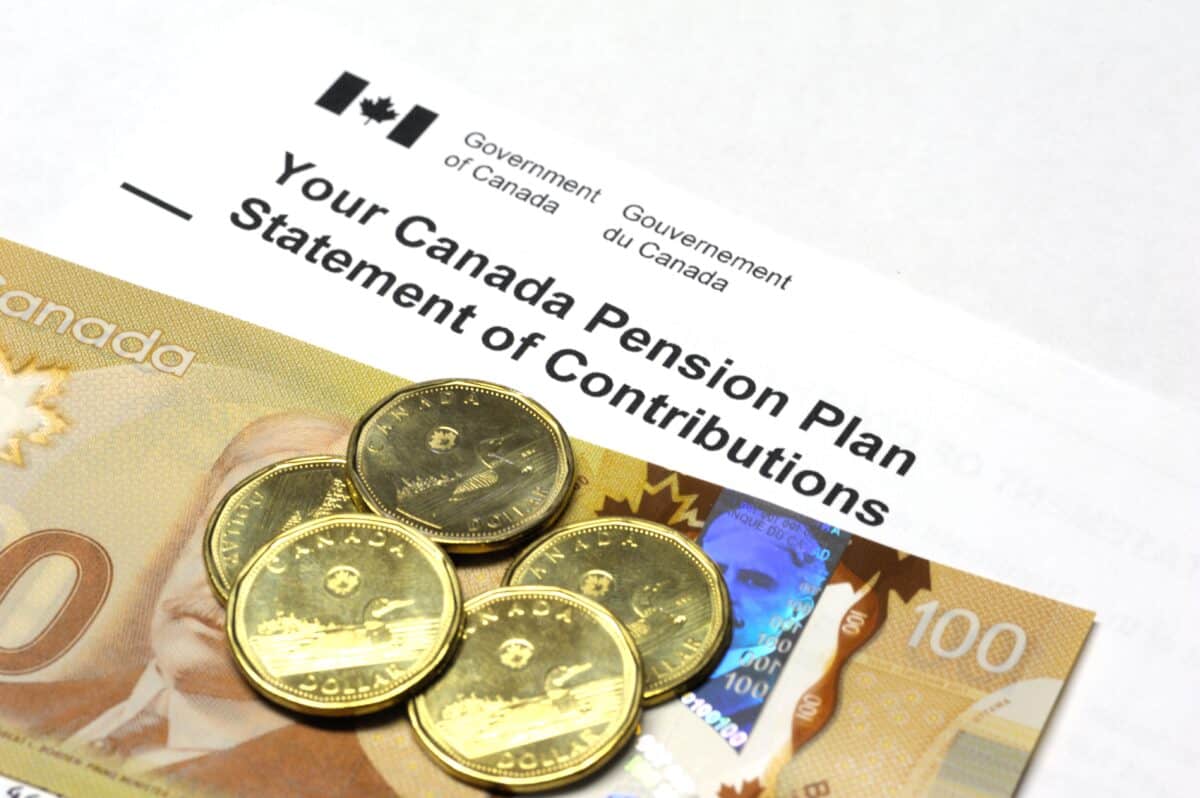
Source: Getty Images
Receive CPP and continue working
You can receive CPP retirement benefits and continue working, although CPP contributions remain mandatory between the ages of 60 and 64 years old. Between the ages of 65 and 69, contributions are optional. After age 70, you can no longer contribute.
If you start receiving CPP payments at age 60, your benefit is permanently reduced by 36% (a 0.6% reduction for each month claimed before age 65). Conversely, delaying your pension beyond age 65 increases the CPP benefit by 8.4% per year (0.7% per month), a 42% permanent increase over five years.
The pension is indexed to inflation annually and is payable for life. Assuming you change your mind, you can cancel your retirement pension up to 12 months after you begin receiving it. However, you must repay all CPP benefits you received to the CRA.
Report all income
Having a part-time job or consulting work while already receiving CPP benefits can be a sensible way to boost retirement income. But you raise alarm bells if you don’t report this extra work income to the tax agency. The CRA requires full disclosure when you file your income tax return, your CPP benefits, plus other income sources.
Failure to report income or misreporting may result in financial penalties of up to 50% of the understated tax. Accurate, honest, and timely reporting helps ensure continued access to government benefits and tax credits.
Earn tax-free income without CRA interference
Canadians can supplement their CPP benefits with investment income through retirement accounts such as the Tax-Free Savings Account (TFSA). Again, the CRA keeps track of contributions and ensures no user overcontributes. The penalty is 1% monthly on the excess contribution.
To avoid CRA interference and receive tax-free income, don’t go beyond the annual limit or available contribution room. Suppose you invest in Canada’s oldest financial institution. Since the Bank of Montreal (TSX:BMO) is TSX’s dividend pioneer with a payment history spanning 196 years, the dividends are almost akin to a pension.
At $156.85 per share, the $113.3 billion bank pays a 4.3% dividend. A $7,000 position generates $75.60 in tax-free quarterly income. Use your yearly TFSA contribution limit to accumulate more BMO shares. Furthermore, reinvest the quarterly dividends to accelerate the compounding of your TFSA balance.
CRA rules apply to all
Retirees don’t get preferential treatment when it comes to taxation. Under Canada’s tax system, all income, including CPP benefits and other sources of income, is subject to tax. Pensioners, like regular taxpayers, must fully comply or else risk appearing on the CRA’s radar.