Building a million-dollar Tax-Free Savings Account (TFSA) isn’t a fantasy. It’s a math problem mixed with discipline and time. The trick is understanding how to make the tax-free compounding work in your favour and how to balance growth, consistency, and risk along the way. Here’s what to consider if you’re serious about hitting seven figures.
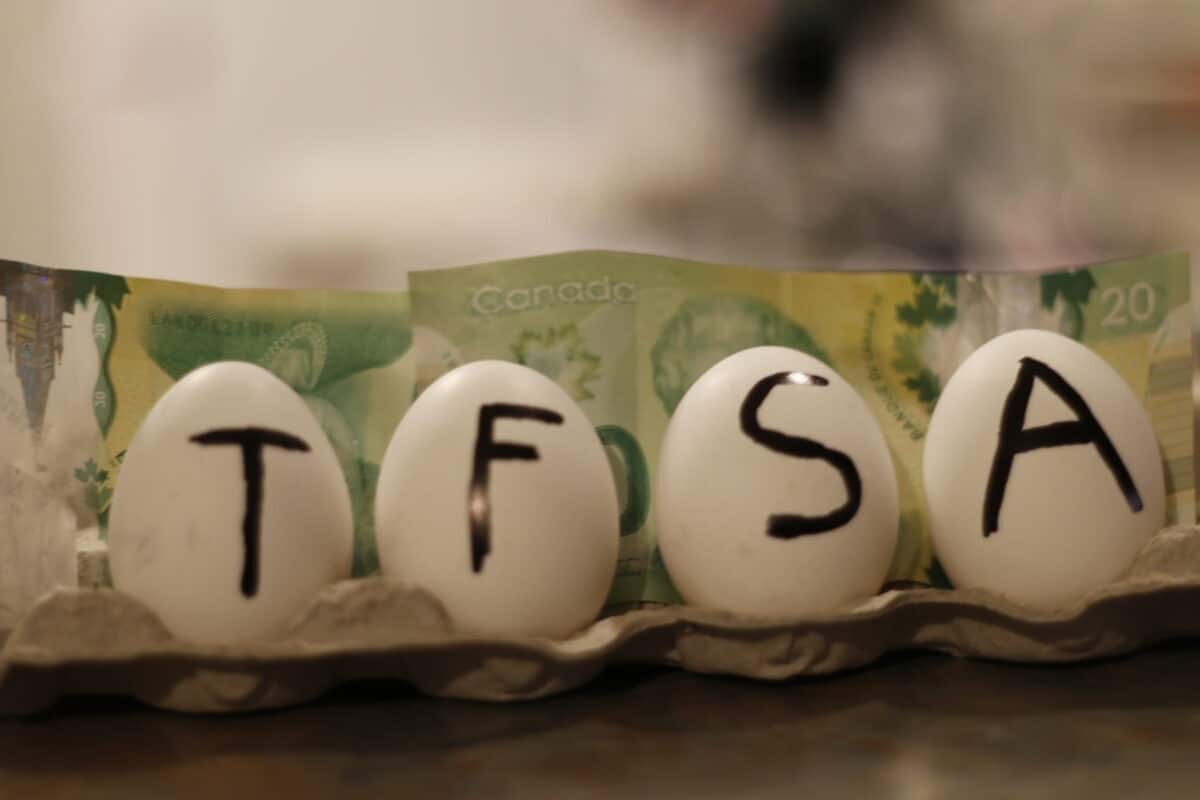
Source: Getty Images
Starting out
The TFSA’s power lies in its tax-free growth. Every dollar earned in dividends, interest, or capital gains stays yours. If you start early and stay consistent, compounding does the heavy lifting. As of 2025, the lifetime TFSA contribution room is $103,500 for someone eligible since 2009, with another $7,000 expected to be added each year. That may not sound like much compared to $1 million, but the key is that there’s no limit on growth.
High returns require exposure to growth, but you can’t afford volatility that makes you panic-sell. That’s why your mix of investments matters more than picking the perfect stock. And if your goal is a million-dollar nest egg, you want every dividend or distribution to go right back in. Dividend-reinvestment plans (DRIPs) let you buy more shares automatically, snowballing your portfolio.
Your million-dollar TFSA won’t grow in a straight line. There will be recessions, corrections, and crashes. The investors who make it are the ones who keep contributing when everyone else pulls out. Once you’re near your goal, your TFSA becomes a perfect retirement income source. Withdrawals are tax-free and don’t affect the Canada Pension Plan or Old Age Security. That means you can use it to supplement income without losing benefits.
Look into ETFs
This is a lot to consider! You can’t actually get this all from one stock, can you? Well, yes and no. Instead of one equity, it might be good to consider a solid exchange-traded fund (ETF) instead. Think of it as a one-stop shop, where a single investment that gives you instant diversification, professional management, and long-term growth potential.
The magic lies in how ETFs work. Each one holds a basket of stocks or bonds, often tracking an index. So, instead of betting on a few companies, you own hundreds at once, even thousands, spreading your risk across sectors, geographies, and industries. That diversification is key to compounding over decades without being derailed by one company’s bad year.
ETFs also shine because of cost. Most charge tiny management fees compared to mutual funds. Over 20 or 30 years, saving even 1% in fees can mean hundreds of thousands of dollars extra in your pocket. That’s what lets a simple ETF strategy quietly snowball into something big, as every saved dollar stays in your account, compounding tax-free inside your TFSA.
VXC
If you want to build a million-dollar nest egg without juggling dozens of stocks, Vanguard FTSE Global All Cap ex Canada Index ETF (TSX: VXC) is one of the simplest and smartest ways to do it. VXC was built for investors who want instant diversification. It holds thousands of companies from around the world from U.S. giants to European leaders Asian powerhouses. That means with one ETF, you’re owning virtually the entire global market outside Canada.
The ETF is heavily weighted toward the United States, which makes sense since U.S. companies dominate global market value and innovation. But it also includes developed markets in Europe and Asia, plus exposure to emerging markets like India and Brazil. That mix balances stability with growth potential. When one region slows, another often picks up, smoothing your returns over time.
Another reason VXC works so well for long-term wealth is cost. Its management expense ratio is around 0.22%, which is tiny compared to traditional mutual funds charging 2% or more. Over 20 or 30 years, that difference can mean hundreds of thousands of dollars. Performance has also been strong. Over the past decade, VXC has averaged roughly 9% annualized returns, driven by global equity growth, and up 13.5% year to date.
Bottom line
The beauty of using just one ETF is how easy it is to stick with. VXC automatically adjusts its allocations as markets shift. That simplicity helps investors avoid emotional mistakes like panic-selling during downturns, and reach that million-dollar nest egg sooner.