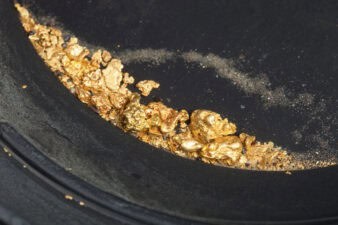
Throughout 2025, one of the biggest storylines, if you’ve been following the markets, is the performance of gold as well as gold stocks. In fact, for many investors, finding high-quality investments to buy to gain exposure has been a priority for this very reason.
Gold is an asset that offers a lot of advantages for investors, which is why the conventional thinking is that it should account for roughly 5% of your portfolio.
Gold is known as a safe-haven asset that helps protect your capital from inflation over the long haul, and it often moves differently from stocks, giving your portfolio more balance when volatility spikes.
However, gold also doesn’t generate a yield, and it doesn’t produce cash flow like businesses do. That’s why the price of gold can underperform when yields rise.
So, although owning the physical metal can be a great long-term stabilizer, many investors prefer to gain exposure through the companies that mine it or through exchange-traded funds (ETFs) that diversify across multiple producers.
That way, you get exposure to gold’s upside while still benefiting from operational growth, dividends, and share-price appreciation.
Because gold has been on an incredible run this year, many investors are now wondering which funds offer the best exposure. But first, why has the gold price been on such a tear this year?

Source: Getty Images
Why has gold been outperforming in 2025?
There are a few significant reasons why the price of gold has gained roughly 60% since the start of the year, a massive rally for a typically low-volatility asset.
First off, because it’s a safe-haven asset, as geopolitical tensions rise and trade wars begin, investors were looking for ways to shore up their portfolios and diversify their investments.
Furthermore, the impact inflation has had on the economy has also caused the price of gold to increase. Even though inflation has eased from its peak, gold is still “catching up” from the last several years, where its performance lagged the pace of rising prices.
As I mentioned earlier, gold tends to underperform in a rising-rate environment because higher yields on stocks and bonds become more attractive to investors. So, as central banks began cutting rates and easing policy again this year, it has removed a major headwind for gold and made it easier for prices to push higher as investors buy gold funds for their portfolio. In addition, inflation also causes the price of producing gold to increase, which naturally pushes the price higher.
Plus, on top of the economic uncertainty worldwide this year, combined with falling yields, the U.S. dollar has been weakening throughout the year, which is extremely important for gold since it’s priced in U.S. dollars, and, therefore, the two typically move in opposite directions.
Finally, central banks around the world have also been buying gold aggressively, so it’s no surprise that gold has been one of the strongest asset classes you can buy in 2025.
Two of the best gold funds to buy now
If you’re looking to gain exposure to the price of gold, the two main ways to do it are by gaining exposure to the producers or by buying a fund that simply holds and stores the gold for you.
For example, one of the best gold funds to buy is iShares S&P/TSX Global Gold Index ETF (TSX:XGD).
XGD invests in several different gold producers, which makes it a much more volatile investment. Because gold producers are leveraged to the price of gold, they can see huge rallies when the price of gold is increasing, but they can also sell off quickly when the price of the precious metal is falling.
So, while XGD is one of the best ways to gain exposure to the gold producer sector as a whole if you’re going to buy and hold for the long term, buying now after such a significant rally ensures you’re paying significant premiums.
Instead, the better way to gain exposure in this environment is to buy a gold fund that’s a lot less volatile, like Sprott Physical Gold Trust (TSX:PHYS), which simply buys and holds the physical gold for you.
For comparison, the PHYS gold fund has gained 54% so far this year compared to XGD, which is up 111% year to date.