I am not opposed to investing in clean energy. The issue is that many of the opportunities available to retail investors are unprofitable, heavily indebted, or dependent on ongoing government subsidies to remain viable.
A large portion of the space is also dominated by utilities, which come with their own risks. These include high leverage, regulatory uncertainty, weather and climate exposure, long project timelines, and limited pricing power.
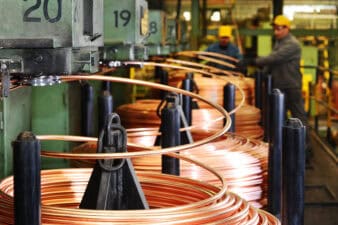
If I were going to invest in energy transition themes, I would focus less on the end providers and more on the inputs that make the system work. A lot of attention has gone toward electrification metals like lithium and copper.
My preference, however, is uranium. Regardless of personal views on nuclear power, it remains one of the most energy-dense, reliable, and low-carbon sources of baseload electricity. It operates independently of weather, has predictable output, and plays a growing role in energy security discussions.
Getting exposure as a Canadian is straightforward. Cameco (TSX: CCO), the largest publicly traded uranium miner in the world, is a long-standing blue chip on the TSX.
Still, one company does not represent an entire theme. If you want broader uranium exposure, there are two main ways to approach it, and one exchange-traded fund (ETF) that combines both.
Source: Getty Images
Two ways to invest in uranium
The first is owning spot uranium exposure. Spot exposure tracks today’s uranium price rather than futures-based pricing. Unlike gold or silver, you cannot buy and store uranium yourself. Handling yellowcake is illegal for individuals and requires specialized licensing, secure facilities, and strict regulatory oversight. It is also prohibitively expensive.
To address this, some asset managers have launched closed-end trusts that buy and store physical uranium on behalf of investors. You buy shares of the trust, which gives you fractional ownership of the uranium held in custody. The benefit is that these vehicles tend to track spot uranium prices closely. The drawback is that uranium itself produces no cash flow. Returns are driven entirely by supply, demand, and speculation.
The second approach is investing in uranium miners. These companies explore for, extract, process, and sell uranium. Mining activity is geographically concentrated. Canada and Australia are among the most important jurisdictions that are politically stable and accessible to Western investors. Other major producers operate in emerging markets such as Kazakhstan, which may be harder for individual investors to access directly.
Some investors prefer miners because they offer operating leverage to uranium prices. When spot prices rise, revenue can increase faster than costs, expanding margins. In strong cycles, this can also lead to multiple expansion. In some cases, miners may pay modest dividends, though income is not the primary attraction.
My preferred uranium ETF
As a Canadian investor, I like the Global X Uranium Index ETF (TSX: HURA). This ETF tracks a global uranium pure-play index from Solactive and blends both approaches discussed above.
The index allows up to 25% of the portfolio to be allocated to investments that provide direct exposure to spot uranium prices. That exposure currently comes through a closed-end uranium trust managed by Sprott. At present, that allocation sits well below the cap, at about 13.4%.
The remainder of the portfolio is invested in uranium mining companies. Cameco is the largest holding at roughly 20%. The ETF can also hold select nuclear utilities, which use uranium as a primary fissile fuel input for electricity generation.
This is not a low-cost ETF. The management expense ratio is 0.98%, with an additional trading expense ratio of 0.07%. Higher costs are a common drawback of thematic ETFs.
Because of that and the lack of diversification, HURA is not something I would treat as a permanent core holding. Timing, position sizing, and sector knowledge matter, particularly in a cyclical and sentiment-driven space like uranium