Canadians: How Much Money Should Be in a TFSA to Retire?

Do you hold stock like Fortis (TSX:FTS) in your Tax-Free Savings Account (TFSA)? You might earn enough dividends to set yourself up for a comfortable retirement.

| More on:
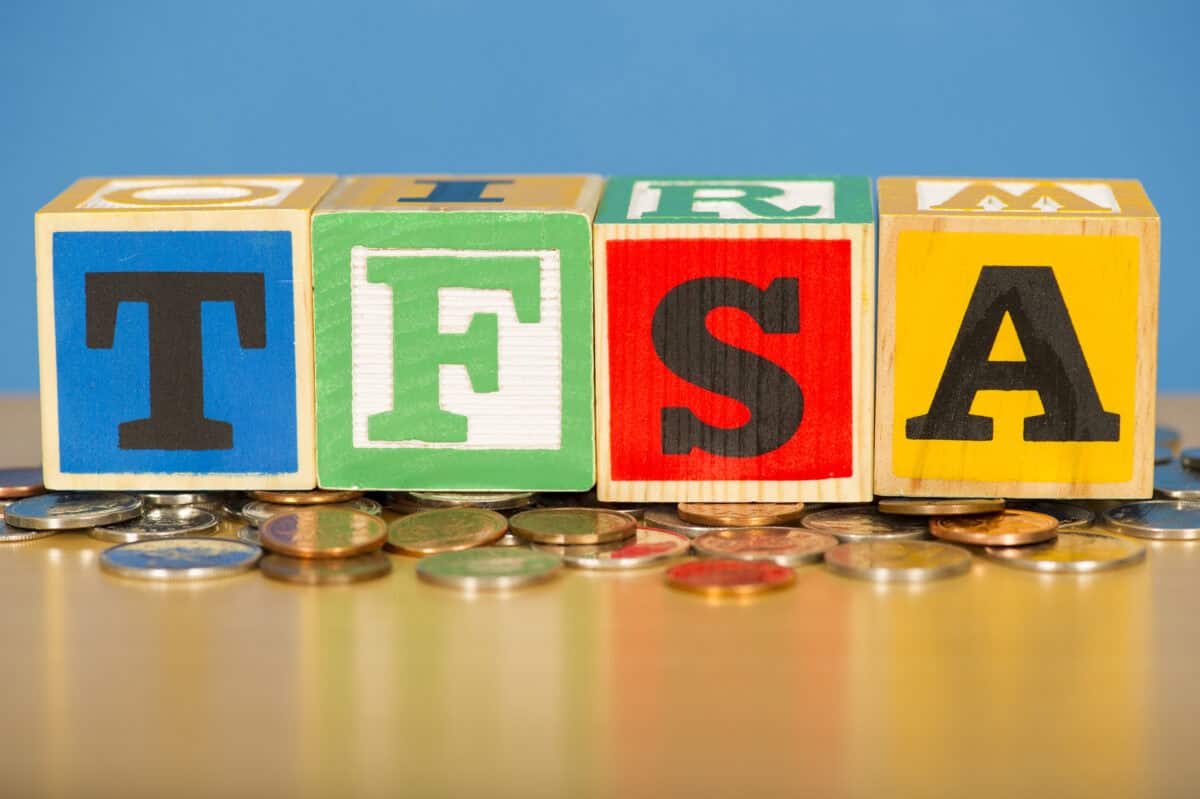
Blocks conceptualizing Canada's Tax Free Savings Account

Source: Getty Images

Key Points

  • A TFSA can fund retirement but required balances vary widely — for example, the article estimates a high‑earning household with $160k annual expenses might need about $4.5M in a TFSA, while a single person with $38k expenses might need about $1.1M.
  • Getting there requires long‑term discipline: maximize contribution room, reinvest dividends, harness compounding with a diversified buy‑and‑hold portfolio, and use the TFSA alongside other retirement accounts — TFSA alone rarely suffices.
  • 5 stocks our experts like better than [Fortis] >

Are you planning to retire on time? If you are still young and have plenty more years in you to stay in the workforce, you should start thinking about it now. A solid retirement plan looks at the big picture rather than a short-term outlook on finances. Buying and holding some of your investments in a Tax-Free Savings Account (TFSA) can be part of an excellent retirement plan.

The account lets you withdraw money held inside it without incurring taxes. Why? Because you’re paying into the account using after-tax dollars. This means any cash or other eligible investments held in the account can grow your account balance tax-free. If you aren’t already, you should be investing in a TFSA.

Today, I will discuss how much money you might need in your TFSA to enjoy an excellent quality of life in your golden years.
How much money should you have in a TFSA for retirement?

Right from the get-go, you must understand that there is never a one-size-fits-all solution when assessing exactly how much a person might need in their TFSA to retire. This question has a subjective answer that depends on tax rates, dependents, and living expenses. Despite each Canadian having unique requirements, you can get ballpark figures for the kind of TFSA income someone might need to retire.

To illustrate the examples, I will come up with two fictitious profiles: Tom and Jonathan.

Suppose Tom is a high-earning professional who primarily invests in dividend stocks like one of my favourites, Fortis (TSX:FTS). Since he invests in a TFSA, he doesn’t need to worry about taxes on the returns in his TFSA. Now, Tom’s annual household income after taxes is $250,000; he pays $5,000 per month in rent for their apartment, and his family’s overall expenses come up to around $160,000 per year.

In this case, Harry would ideally like to have around $4.5 million in his TFSA during retirement to maintain the same kind of lifestyle and expenses without getting worried. This is the kind of TFSA account balance you can have with disciplined and long-term investing.

Now, we have Jonathan, who is a single guy who doesn’t have family or other dependents. He just has to pay around $1,500 in rent; his total living costs add up to around $38,000 per year. For a comfortable retirement, Jonathan might need as much as $1.1 million in his TFSA to retire using the income from his investments.

Foolish takeaway

You cannot retire on a TFSA alone in 2026. You will need to realize substantial long-term gains, leverage dividend income, and unlock the power of compounding to accumulate enough wealth so you can live off of investment income during your golden years.

The only way that can happen is by making solid and well-informed long-term investments in your TFSA. Building up a well-balanced portfolio, saving diligently, and being disciplined as a stock market investor can help you make it work.


Fool contributor Adam Othman has no position in any of the stocks mentioned. The Motley Fool recommends Fortis. The Motley Fool has a disclosure policy.

More on Energy Stocks

Utility, wind power
Energy Stocks

Renewable Energy in Canada: Hype or Historic Opportunity?

Brookfield Renewable Partners (TSX:BEP.UN) is doing big things in renewable energy. But is it just hype?

Read more »

a person watches stock market trades
Energy Stocks

What’s Ahead for Canadian Natural Resources Stock in 2026?

Given its strong operating performance and favourable growth outlook, I expect Canadian Natural Resources to maintain its upward momentum and…

Read more »

Oil industry worker works in oilfield
Energy Stocks

Top Energy Stocks to Invest in for 2026

With oil demand holding firm and cash flows rising, these two Canadian energy stocks could shine in 2026 and beyond.

Read more »

Investor wonders if it's safe to buy stocks now
Energy Stocks

Is Cenovus Energy a Buy?

Cenovus Energy (TSX:CVE) stock just hit a 52-week high. But is its $8.6 billion MEG buy a stroke of genius…

Read more »

senior man smiles next to a light-filled window
Energy Stocks

If I Could Only Buy 2 Dividend Stocks in 2026, These Would Be My Picks

For investors building a dependable income portfolio in 2026, these two dividend stocks offer a compelling mix of yield, stability,…

Read more »

Colored pins on calendar showing a month
Energy Stocks

A Perfect TFSA Stock: A 6.5% Yield With Constant Paycheques

I love this TSX oil & gas royalty as a high-yield passive income stock.

Read more »

golden sunset in crude oil refinery with pipeline system
Energy Stocks

Better Pipeline Stock: Enbridge or TC Energy?

Let’s evaluate Enbridge and TC Energy to determine which of the two pipeline companies is a better buy at current…

Read more »

worker holds seedling in soybean field
Energy Stocks

Oil Is Weak: 1 Canadian Dividend Stock I’d Buy Anyway

Oil looks shaky, but this TSX royalty payer can still reward you because it collects revenue without drilling or heavy…

Read more »