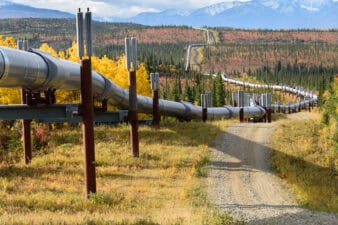
Oil looks weak right now. The market keeps coming back to the same worry: too much supply for demand. Forecasters have warned that 2026 could face ample production growth while demand growth stays soft, which caps rallies fast. The Organization of Petroleum Exporting Countries (OPEC+) has even paused some planned increases to avoid a glut, and traders keep flipping between softer economic data and geopolitical noise without committing to a higher price trend.

Source: Getty Images
FRU
That’s why Freehold Royalties (TSX:FRU) can shine even when oil feels flimsy. It does not drill. It owns royalty interests across Canada and the United States and collects a slice of production revenue from operators. Operators fund the capital spending, while Freehold focuses on stacking high-quality land, keeping costs lean, and sending cash back to shareholders. It also spreads risk across many wells and operators. In a choppy tape, that “paid to wait” structure can feel calming.
Recent news over the last year has mostly been about execution and discipline, not flashy promises. The dividend stock kept leaning into U.S. exposure, especially the Permian, because it tends to attract capital even when budgets tighten elsewhere. It also continued to use acquisitions, but in a measured way, aiming to improve the long-term royalty base rather than swing for the fences. That matters in 2026, because the best royalty business wins by compounding quietly.
The other headline-friendly point is the dividend. Freehold pays monthly, which investors love when markets chop sideways. That also puts pressure on management to keep the payout aligned with cash flow, because a monthly dividend stock makes any mismatch show up quickly. In other words, it forces honesty. If commodity prices sag, you watch payout coverage and debt, not just the yield.
Earnings support
Now the numbers, because this is where the “buy anyway” case either holds up or falls apart. In the third quarter of 2025, Freehold reported $74 million in revenue and $59 million in funds from operations, or $0.36 per share. It paid $44 million in dividends in the quarter, or $0.27 per share. Production averaged 16,054 barrels of oil equivalent per day (boe/d), up 10% from the prior year, with liquids weighting at 65%.
Those figures tell a clean story. The dividend stock generated meaningful cash flow, it grew production, and it did not need to outspend to do it. The dividend did not consume the whole pie, either. Management also highlighted that it reduced long-term debt and still invested in acquisitions, which signals it kept multiple levers available. In an oil market that can punish leverage, that flexibility matters.
Looking ahead, the setup for 2026 comes down to three things: commodity prices, operator activity on its lands, and capital allocation. If oil stays weak, Freehold can still hold up better than many producers because it avoids direct operating costs and large capex bills. If oil rebounds, it participates without needing to rebuild a drilling budget. The risk is that a prolonged downturn slows drilling enough to pressure royalty volumes.
Bottom line
So could this dividend stock be a buy for others? It can, if you want energy exposure with fewer sleepless nights and you like getting paid monthly while you wait for the cycle to turn. Plus, it offers that monthly dividend at a 6.5% yield, so even $7,000 can create ample income.
| COMPANY | RECENT PRICE | NUMBER OF SHARES | ANNUAL DIVIDEND | ANNUAL TOTAL PAYOUT | FREQUENCY | TOTAL INVESTMENT |
|---|---|---|---|---|---|---|
| FRU | $16.64 | 420 | $1.08 | $453.60 | Monthly | $6,988.80 |
The royalty model helps, and the recent cash-flow numbers support the dividend today. But it’s not magic. If oil stays weak for longer than expected, coverage can tighten and sentiment can sour. Buy it for resilient structure and disciplined management, not because you think oil has to bounce next week.