The cumulative contribution room of the Tax-Free Savings Account (TFSA) rose to $109,000 in January 2026, boosted by the new $7,000 annual limit. Even if you were eligible in 2009 when the program was launched, but never contributed, the room has grown every year. Unused contribution room rolls over indefinitely.
The actual TFSA usage rate, however, is surprisingly low, especially for Canadians who are 10 years away from 60 or the sunset years. Based on published data, the national average for the 50–54 age bracket is between $26,479 and $30,200.
Given this information, the unused contribution room is significantly large. Nonetheless, the approximately $80,000-plus gap is a massive opportunity and tax-free potential for this group. That is why many prospective retirees have made the TFSA a cornerstone of their retirement strategy.
Source: Getty Images
Invest idle cash
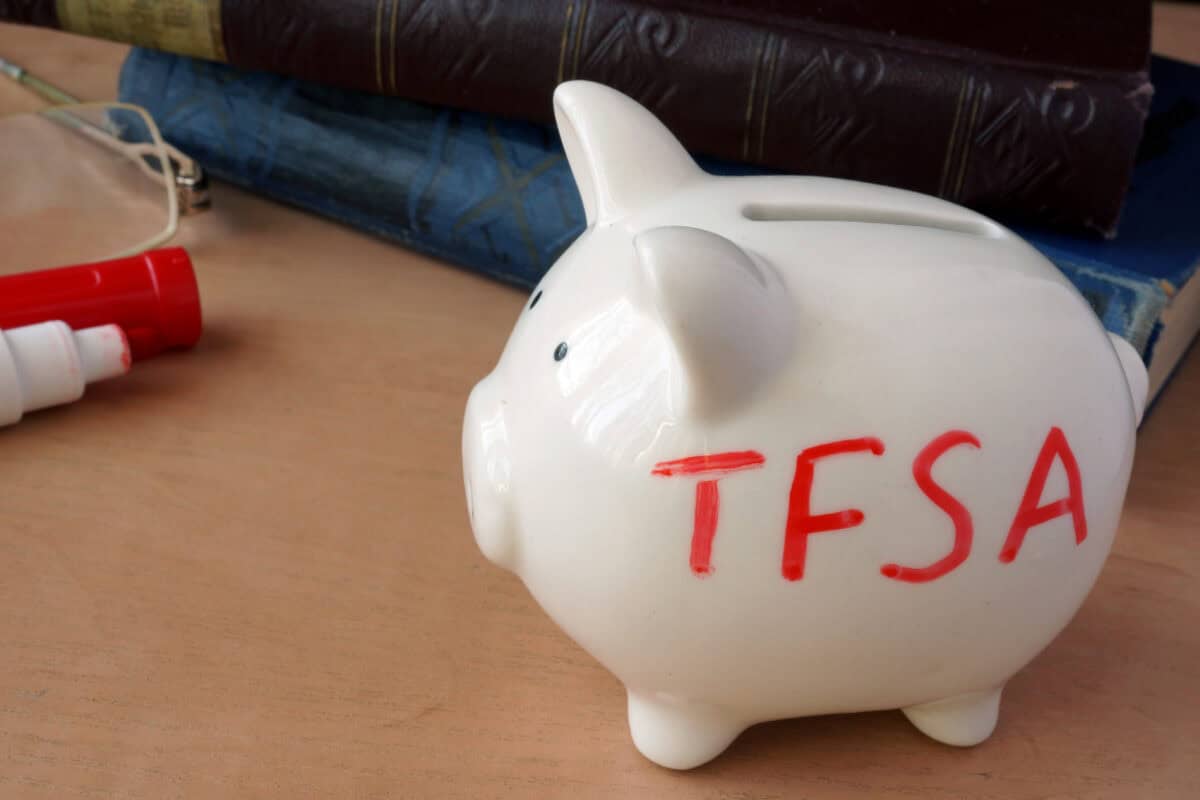
The TFSA is a one-of-a-kind investment account, not a piggy bank. You squander the tax-free growth feature if you store cash. Consider investing idle cash in income-producing assets. Eligible investments are bonds, mutual funds, guaranteed investment certificates (GICs), exchange-traded funds (ETFs), real estate investment trusts (REITs), and stocks. Many TFSA investors prefer to hold dividend stocks.
Play catch-up
A rock-solid investment option if you’re in catch-up mode is the Bank of Nova Scotia (TSX: BNS). This large-cap stock pays the highest dividend among Canada’s Big Six banks. At $106.92 per share, the yield is 4.1%. A lump sum investment of $80,000 will generate $824 tax-free income every quarter. Assuming you keep reinvesting dividends, the money will compound to $147,844 in 15 years.
The $128.5 billion lender has been paying dividends for 194 years and is not about to break the cycle. In addition to the impeccable payment history, earnings growth in Q1 fiscal 2026 is welcome news for BNS investors. Net income in the three months ending January 31, 2026, climbed 131.5% to nearly $2.3 billion compared to Q1 fiscal 2025.
According to its President and CEO, Scott Thomson, all business lines reported earnings growth during the quarter. Despite exiting markets in Central America and Colombia, the International Banking segment’s earnings rose 7% year-over-year to $737 million. He expressed confidence that BNS can achieve its medium-term objectives in 2027, including a return on equity (ROE) of 14%-plus or more.
Consistent annual contributions
For seniors who do not have an $80,000 lump sum ready to deploy, the second path to fortifying a retirement fund is through consistent annual contributions. This strategy is particularly effective because Canadians aged 50 and older are in the peak earning years.
Commit to contributing the maximum $7,000 annual limit, plus an additional portion of the unused room, at the start of each year. Your tax-free room won’t fall far behind with this systematic approach. A steady accumulation of BNS shares will also result in a substantial retirement fund in a decade or more.
Time is an asset
Time is still the greatest asset for Canadians in the 50–54 age group. Nothing can stop them from reclaiming their tax-free status. More importantly, the hard-earned dividends transform into pension-like income. The key is to shift from a savings mindset to an investment mindset before the sunset years.