Canada’s large-cap energy names aren’t just known for their outsized dividend yields or their generous and very consistent dividend growth trajectories; they’re serious value contenders.
And in a market environment where value is getting passed up in favour of growth with themes like AI pushing investors to take a chance in tech names, primarily because of the recent momentum behind the shares, I do think that the second half could be an opportunity for contrarians to take a step back and consider the names that much of the market isn’t all too impressed by, at least of late.
Even with geopolitical tensions picking up in recent sessions, it feels like another surge in oil prices beyond the US$100 mark is off the table, at least for now.
And while it’s impossible to predict the next move, whether it’s a peace deal that lasts or a worsening of the conflict that keeps the Strait of Hormuz closed for some while longer, I do think that the energy sector could be a great place to score steady passive income for those who can stomach the share price fluctuations that are sure to be a bit more elevated from here.
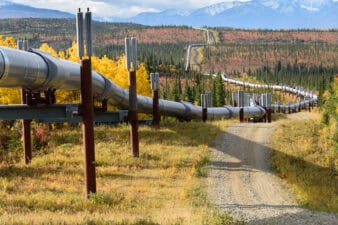
In any case, this piece will feature two of the TSX Index’s heaviest hitters in energy: pipeline firm Enbridge (TSX: ENB) and the slightly choppier (and possibly cheaper) Suncor Energy (TSX: SU).

A person stands in front of several doors representing different U.S. stock options for Canadian investors.
Enbridge
You cannot go wrong with Enbridge, given the 5% yield and modest 26.1 times forward price-to-earnings (P/E) multiple. If you’ve been around TSX stocks for long enough, though, you’ll know that shares of ENB have certainly been a heck of a lot cheaper with a far more swollen dividend yield. Indeed, a P/E in the teens with a yield closer to 7% was possible to land with the pipeline juggernaut not all too long ago.
But just because it’s pricier to get in with less yield, I still view Enbridge as one of the better dividend payers in the market right now, especially if the hunt for yield becomes a bit more scarce. Indeed, it’s not like there’s a massive list of 5%-yielders to pick from anymore. And certainly, none of the comparable dividend payers come close when it comes to dividend growth prospects, at least in my opinion.
Has the easy money been made in ENB stock?
Possibly. While it’s no longer a deep-value name, it still possesses one of the best risk/rewards on the Canadian midstream energy market. It has reliable cash flows, far less sensitivity to energy price moves, and a management team that’s already shown that it can raise the payout, even amid tremendous industry headwinds and mounting investor doubt.
In my view, Enbridge’s actions in tough times speak loudly. And that makes the name worthy of a greater premium now that the industry is in a far better spot.
Suncor Energy
Suncor Energy is probably a better fit for the deep-value crowd, especially after the latest dip, nearly half of which has been recouped in recent weeks. The stock goes for 8.9 times forward P/E to go with a 2.9% dividend yield. Suncor was hit with a recent downgrade, primarily due to share price appreciation, but, in my view, the stock looks far from expensive, especially when you consider the fundamental improvements made in the past year.
While I’m a huge fan of the producer, I must say that Enbridge is my preferred pick. It has a higher yield and is simply a steadier ride at a time like this, when oil prices could surge or plunge based on developments coming from the Middle East. If you prioritize value above all else, Suncor might be your better bet, but, for me, I have to go with Enbridge.